
The first thing customers want to accomplish when they visit our shop is to fix their vehicle problem which led them to request the appointment. The customer needs to select either an oil change, a tire rotation, a brake inspection, or a check engine light diagnostic service. The service desk team considers it essential to possess all vehicle safety features because they need to check every component that protects customers from potential threats.
That’s exactly why courtesy inspections matter.
A courtesy inspection is a quick but meaningful review of your vehicle’s key systems during a routine visit. It’s not about “finding stuff to sell.” Done correctly, it’s about making sure you have a clear picture of your vehicle’s overall condition, so you can make smart decisions before small issues turn into expensive breakdowns.
What A Courtesy Inspection Really Is (And What It Isn’t)
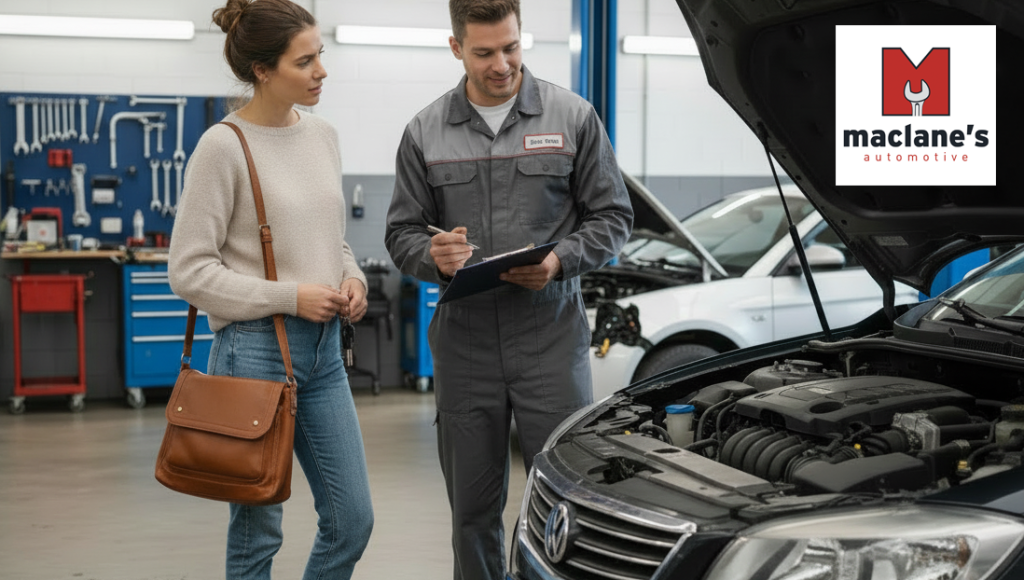
A proper courtesy inspection needs to be executed as a standard procedure which requires us to examine essential wear parts and safety equipment during the time your vehicle stays in the shop. The inspection process evaluates various components which include tires, brakes, steering and suspension systems, engine fluids, battery status, belts and hoses, vehicle lights, and all visible fluid leaks.
The method does not use fear to intimidate people, and it does not rely on random guessing. The document presents a complete overview of our visible findings, which we obtained during your visit, while presenting direct information about present requirements, future needs, and monitoring elements.
Why Customers Expect It, Even If They Don’t Ask
Most drivers are not crawling under their vehicle, measuring brake pad thickness, or checking for seepage around gaskets. And they shouldn’t have to. The whole point of bringing a vehicle to a professional shop is to get professional eyes on it.
In real-world shop conversations, we’ve seen that customers often assume their vehicle is being looked over during a visit. If something obvious is missed, it can feel confusing later when a problem shows up shortly after service. Courtesy inspections help close that gap. They create a shared understanding of the vehicle’s condition, instead of leaving you to find out the hard way on the side of the road.
The #1 Purpose: Serving You With Better Information
The process of a courtesy inspection provides valuable benefits because it transforms unknown situations into known outcomes. The examination results show that everything meets the required standards, which we can present to you with absolute certainty. We will show you our findings about current equipment conditions. We will explain their implications to you while we discuss when they will occur. We will explain the unsafe situation to you in simple terms, which will help you decide your next steps. The actual service provides you with the necessary information that helps you monitor upcoming repairs while preventing unwanted interruptions from unexpected events.
How Courtesy Inspections Help You Save Money
Most costly repairs do not begin as costly repairs. They start as smaller issues that were either invisible to the driver or easy to ignore.
A courtesy inspection helps us catch things early, like uneven tire wear that points to alignment or suspension issues, a weak battery before it leaves you stranded, or brakes that are approaching the wear limit before they damage rotors. When you address your problems through preventive maintenance, you gain extra possibilities which help you establish your repair timetable while minimizing potential damages.
Even when a repair isn’t urgent, knowing it’s coming helps you budget for it instead of getting blindsided later.
A Safer Vehicle For You And Everyone On The Road
Some vehicle problems are annoying. Others are dangerous.
The procedure of conducting a courtesy inspection helps to identify safety hazards that remain hidden from view at this moment. Drivers who think their vehicle remains operational face danger from the presence of worn vehicle parts, damaged tires, brake fluid leaks, and nonfunctioning lights. Our company conducts inspections to discover safety hazards, which we will resolve before they result in dangerous conditions, because safety remains our top priority. The combination of fewer trips, reduced downtime, and improved planning results in optimal efficiency. The public fails to recognize that courtesy inspections provide their most valuable benefit through their ability to deliver convenience to drivers.
Fewer Trips, Less Downtime, Better Planning
The existence of vehicle problems becomes apparent through our inspections, which allow us to conduct multiple repairs during a single visit to your vehicle. The process requires less time for scheduling and driving, plus it results in shorter periods without access to your vehicle.
It can also improve parts planning. If we know what’s needed ahead of time, we can often order parts and schedule work more efficiently, rather than waiting for a breakdown to force an emergency appointment.
Courtesy Inspections Also Improve The Quality Of Shop Work
From a shop perspective, inspections create consistency and accountability. A vehicle should not show a serious issue during one visit and then magically show “no issues” the next time without any repair being done. That kind of inconsistency is exactly what strong inspection processes are designed to prevent.
In well-run shops, a smart training approach is to have multiple technicians inspect the same vehicle and compare results. It quickly reveals how different people interpret “good,” “fair,” or “needs attention.” Once you see that variation, you can standardize what each rating means, how it should be measured, and how it should be documented.
That training isn’t just for our benefit. It directly affects the quality of information you receive as a customer.
Training Matters: Great Inspections Don’t Happen By Accident
A courtesy inspection is only as good as the technician performing it and the process guiding it.
We focus on training that builds consistency, because consistent inspections build trust. A big part of that is using clear standards and making sure our team is aligned on what to check, how to check it, and how to record it.
We also know that many technicians learn best visually. Short videos and hands-on demonstrations can be more effective than long written procedures, especially when it comes to showing what a worn part looks like, what “normal” sounds like, and how to communicate findings clearly.
How We Communicate Findings Without Pressure Or Fear
The majority of shops make their first mistake at this point because customers develop justifiable doubts about their business operations. People lose interest when every appointment starts with negative forecasts about their future. Our shop needs to provide customers with essential service information when they arrive at our location. We work to maintain the necessary balance that exists between these two opposing forces.
When we review inspection results, we focus on three things:
- What we found and how we know (measurements, visible wear, test results, or clear symptoms)
- What it means for you (safety, reliability, performance, and what could happen if it worsens)
- What your options are (fix now, plan soon, or monitor)
We won’t exaggerate, but we also won’t sugarcoat reality. If a part is likely to fail and could leave you stranded or create a dangerous driving situation, you deserve to hear that clearly. The goal is to help you make informed decisions, not to scare you into a repair.
What You Should Expect In A Good Courtesy Inspection
If you’ve ever wondered what “good” looks like, here are a few practical signs you’re getting a real inspection and not a quick glance.
A strong courtesy inspection should feel organized and transparent. The process requires you to comprehend the evaluated items together with their present state and the suggested future actions. The process requires us to explain our work recommendations by providing evidence to support our decision while assisting you with prioritization tasks without creating a sense of urgency.
Early Detection Through Common Items That Courtesy Inspections Identify
The courtesy inspection process identifies additional vehicle problems that drivers fail to detect until visible symptoms appear because each vehicle visit presents unique inspection requirements. The process identifies brake wear, which will continue until braking produces grinding sounds, and drivers show alignment problems through their tire wear patterns, and drivers display small fluid leaks which remain hidden until they reach their driveway, and drivers show their equipment through their loose steering and suspension elements, and drivers show their equipment through their weak battery and worn belt and hose components.
Catching these early is rarely dramatic, but it’s often the difference between a planned repair and an unexpected tow.
Let’s Wrap It Up: Courtesy Inspections Are About Trust
Our team uses courtesy inspections as the most effective method to improve our service value during customer visits. The system helps you learn about your vehicle while you plan repairs according to your schedule which protects you from unexpected breakdowns. The system maintains our work standards while establishing our recommendations because our entire process depends on what we can access and confirm.
You can reach us at (610) 981-2183 to arrange a service appointment or inquire about your vehicle’s status. Our team of pros here at Maclane’s Automotive provides assistance through our comprehensive courtesy inspection process, which establishes your driving confidence at every visit.
FAQs
What Are the 4 Types of Inspections?
In the automotive industry, inspections are generally grouped into four main types:
1. Safety Inspection
A safety inspection focuses on components that directly impact driver and passenger safety. This includes brakes, tires, steering, suspension, lights, and windshield wipers. Some states require annual safety inspections to keep vehicles legally on the road.
2. Emissions Inspection
An emissions inspection checks whether a vehicle meets environmental standards. The system is tested using the vehicle’s onboard diagnostics (OBD II) and sometimes tailpipe testing to ensure it is not producing excessive pollutants.
3. Pre-Purchase Inspection
A pre-purchase inspection is performed before buying a used vehicle. A certified technician examines the vehicle’s mechanical condition, accident history signs, and potential future repair needs to help buyers make an informed decision.
4. Courtesy (Multi-Point) Inspection
A courtesy inspection is a complimentary check performed during routine service visits. It evaluates major systems such as fluids, brakes, tires, and battery condition to identify maintenance needs early.
What Does Courtesy Vehicle Mean?
A courtesy vehicle is a temporary replacement vehicle provided by a repair shop or dealership while your car is being serviced or repaired. It allows customers to continue their daily activities without interruption.
Courtesy vehicles are typically offered for longer repairs, warranty work, or major services, though availability may vary by location.
What Is a 7 Point Inspection?
A 7-point inspection is a basic vehicle check that covers seven essential safety and maintenance areas. While the exact items may differ between shops, it commonly includes:
- Engine oil level and condition
- Brake system condition
- Tire tread depth and pressure
- Battery health
- Fluid levels (coolant, brake fluid, etc.)
- Lights and signals
- Belts and hoses
This type of inspection is often performed during oil changes or routine maintenance to quickly assess a vehicle’s overall condition.
What Do You Mean by Inspection?
An inspection is a systematic evaluation of a vehicle’s components to determine their condition, safety, and performance. During an inspection, a technician visually checks, measures, and tests parts to identify wear, damage, leaks, or malfunctions.
The purpose of an inspection is to detect potential problems early, ensure safety, maintain reliability, and help vehicle owners avoid costly breakdowns.
