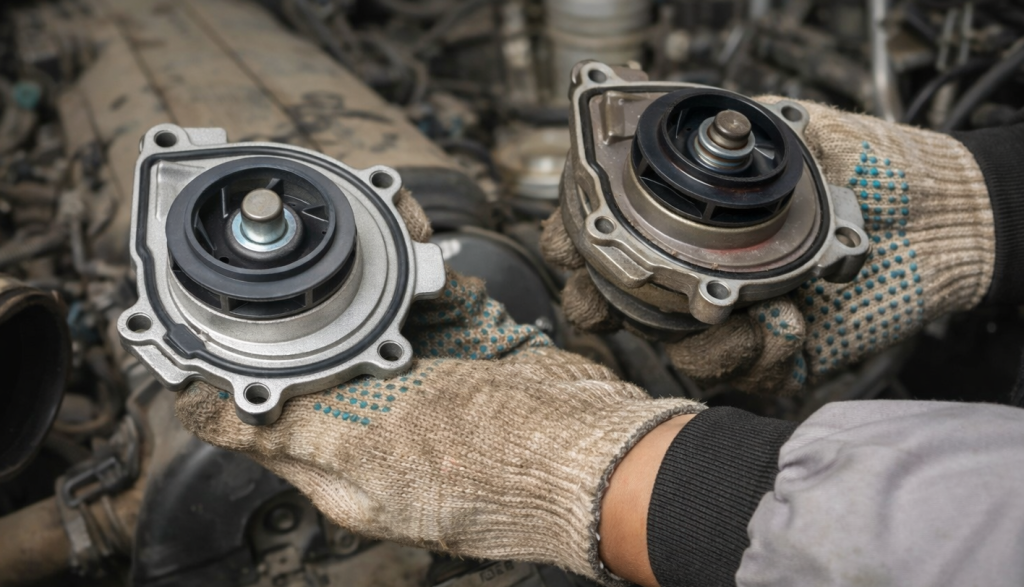
You have received training on information that existed until the month of October in the year 2023. People start to notice the water pump only after they see their temperature gauge rising, and they feel their stomachs drop. The water pump lacks visual appeal, yet it serves as a vital component that powers the entire cooling system. The system maintains coolant flow through engine components and radiator components to stop heat accumulation in specific areas. When that flow stops working properly, it creates dangerous situations that result in complete vehicle breakdowns.
The pump itself does not represent the most expensive component of the system. A malfunctioning water pump causes engine overheating, head gasket damage, cylinder head distortion, and, in extreme cases, complete engine destruction. The positive aspect of water pumps is that they typically produce initial warning signs before complete system failure occurs. People need to recognize system failure signs that operate in their environment, and they must treat these signs as serious problems.
The Water Pump Functionality Explanation
The water pump system operates on a basic design that requires it to move the coolant through four main engine areas, which include the engine block and cylinder head, and the heater core and radiator system. The system draws heat away from engine parts that produce excessive heat, while maintaining a constant operating temperature. Proper heater operation requires warm coolant to pass through the heater core because cabin heat depends on this heated liquid.
Coolant flow maintains its regular pace when the pump operates in an appropriate manner. Systems maintain their temperature. The pump begins to malfunction when it begins to lose coolant through both drops in flow and leakages. The cooling system experiences rising temperatures and changing pressure levels, which creates additional stress on its components.
Early Warning Signs Of Water Pump Trouble
A lot of drivers miss the early stage because the car still runs “okay.” But this is the stage where a quick repair can save a much bigger bill.
Coolant Leaks Under The Vehicle
The first visible symptom appears through coolant leaks that become detectable. The engine front area shows two types of fluid leaks, which create small puddles and crusty residue built from various vehicle designs. Drivers can identify coolant through its four color options, which include green, orange, pink, and blue, and its sweet scent.
Whining Or Unusual Noises From The Engine Area
The pump gasket and internal seal both become vulnerable to leaks. The seals experience heavy damage because the pump operates at high speeds while its temperature fluctuates between hot and cold periods. The seal will start leaking coolant after it has reached its complete life span. The process begins with a slow seepage that creates a chalky path, which later develops into a continuous leak.
This matters because bearings do not heal. When they start getting noisy, they are telling us that internal parts are wearing and the pump is not going to last forever.
Temperature Fluctuations That Feel “Off”
Not every pump failure shows up as an instant overheat. Sometimes what we see first is a temperature gauge that wanders more than it used to. The engine warms up, then cools slightly, then warms again. Or the heat works at idle, then gets cooler while driving, or the other way around.
That kind of inconsistency can come from several cooling system issues, but weak coolant circulation is on the list, and water pump wear is one reason.
However, it’s important to note that similar symptoms can also indicate problems with other components of your vehicle, such as shocks and struts or even transmission issues. Therefore, if you notice any of these warning signs, it’s advisable to seek professional help promptly to avoid further complications.
Advanced Symptoms That Usually Mean “Stop Waiting”
When a water pump gets worse, symptoms become harder to ignore. At this point, delaying repairs risks engine damage.
Persistent Overheating
If overheating is happening repeatedly, or the temperature climbs quickly in traffic, the cooling system is not keeping up. A water pump with a worn impeller, failing bearings, or internal leakage may not move enough coolant to remove heat.
Overheating is one of those problems that can snowball. Even one serious overheating can warp cylinder heads or stress head gaskets. Repeated overheating can push an engine toward failure.
Steam From The Radiator Area Or Under The Hood
Visible steam is usually coolant escaping and hitting hot components. If steam shows up along with coolant loss, it is a major red flag. People sometimes think steam means “just add water.” The pump will leak, and poor circulation results from the issue, which needs coolant addition, yet the engine will still overheat at unexpected times. The situation requires an immediate radiator solution because it leads to additional operational failures.
Corrosion, Deposits, Or Crust Around The Pump
Our water pump assessment involves searching for both corrosion and deposits that build up on the equipment. Coolant chemistry needs to be understood. The system will develop internal rust and mineral deposits after the existing coolant has degraded throughout its lifecycle. The system will experience flow restrictions because of these deposits, which will also make the pump less effective. The process of metal parts corroding will lead to complete erosion, which produces leaks that develop at both the pump housing and the impeller section.
Wobbling Pulley Or Loose Feel At The Pump
Some pumps will show obvious mechanical wear. If the pulley wobbles or there is play in the shaft, the bearings are worn, and failure is imminent. This can also throw belts off or damage other accessory components, depending on how the vehicle is designed.
Why Water Pumps Fail In The First Place
Water pumps are wear items. They live in heat, pressure, and constant motion. A few failure causes come up over and over.
Seal degradation is a big one. Internal seals wear because of rotation and temperature cycling. When the seal begins to leak, coolant starts to escape, and the pump starts its countdown to failure. Gasket wear is another common culprit. Gaskets experience shrinkage, cracking, and complete failure when they endure aging, high temperatures, and vibrations. Corrosion stands as a critical factor in this situation.
The metal surfaces of equipment undergo erosion through corrosion when the coolant reaches an advanced age or becomes polluted. The situation developed because users failed to replace the coolant at necessary intervals, which led to mineral buildup that blocked essential system channels. The pump needs to work harder because of this blockage, which leads to decreased circulation and results in hot spots and overheating issues.
Is It Really The Water Pump Or Something Else?
The situation becomes ambiguous because various problems create identical symptoms. Overheating results from thermostat malfunctions, which create radiator blockages, cooling fan breakdowns, coolant leaks, and a faulty radiator cap. We never want anyone guessing and swapping parts.
Still, there are patterns that often point toward the pump:
- Coolant loss that appears near the pump area, especially with crusty residue or a steady drip
- Abnormal whining or grinding noises that track with engine speed
- Temperature fluctuations combined with signs of poor circulation, like inconsistent cabin heat
- Overheating paired with steam and ongoing coolant loss
When we diagnose cooling issues, we rely on testing, not hunches. Skilled mechanics will check coolant flow behavior, pressure readings, evidence of leakage, belt condition, overall pump performance, and even common suspension problems, as these can sometimes influence the vehicle’s cooling system indirectly. Sometimes the issue is obvious right away. Other times, it takes a more methodical inspection, especially if the leak only happens under pressure or when hot.
What Happens If We Keep Driving With A Bad Water Pump?
This is the part people do not love hearing, but it is important. Driving with a failing water pump risks severe engine damage.
If coolant drops too low or circulation fails, engines can overheat and seize. Cylinder heads can warp. Head gaskets can blow. In extreme cases, engine blocks can crack. Even if the engine survives, repeated overheating can shorten the life of hoses, radiators, sensors, and seals. It becomes a chain reaction.
In a lot of real-world cases, the pump replacement is not the expensive part. The expensive part is waiting until overheating turns into internal engine repair.
When Water Pump Replacement Is Typically Due
Many manufacturers recommend replacing the water pump somewhere around 60,000 to 100,000 miles. The timing belt service for engines that use a timing belt will occur at the same time as this service because the pump operates with a timing belt and its parts are located in the same engine area. The combined work will result in cost savings because it requires less labor for both tasks to be executed at once, while also minimizing the need to perform complete work again.
We examine vehicle history through its odometer readings, its operational time, completed repairs, and any initial problems that have appeared since the last inspection. Proactive inspections identify leakage problems, bearing noises, and corrosion issues before they lead to equipment failures.
How We Approach Water Pump Diagnosis And Cooling System Repair
At Maclane’s Automotive, we treat water pump concerns like a full cooling system story, not a single part swap. We want to know why the pump is failing, whether the coolant condition contributed, and whether any related components are also at risk.
We also focus on parts quality. Cooling system repairs live in heat and pressure, so using the right materials matters. The pump replacement process requires technicians to remove all dirt from sealing surfaces and select appropriate gasket materials that match the specific application requirements and correctly fill and bleed coolant systems to prevent air pockets. The system contains air, which produces overheating problems that persist after all repairs have been completed.
Our goal after completing repairs is to ensure drivers receive vehicles with constant temperatures and no leaking, and complete operational trust in the vehicle system. Vehicle maintenance requires attention to both water pumps and cooling systems, together with all other elements that affect the vehicle’s performance. Drivers should get an alignment check when they experience misalignment symptoms, which include both uneven tire wear and their vehicle moving toward one side.
Final Thoughts And A Simple Next Step
Water pump problems usually start quietly. A small coolant leak. A faint whining noise. A temperature gauge that seems a little jumpy. The car will start to overheat, which serves as the first warning that drivers will ignore until the moment of danger. The cooling system requires testing when any warning sign appears because engine damage will follow without proper assessment. The existing problems might be connected to common automotive electrical system problems, which need special testing procedures.
Call us at (984) 363-4876 and let us schedule a proper water pump and cooling system inspection.
