It is easy when your truck or car’s AC goes off to think that all you need to do is get it recharged. In some cases, this may be accurate. However, other times, the real problem will be an AC compressor, and running your system further will only make a bad situation worse.
Here at Maclane’s Automotive we can help drivers identify the true problem within their AC system, determine if replacing the compressor is necessary, and develop a budget plan. Our guide will provide clear insight into this process.
How Does the AC Compressor Work?
The AC compressor is basically the ‘pump’ of your vehicle’s air conditioner, where it is responsible for transferring low-pressure gas into high-pressure gas before pumping it out to the condenser, expansion valve, and finally the evaporator. The refrigerant is moved by the compressor throughout the AC system for cooling purposes.
Without building enough pressure, circulating refrigerant, and shedding metal particles internally, the AC system cannot cool properly, regardless of how much refrigerant is added.
Signs Your Compressor Is Failing (Or Already Failed)
Some compressor problems are obvious. Others look like smaller issues at first. Here are the most common signs we see in the shop.
Noises When The Air Conditioning Is Running
Noise of grinding, squeaking, rattling, or even knocking from the AC while turning it on means a faulty compressor bearing or internal damage. It may also be a case of a belt or belt tensioner issue, such as a chirp or squeak noise, but it is also normal with the clutch bearing wear or starting engine seizure when a compressor goes bad.
AC Works Sometimes, Then Quits
Intermittent cooling can happen when a compressor clutch is slipping, an internal control valve is sticking (common on variable displacement compressors), or the compressor is overheating and shutting down. If your AC is cold in the morning but warm at idle in traffic, that’s another pattern we investigate closely.
The Compressor Clutch Won’t Engage
Many vehicles use an electromagnetic clutch on the compressor pulley. If the clutch isn’t engaging, the compressor won’t turn, and you’ll get warm air. The catch is that the clutch not engaging does not automatically mean the compressor is bad. It could be:
- Low refrigerant preventing operation (pressure sensor safety)
- A blown fuse or relay
- A wiring issue
- A failed pressure sensor
- A bad clutch coil
We diagnose the electrical side first, so you don’t replace the wrong part.
Burning Smell Or Visible Smoke (Stop Using The AC)
If a compressor is seizing, the belt can slip and overheat, creating a burning rubber smell. In severe cases, you might see smoke near the belt drive. At that point, continuing to run the AC can cause belt failure and could affect other belt-driven accessories.
Metal Debris In The System (“Black Death”)
When a compressor fails internally, it can send metal shavings and contaminated oil through the entire AC system. You won’t see this without inspection, but we often find it when checking the orifice tube/expansion valve, the receiver-drier/accumulator, and the oil condition. This type of failure usually requires more than just swapping the compressor.
When You Should Replace The Compressor (And When You Shouldn’t)
A compressor replacement is the right call when the compressor has failed mechanically, is contaminated, or can’t maintain correct pressures even though the rest of the system is in good condition. But there are plenty of cases where replacement is not the first step.
Replace The Compressor When:
The compressor is seized or noisy. If the pulley/clutch area is noisy or the compressor is locking up, replacement is typically the safe move.
The compressor has internal damage or contamination. If metal debris is present, we treat it like a system contamination event, not a single-part failure.
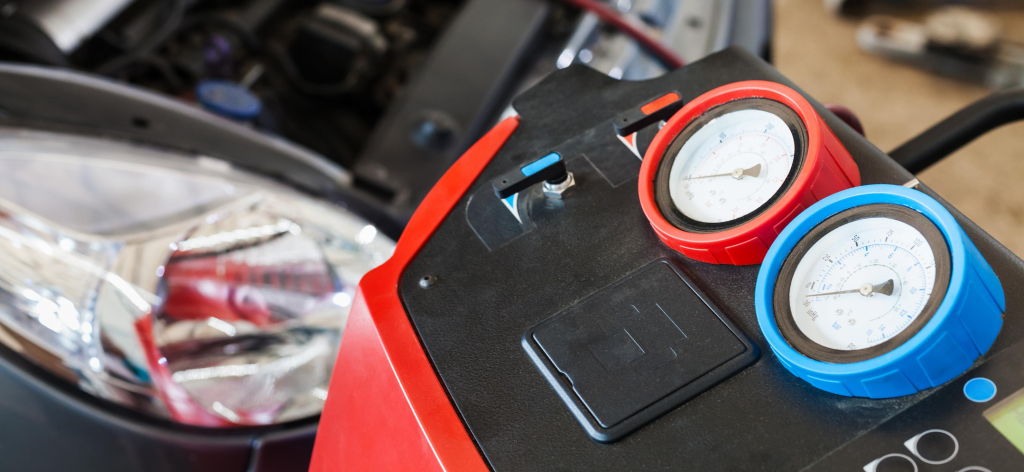
It can’t build the correct pressure. We confirm this with manifold gauge readings (and often scan data), comparing high-side/low-side pressures against expected ranges based on ambient temperature and system design.
The clutch or control valve repair isn’t practical. Some compressors allow clutch-only service or control valve replacement, but on many vehicles, the labor and risk make full compressor replacement more cost-effective long-term.
Don’t Replace The Compressor Yet If:
The system is simply low on refrigerant due to a leak. A recharge without fixing the leak is a temporary patch. The right repair is leak detection, repair, evacuation, and recharge.
The problem is electrical. A bad relay, fuse, pressure sensor, or wiring fault can prevent compressor operation even when the compressor itself is fine.
The issue is airflow-related. A failing condenser fan, clogged cabin air filter, or blend door problem can mimic AC failure. We confirm airflow and fan operation before condemning the compressor.
What Causes Compressors To Fail
Compressors rarely fail “for no reason.” The common causes we see include:
Low refrigerant from a leak, which reduces oil circulation and lubrication.
Moisture contamination, often from improper service procedures or a neglected receiver-drier/accumulator after a leak event.
Debris in the system from an earlier failure, especially if a compressor was replaced without proper flushing and filtration.
Overheating and high head pressure, sometimes caused by condenser airflow problems, overcharging, or a blocked condenser.
Age and wear. Like any mechanical pump, internal tolerances and seals degrade over time, especially in high-mileage vehicles.
What’s Included In A Proper Compressor Replacement
A “compressor replacement” can mean different things depending on how the system failed. We focus on doing it the way that protects the entire AC system, not just the part you can see.
An AC overhaul process requires, among other things, replacing the compressor with a new one, proper oil balancing, changing the receiver-drier/accumulator, and replacing the expansion device (orifice tube/expansion valve). Also, when there are indications of contamination or when the manufacturer indicates this procedure, the process will require replacement of the expansion device.
Where internal compressor failure occurred, this process will also require dealing with debris by means of flushing or other methods, checking for contamination in component(s) where debris tends to accumulate.
How Much Does It Cost to Replace An AC Compressor?
Pricing varies a lot by vehicle, because compressor design, labor time, refrigerant type, and access all matter. With that said, most drivers want a realistic range, so here’s what we typically see in the real world.
Typical Total Cost Range
AC repair and replacement of compressors typically involve spending between $900-$2000 in most cars and small trucks, but the costs will depend on the type of vehicle and whether other components require replacement along the way.
What Drives The Price Up Or Down
Parts cost. Compressors range from a few hundred dollars to well over a thousand, depending on brand, availability, and whether it’s OE or aftermarket.
Labor time and access. Some compressors are easy to reach. Others require removing additional components, which increases labor.
Refrigerant type. R-134a systems are usually less expensive to service than newer R-1234yf systems, largely due to refrigerant cost and service requirements.
System contamination. If the old compressor sent metal through the system, the repair may need additional parts and labor to prevent repeat failure.
Related components. Replacing the receiver-drier/accumulator and expansion device is often recommended, and sometimes required for warranty coverage on the new compressor.
To keep expectations clear, we always quote the job based on what we find during diagnosis, not a one-size-fits-all number.
How To Avoid Replacing The Compressor Again
Compressor comebacks are usually caused by contamination, incorrect oil charge, or a leak that never got fully fixed. A few practical ways we help prevent repeat failure include confirming the root cause, replacing the receiver-drier/accumulator when appropriate, measuring and correcting oil balance, evacuating properly, and charging by weight (not by pressure guesses). We also verify condenser airflow and fan operation, because high head pressure can kill a new compressor quickly.
Closing And Call To Action
Here at Maclane’s Automotive in Malvern, PA, we will test your system’s pressure, investigate all potential leaks, assess the performance of clutch and control systems, and conduct contamination tests before we offer our recommendations. The compressor replacement will lead us to provide you with details about the necessary maintenance work that needs to be performed.
If your car or truck’s AC isn’t keeping up, don’t wait until a small issue turns into a full system repair. Call our pros at (484) 321-8137 and let our team diagnose the problem, give you a clear estimate, and get you back to cold, reliable air as quickly as possible.