Brakes are one of those systems you do not think about until something feels “off.” And when it comes to stopping power, waiting it out is rarely the smart move. For most car and truck owners, the real question is not if you will need a brake inspection, but when you should get one.
At Maclane’s Automotive Downingtown, PA, we assist drivers with brake issue detection which helps them avoid driving hazards and expensive repairs that result from extended brake performance issues. The following guide explains all brake inspection signs which drivers need to know plus additional situations which require an inspection even when everything appears normal.
Common Signs You Should Get A Brake Inspection
Brake problems manifest through changes in sound and feel and stopping distance and warning lights. The system requires inspection when you observe any of the following.
Squeaking, Squealing, Or Grinding Noises
A high-pitched squeak or squeal often points to worn brake pads. Many pads include wear indicators that make noise when pad material is running low. That sound is doing you a favor by warning you before metal meets metal.
Grinding is more urgent. It can mean the pad material is gone and the backing plate is contacting the rotor. When that happens, rotors can get damaged quickly, and what could have been a pad replacement can turn into a larger job.
Longer Stopping Distance Or A “Soft” Brake Pedal
If your vehicle takes longer to stop, do not assume it is just road conditions or “older brakes.” A soft or spongy brake pedal can signal problems like air in the brake lines, aging brake fluid, or a hydraulic issue that needs attention. Brake pedal changes become necessary for evaluation because they decrease your emergency stopping ability during unexpected events.
Vibration Or Shaking When Braking
Braking systems have problems when you experience steering wheel vibration and pedal vibration and front end vibration. Drivers describe the braking experience as a pulsing sensation which occurs during their deceleration process. This condition develops after drivers experience multiple instances of intense braking and towing and mountain driving and continuous brake heating and cooling during their stop-and-go driving.
Pulling To One Side When You Brake
The vehicle demonstrates uneven braking performance when it pulls to either side during the braking process. The problem arises from either caliper defects or irregular brake pad deterioration or brake system components which have become contaminated or from tire problems which emerge during braking. The need for brake system inspection arises from the fact that pulling behavior leads to losing control when performing emergency stops.
Burning Smell After Driving
A sharp chemical odor emerges after the driver applies the brakes because the brakes begin to overheat. This situation may occur when drivers use the brakes continuously while descending a hill or when they tow heavy objects or because a caliper remains fixed in a position which keeps a brake from releasing its hold. Drivers should stop their vehicles when they observe smoke or a strong burning odor or experience a dragging sensation because their vehicle needs professional inspection.
Brake Warning Light Or ABS Light
The brake warning light requires your immediate attention because it represents a serious matter. The situation might involve a basic problem which results from low brake fluid levels, or it may show a hydraulic malfunction which causes brake system issues.
The ABS light indicates that the anti-lock braking system has identified a malfunction because your regular braking system continues to function while NABS operates incorrectly during slippery conditions and emergency stops.
Your vehicle uses warning lights to alert you about necessary repairs, and you should treat brake system problems as emergencies which require immediate action.
Unusual Sounds When You Are Not Braking
The vehicle produces clicking and scraping and rubbing noises during operation, which point to brake component problems and brake system debris and backing plate contact with incorrect areas. The braking system produces noise changes which follow your application of the brakes.
Your Parking Brake Feels Weak Or Does Not Hold
The parking brake system on most vehicles operates independently from the primary braking system yet it plays a crucial role in maintaining safety for both trucks and vehicles that need to stop on slopes. The brake inspection should proceed because it shows no signs of brake problems.
Situations Where You Should Schedule A Brake Inspection Even Without Symptoms
The absence of noise or warning lights does not indicate that every brake problem exists in the system. Drivers discover their vehicle performance problems after their vehicles develop undetected wear through extended periods. We advise brake inspection at specific times even when everything appears to function normally.
You Have Not Had Brakes Checked In A While
You have not visited a brake inspection center since your last appointment. The brake system develops wear through time as both brake pads and rotors and brake fluid deteriorates with age and moisture. Regular brake inspections help identify brake component problems that develop into major issues because drivers lose their ability to detect brake problems through sound and visual signals after they become accustomed to hearing normal operation sounds.
You Drive In Stop-And-Go Traffic Or Hilly Areas
Your driving pattern involves both stop-and-go traffic and hilly terrain. The brake system experiences increased wear because emergency braking needs multiple repeated stops. Your braking system experiences greater strain during your daily driving through heavy traffic and steep grades and city driving with multiple stops compared to steady highway routes.
You Tow Or Haul Heavy Loads
Your work involves towing or transporting heavy loads. The braking system of trucks which tow trailers and transport heavy loads needs to handle additional operational demands. Downhill driving causes extra weight to create greater vehicle heat and wear. Regular towing activities require you to increase your brake inspection frequency.
You Recently Bought A Used Vehicle
Your purchase of a used vehicle shows no signs of wear because the vehicle operates properly. A brake inspection enables you to establish your vehicle’s current condition which helps you create a maintenance schedule that prevents unexpected repairs.
You Have Had A Tire Or Suspension Issue
The three factors which cause unbalanced tire degradation together with vehicle alignment faults and suspension component deterioration create a situation that displays brake malfunction symptoms which include vehicle pulling and brake system vibration. The process of checking brakes directly after you completed all of these problems will verify that all components operate according to their intended functions.
What We Check During A Brake Inspection
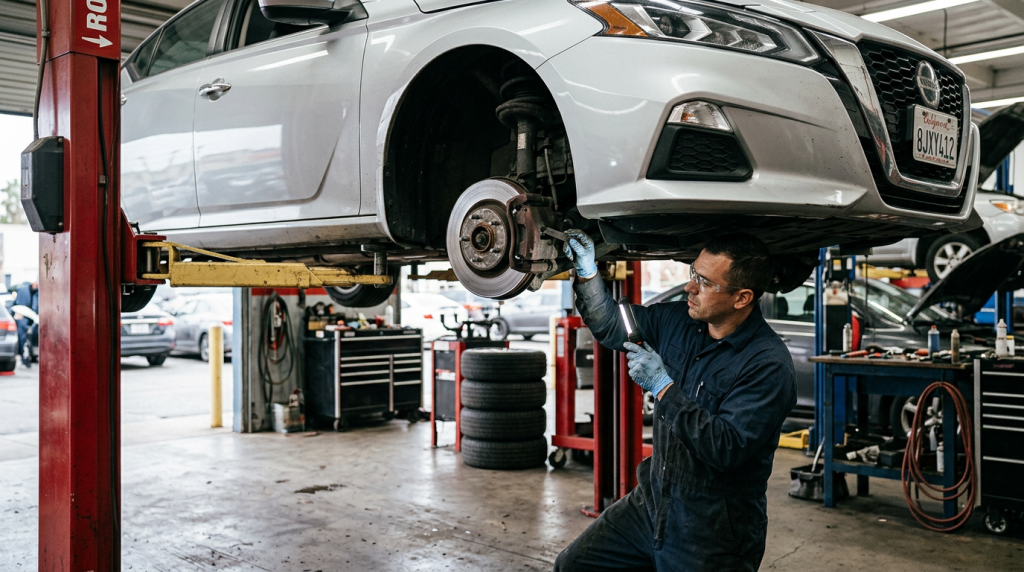
The components of brake systems which make vehicles come to a stop and which create tire damage and which determine overall vehicle safety are the parts we examine during our inspection process.
Here are some of the main items we look at:
- Brake pad thickness and wear pattern, including inner and outer pads
- Rotor condition, scoring, heat spots, and thickness where applicable
- Calipers, slide pins, and hardware condition to confirm smooth operation
- Brake fluid level and visible signs of leaks around key components
- Brake lines and hoses for cracking, swelling, or damage
- ABS-related concerns when warning lights or symptoms point that direction
If we see something that needs attention, we will explain what we found, what it means for safety and performance, and what your options are.
How Long Can You Wait After You Notice A Brake Problem?
The most common inquiry we receive needs an answer which depends on the symptoms which the patient displays. The driver should schedule maintenance for a mild squeak which becomes urgent when the car emits grinding sounds together with a warning light which causes the vehicle to pull and the brake pedal to become very soft and the driver detects a burning smell.
We advise people to proceed with caution when they have doubt about their situation. The majority of brake problems will not resolve themselves and the process of making repairs becomes easier when you fix issues before they result in equipment failure.
A Simple Rule Of Thumb For Drivers
The basic test for brake problems needs to be performed when drivers detect changes in brake sounds or brake vibrations or the vehicle’s ability to stop compared to its stopping power two weeks before. Drivers most frequently first detect minor changes which match our identification process because we want to detect changes that happen before they become major problems.
Schedule Your Brake Inspection Today
We provide assistance when you experience squealing sounds together with vibration and extended stopping times and warning lights and when you need reassurance before your upcoming road trip. Drivers can schedule a brake inspection by calling us at Maclane’s Automotive in Downingtown, PA, at (610) 981-2183 to confirm that their vehicle will stop properly.
FAQs
What are the common signs that indicate I need a brake inspection?
The signs that indicate you need a brake inspection include hearing your brakes make three different types of sounds and experiencing longer stopping distances together with a soft brake pedal and feeling your vehicle shake during braking and your vehicle pulling to one side during braking and your brakes producing a burning smell after driving and brake warning or ABS lights becoming active and your brakes making strange sounds when you are not braking and your parking brake not working properly.
Why does my car make squeaking or grinding noises when I brake?
A high-pitched squeak or squeal often indicates worn brake pads with wear indicators alerting you before the pads are fully worn. The grinding noise indicates an urgent situation because the pad material has disappeared which causes the backing plate to touch the rotor and this contact creates rapid rotor damage that results in more expensive repairs.
What does it mean if my brake pedal feels soft or spongy?
The brake pedal becomes soft or spongy because of multiple problems that include air bubbles inside brake lines and brake fluid that has become old and hydraulic system failures. Your brakes require immediate inspection because changes in brake pedal behavior will affect your emergency stopping ability even though your brakes currently function.
When should I schedule a brake inspection even if I don’t notice any symptoms?
You should schedule a brake inspection if you haven’t had your brakes checked in a while, if you frequently drive in stop-and-go traffic or hilly areas, if you tow or haul heavy loads regularly, if you’ve recently bought a used vehicle, or if you’ve had recent tire or suspension issues. The condition of these situations causes hidden wear which becomes detectable only after some time.
What causes my vehicle to pull to one side when braking?
The act of pulling to one side during braking occurs because of three different problems which include caliper problems and uneven pad wear and contaminated brake components and tire issues which become more visible during braking. The car experiences uneven braking which results in loss of control and requires immediate brake inspection.
Why is there a burning smell after I drive and apply my brakes?
The occurrence of a sharp chemical burning odor after stopping your vehicle indicates that your braking system has reached an excessive temperature level. The brake system can experience problems when drivers keep their brakes engaged during downhill rides and when they tow heavy loads or when calipers malfunction and prevent brakes from releasing. The presence of smoke and intense burning odors and the experience of dragging sensations require you to stop driving and get your brakes inspected without delay.