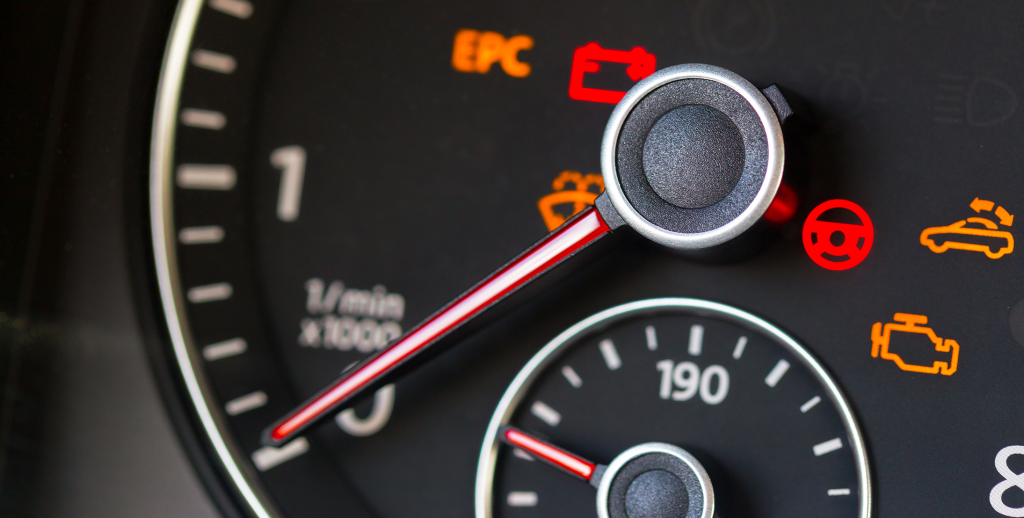
Do you know about that little amber light on your dashboard- the one shaped like a tiny engine? If you do, perhaps you also feel like it always seems to show up at the worst time. Right before a road trip, late at night, or when you are already running behind, it can spark dread in any car owner that has been holding on hoping their car was working just fine after all.
The check engine light is one of those things that can mean almost nothing, OR it can mean something so important you should stop driving right now!
So let’s slow this down and make it practical. What it is, why it turns on, what you should do in the first five minutes, and whether you actually need repairs right away or not.
What The Check Engine Light Actually Is
The check engine light is part of your car’s onboard diagnostics system. You may hear plenty of people say OBD II. That is basically your car’s built-in monitoring system that watches sensors, emissions equipment, and how the engine and transmission are running.
When something looks “off” compared to what the computer expects, it stores a diagnostic trouble code (a DTC) and may turn the check engine light on.
The light is not telling you what part to replace. It is telling you that the computer noticed a problem in a system. Sometimes it knows exactly what failed. Sometimes it only knows the result, like “running too lean,” and a bunch of things could cause that.
Also, the check engine light is mostly emissions-focused. Not always, but a lot of the time, the trigger is something that could increase emissions or damage the catalytic converter over time.
Solid Light Vs Flashing Light (This Matters A Lot)
This is the part people miss.
If it is solidly lit
A solid check engine light usually means: a fault was detected, but it is not currently severe enough that the computer thinks immediate damage is happening.
You can often drive for a bit. But you still want to take it seriously, because some “solid light” issues can become expensive if ignored.
If it is flashing
The car uses its check engine light to show that an active misfire is occurring or that a serious problem exists which can lead to quick damage of the catalytic converter. The situation requires urgent treatment because the warning light shows a hazardous condition. Drivers should decrease their speed while driving and they should not accelerate quickly and they should stop the vehicle if it starts to drive poorly.
The driver should choose between towing the vehicle or driving it to the nearest safe location. A lot of catalytic converter failures start with “I drove it for a week with a misfire.” That part hurts to write because it happens constantly.
Do You Have To Get Repairs Right Away?
Sometimes yes. Sometimes no. The correct answer depends on two things:
- How the car is behaving
- What code is stored
Here’s a simple way to think about it.
You should stop driving (or drive as little as possible) if:
- The check engine light is flashing
- The engine is shaking, stumbling, or you feel a strong loss of power
- The temperature gauge is climbing
- You smell fuel strongly, or burning plastic, or something, just feels wrong
- The car is overheating, or the oil pressure warning light is on (different light, but people confuse them)
- You hear loud knocking, metal tapping, or horrible new noises
In those cases, yes. It can be “repaired right away” because continuing to drive can turn a manageable problem into a major one.
You can usually drive for a short time if:
- The light is solid
- The car drives basically normally
- There is no overheating, no strange noises, no strong smells
But even then, you should plan to get the code scanned soon. Not in three months. Think days, not weeks, unless you confirm it is something genuinely minor.
The First Things To Do When The Light Comes On (In Order)
If your check engine light just came on, here is the calm checklist.
1. Notice whether it is flashing or solid
Do not skip this.
2. Pay attention to how it feels
Is it running rough? Is it sluggish? Does it stall at stops? Any weird sounds?
If the car suddenly drives differently, treat it as more urgent.
3. Check your gas cap (seriously)
An EVAP leak code will activate and the warning light will turn on because of a loose gas cap or a damaged gas cap or a missing gas cap. The user should tighten the device until it produces multiple clicking sounds. The damaged cap needs replacement because the seal shows cracks and the cap shows damage. The driver should operate the vehicle.
The light sometimes turns off after the vehicle completes multiple driving sessions. The system requires a scan tool to remove the warning because the problem will stop operating, but the issue remains.
4. Check fluid levels quickly
Oil and coolant levels, namely. You are not diagnosing the whole car here. You are just making sure you are not about to cook the engine.
5. Get the code scanned
You do not have to guess.
You can:
- Use a cheap OBD II scanner (they are inexpensive now)
- Use a Bluetooth dongle and an app
- Go to an auto parts store that offers free code reading (many do)
Just remember. A code scan gives you a starting point, not a full diagnosis.
Common Reasons The Check Engine Light Turns On (And How Urgent They Tend To Be)
Here are the usual suspects.
Loose gas cap or EVAP leak
Typical codes: P0440, P0442, P0455
Urgency: Usually low
EVAP leaks are emissions-related. The car might run perfectly. But big leaks can sometimes cause fueling issues, and ignoring them can make you fail an inspection.
Oxygen sensor or air fuel ratio sensor issue
Typical codes: P0130 to P0167 range, sometimes P0171/P0174 indirectly
Urgency: Medium
A bad sensor can lead to poor fuel economy and, over time, can stress the catalytic converter if the mixture is wrong.
Catalytic converter efficiency
Typical codes: P0420, P0430
Urgency: Medium to high, depending on the cause
The code does not always mean the converter is “dead.” It can be triggered by misfires, exhaust leaks, faulty sensors, or engine burning oil. But if you ignore it, you could be looking at a costly repair later.
Misfire (spark plugs, coils, injectors, vacuum leaks)
Typical codes: P0300, P0301 to P0308
Urgency: High if the car is actively misfiring, especially if flashing
Misfires are one of the fastest ways to wreck a catalytic converter. If the engine is shaking, do not keep driving like nothing is happening.
Mass airflow sensor (MAF) or intake issues
Typical codes: P0101, P0102, P0103
Urgency: Medium
Sometimes it is a dirty sensor. Sometimes it is an air leak. Sometimes, an air filter housing is not sealed. It can make the car run lean or rich.
Thermostat or coolant temp issues
Typical codes: P0128
Urgency: Medium
This one often means the engine is not warming up properly. It can reduce fuel economy and heater performance. Not usually an immediate breakdown issue, but don’t ignore it forever.
EGR valve, PCV system, vacuum leaks
Typical codes: varies
Urgency: Medium
Vacuum leaks can make the car run lean and cause drivability problems. PCV issues can lead to oil leaks and a rough idle.
Transmission-related codes (sometimes show as check engine)
Typical codes: manufacturer-specific, sometimes P0700
Urgency: Medium to high
If you notice harsh shifting, slipping, or delayed engagement, stop pushing it and get it checked.
“It Drives Fine, So It’s Probably Fine” Is Not Always True
This is where people get burned.
Some issues do not change how the car feels right away. EVAP leaks, early oxygen sensor issues, small vacuum leaks, and even some misfires that happen only under load. You can drive for weeks, thinking everything is okay.
Meanwhile, the car could be running too rich, dumping extra fuel, overheating the catalytic converter, and slowly creating a bigger repair.
So yes, you can often drive with a solid check engine light. But you should still treat it like a real warning, not a decoration.
What Not To Do
A few common mistakes.
Do not just disconnect the battery to “turn the light off”
It clears codes and resets, monitors. The problem is still there. Also, it can create other issues like radio resets, idle relearn problems, and you still will not pass an emissions test if the monitors are not ready.
Do not replace parts based on the code alone
A code is not a shopping list.
Example: P0420 does not automatically mean “buy a catalytic converter.” It means the system thinks the converter is not doing its job. The why is the real question.
Do not keep driving with a flashing light
This one is worth repeating. Flashing means active damage risk.
How Long Can You Drive With The Check Engine Light On?
People want a number. Like “200 miles” or “two weeks.” Realistically, it depends.
But here is a usable guideline:
- Flashing light or rough running: drive as little as possible, ideally not at all. Tow if needed.
- Solid light, drives normally: you can usually drive short term, but get it scanned within a day or two and schedule repairs based on what you find.
- Solid light plus other symptoms: treat it as urgent. Symptoms matter more than your calendar.
If you are about to do a long highway trip and the light comes on, I would not just hope for the best. Get the code scanned before you leave. Even a quick scan can save you from being stranded somewhere random.
Will A Check Engine Light Make You Fail Inspection?
Often, yes. The emission inspection process will fail vehicles which have activated check engine lights. The vehicle will continue to show a failure until all systems complete their monitoring process which requires multiple driving sessions.
When it is okay to wait a little
If you scan the codes and it is something like a small EVAP leak, the car drives fine, and you have no other warning lights, you might choose to schedule it when you can. That is reasonable.
Just do not let “I will deal with it later” turn into months. Because later has a way of becoming expensive.
The Bottom Line: Choose Maclane’s Automotive
The check engine light functions as a vehicle warning system because it identifies a problem that affects both emissions control and engine operation. A solid light usually indicates that you can drive for a short time, but you must obtain the code scan and establish your driving schedule.
A vehicle display shows an urgent situation through its flashing light, which requires immediate action to stop driving because it will result in fast vehicle damage, particularly to the catalytic converter system. If you want the simplest move, check the gas cap, check if it is flashing, and get the code read. Then decide with real information, not vibes.
FAQs
What is the difference between a solid check engine light and a flashing one?
A solid check engine light means a fault was detected, but it is not currently severe enough to cause immediate damage; you can usually drive for a bit, but you should address it soon. The flashing check engine light shows that an active misfire condition exists, which creates a serious threat to the catalytic converter because drivers must. The driver must slow down and avoid sudden acceleration while pulling over to the side of the road when required.
What should I do first when my check engine light turns on?
The first step involves checking whether the light displays a solid or flashing pattern. The driver needs to check their gas cap because a loose cap will activate the check engine light. The driver should examine their oil and coolant levels because this process helps them avoid engine overheating. The OBD II scanning process requires you to access an OBD II scanner from an auto parts store to create your initial diagnostic code base.
Can a loose gas cap cause the check engine light to come on?
Absolutely! The problem will resolve itself after the driver tightens the gas cap until it produces a clicking sound through multiple driving periods. The driver needs to replace their gas cap because it has become damaged to prevent this issue from occurring again.