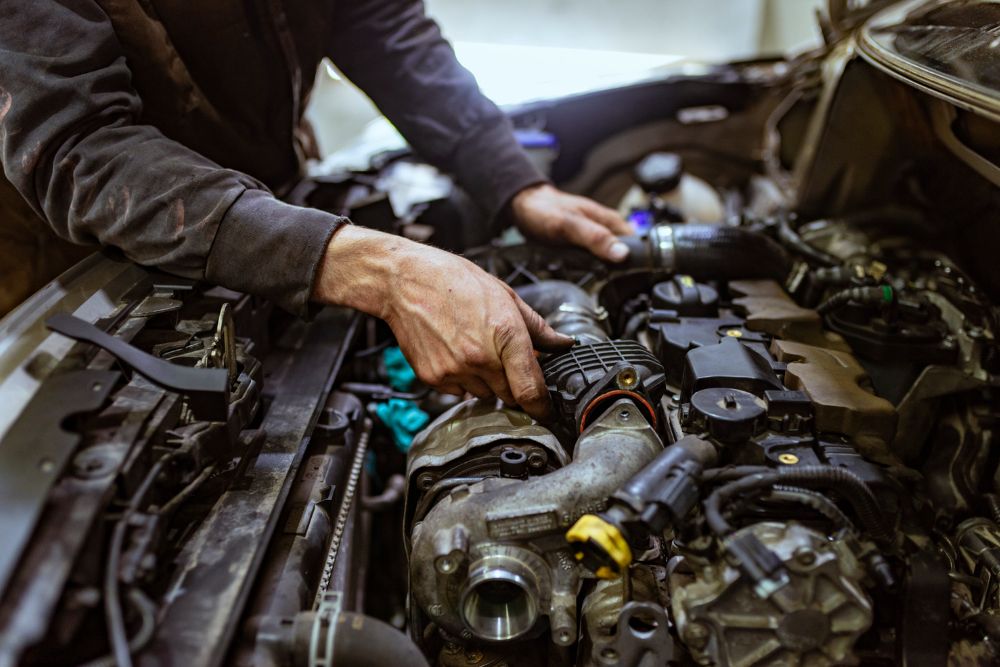
The timing belt in your car may seem like an ordinary part, but it’s one of the most vital pieces in maintaining your engine’s operation. We at Maclane’s Automotive have witnessed firsthand how a faulty timing belt can transform a typical day into a car nightmare!
Consider your timing belt to be the maestro of the orchestra under your hood– it ensures all the moving components of your engine are playing together in harmony. The rubber belt synchronizes both the camshaft and crankshaft so that your engine valves open and close at exactly the right times for each firing cycle of the cylinders.
If a timing belt deteriorates, your engine is deprived of this essential synchronization.
The consequence can be catastrophic:
Immediate Engine Shutdown: Your car will stop running instantly
Potential Valve Damage: Pistons and valves might collide
Extensive Engine Repairs: Could lead to costly repairs or engine replacement
The good news? You can avoid problems like these by performing regular maintenance. Just like you wouldn’t miss a doctor’s visit, your timing belt needs a check-up. The majority of producers recommend you replace your timing belt between 60,000 and 100,000 miles.
Continue reading to discover why being proactive with maintenance is more than just preventing breakdowns, it’s about safeguarding your investment and ensuring your safety on the road.
Understanding Timing Belt Failures
A timing belt that breaks is a disaster for your engine’s well-being. When a timing belt fails, it destroys the important timing between your engine’s pistons and valve train. When this timing is lost, it creates a potentially disastrous scenario where pistons and valves could crash into each other.
Here’s what happens inside your engine during a timing belt failure:
- Your pistons continue their up-and-down motion
- Valves lose their coordinated opening and closing sequence
- Without proper timing, valves can remain open when they should be closed
- Moving pistons can strike these open valves, causing them to bend
The aftermath of a timing belt failure often includes:
Immediate Engine Damage
- Bent valves requiring cylinder head removal
- Potential piston damage
- Compromised engine compression
Secondary Issues
- Damaged valve springs
- Worn camshaft bearings
- Broken valve guides
A failed tensioner can be equally destructive. A tensioner’s malfunction leads to the timing belt literally machining itself against the cover. This type of damage doesn’t happen instantly – you might notice unusual engine noises for a while before complete failure occurs.
That being said, catching timing belt issues early can save you from extensive engine repairs. Signs like unusual engine noises, rough running conditions, or visible belt wear should prompt immediate inspection by a qualified technician, like ours here at Maclane’s Automotive!
Diagnosing and Repairing a Broken Timing Belt
A broken timing belt often reveals itself through these distinct signs. Here’s what you should look for:
Signs of Tensioner Failure:
- Excessive movement in the tensioner mechanism
- Bearing failure or displacement
- Stretched or elongated tensioner spring
- Belt material debris inside the timing cover
Initial Inspection Steps:
- Remove timing belt covers
- Check tensioner components
- Examine belt condition
- Look for broken fasteners
- Inspect water pump seals
Required Replacement Parts:
- New timing belt kit (includes tensioner)
- Water pump
- Tensioner spring
- Necessary gaskets and seals
Pre-Repair Inspection Tips:
- Look for signs of improper previous installation
- Check for machining marks inside timing covers
- Verify timing marks on camshaft and crankshaft
- Inspect the coolant system for leaks
Correct installation is necessary for longevity. A misaligned tensioner will cause the belt to bind against the cover, and this will lead to premature failure. You may not always notice warning noises before belt failure, so routine checks are necessary.
At Maclane’s Automotive, we thoroughly inspect before repairing any timing belt to ensure that all the related components are in good health. Doing it this way guarantees no follow-up failures and that your engine will run reliably after the repair.
Choose Maclane’s Automotive Repair Today
Don’t wait until it’s too late! Keep your car lasting longer and maintain its performance by scheduling a timing belt inspection with Maclane’s Auto today. Our expert technicians are ready to provide thorough and reliable service to keep your car running smoothly. Call us now at (610) 590-9974 to book your appointment!
