Car air conditioning usually gives us a little warning before it quits completely. The tricky part is that those warnings do not always feel like “A/C problems” at first. Sometimes it starts as a weird noise, sometimes the cabin air just is not as cold as it used to be, and sometimes the system acts like it has a mind of its own.
In many cases, A/C compressor trouble will present itself in one of several typical manners. While some symptoms are similar to other potential causes, such as low A/C charge, plugged condenser coil, or electrical faults, there are certain symptoms which almost always indicate a faulty compressor which requires repair or replacement. Below is a rundown of some common symptoms, in our typical, layman’s terms.
Common Signs Of A Bad Compressor In A Car
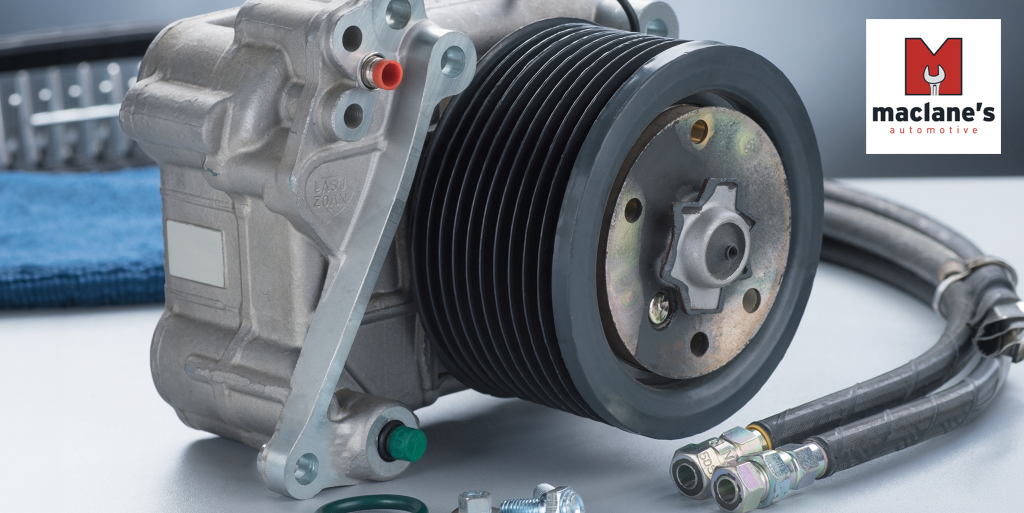
Your vehicle’s compressor essentially acts as the “pump” which keeps your refrigerant moving around your system properly. If the compressor is functioning normally, it should cycle on/off effectively, generate proper system pressures, and help your evaporator work correctly. When it is not healthy, we usually get performance issues, noise, or evidence the system is being contaminated internally.
Warm Air Or Weak Cooling That Comes And Goes
A very common complaint is “it only works intermittently.” This is a key symptom to watch for when considering A/C compressor malfunction. Your compressor might be working and engaging, but may not be able to consistently build and/or hold pressures in order to effectively cool your A/C system. More often than not, people think this means low refrigerant. And while that can certainly be true in many cases, it doesn’t account for others where the refrigerant levels are correct, yet your cooling is intermittent.
Here we would begin looking for unusual compressor clutch operation (if applicable), unusual pressures and even unusual compressor cycling. Intermittent cooling can often be worse when ambient temperature conditions are warm or hot, and can especially appear when sitting in traffic or other stop and go driving.
No Cold Air At All
If you’ve suddenly got nothing coming from your A/C but heat and ambient air, your compressor not engaging is typically high on the list of suspects. The problem could either lie within the compressor itself, or with the controls on the system such as the relay, pressure switch, wiring, and control module instructions. Here, it’s important to note that we don’t automatically assume you need a new A/C compressor.
We must first determine if the system is trying to engage your compressor and how the pressures are reacting. If your compressor is working and you have abnormal pressure, then your A/C compressor starts looking more suspicious.
Clicking, Chattering, Or Rapid Cycling
When your car’s air conditioning is clicking on and off rapidly, or cycling, the machine may feel like it wants to operate yet can’t. Lack of refrigerant can result in rapid cycling; however, restrictions, sensor errors, or an old compressor that can no longer handle the job can lead to similar effects.
Rapid cycling is one of those symptoms that forces an A/C technician to perform an entire A/C performance check in order to find out what’s happening inside the system. High-side/low-side pressures, vent temperature, fan status, and how the system behaves are some important aspects in the troubleshooting procedure.
Grinding, Squealing, Or Rattling Noises Under The Hood
When we hear noises from underneath our hood when turning on the AC, that usually means trouble with the compressor. Mechanical failure means internal parts like bearings start to malfunction and eventually wear out, and one of the most typical ways to spot such a problem is listening for strange noises. A squealing noise can be caused by the belt slipping under the weight of the compressor seizing.
In that case, further running of the A/C could not only exacerbate the existing issues but also damage the belt and cause the whole accessory drive system to fail. Changing noises between on and off A/C states usually require prompt action.
A/C Clutch Problems (On Certain Systems)
The compressor clutches are common for many models of cars; their malfunction can manifest itself in a similar fashion as other A/C-related problems.
Other reasons include a coil that isn’t performing well, an air gap that is out of specs, and worn-out clutch material. Other cases might involve a working clutch but a compressor with an internal failure. Testing is important in order to prevent unnecessary replacements and spending on the wrong component.
Refrigerant Leaks Around The Compressor
The compressor might have seals leaking, along with cracks in the housing and leaks at manifold connection points. When you see oily residue at the area of the compressor body or at the place where the A/C lines mount to the compressor, there is a possibility of a refrigerant leak. Oil moves with refrigerant, making it a good way to identify the leak.
A leak is dangerous when it lowers the refrigerant pressure below a certain level where the system might shut itself off in order to avoid further damage, or start running improperly, damaging itself even more. If a compressor has been running with low charge for a while, that can speed up failure.
Metal Debris Or “Black Death” Contamination
This is the one most people never see, but it is one of the biggest reasons A/C repairs can snowball. In case of internal compressor failure, metal pieces from inside the compressor could make their way through the A/C system. Contamination may cause a blockage in an expansion valve or an orifice tube. It will destroy the condenser as well as a new compressor installed without cleaning the system. This is why we inspect the compressor in search of debris to know how to properly approach this situation. Otherwise, you could pay for an additional repair.
What Causes A Compressor To Fail
Compressors usually fail from a mix of age, wear, and operating conditions. Low refrigerant from a slow leak can reduce lubrication returning to the compressor. Heat and high head pressures from poor airflow across the condenser can add stress. Electrical issues can keep a compressor from engaging properly or cause erratic operation. And of course, normal wear eventually catches up, especially on vehicles that run A/C year-round for defrost and humidity control.
Here are a few common contributors we see in the shop:
- Low refrigerant charge from leaks that were never addressed
- Poor condenser airflow (fans, debris, bent fins, or cooling system issues)
- Contamination from a previous failure or improper recharge practices
- Electrical faults affecting compressor control or clutch operation
How We Confirm A Bad Compressor (And Avoid Guesswork)
A/C work should not be a coin flip. When we diagnose compressor concerns, we focus on measurable results. We check system pressures, verify commands and engagement, inspect for leaks and oil residue, and look for signs of restriction or contamination. Also, it is important to consider how the customer describes his issue: such clues as “works when driving but stops at idling” or “works in the morning and stops at lunchtime.” When replacing the compressor, we also analyze the whole system and see if some components should be replaced along with it.
This includes installing a new receiver drier or accumulator, clearing up any restrictions, and thoroughly checking the system, cleaning it up, and vacuuming/recharging it according to specifications.
When To Repair Versus Replace
Some compressor-related issues are external or control-related, like a relay, wiring problem, or a clutch issue on specific designs. In those cases, repair may be enough. But if the compressor is leaking, noisy internally, seized, or failing to pump correctly, replacement is usually the smart move.
We also factor in system condition. If there is evidence of internal debris, we treat it like a system-level problem, not just a single-part swap. That approach costs more upfront than guessing, but it is usually what prevents repeat breakdowns.
Get A/C Compressor Help From Maclane’s Automotive
If your A/C is giving you cold air when you are driving but stops working as soon as you stop at the red light, or makes unusual sounds, or blows warm air in general, and if you see any signs of leaks or oily residue, it is better to address the problem sooner rather than later. We would be able to detect if it is your compressor causing issues and offer a proper solution for your particular vehicle’s A/C system.
In addition to addressing A/C compressor issues, we also offer a range of essential summer car care services.
Call Maclane’s Automotive in Downingtown, PA, at (610) 822-9956 to schedule an A/C inspection and get comfortable again.