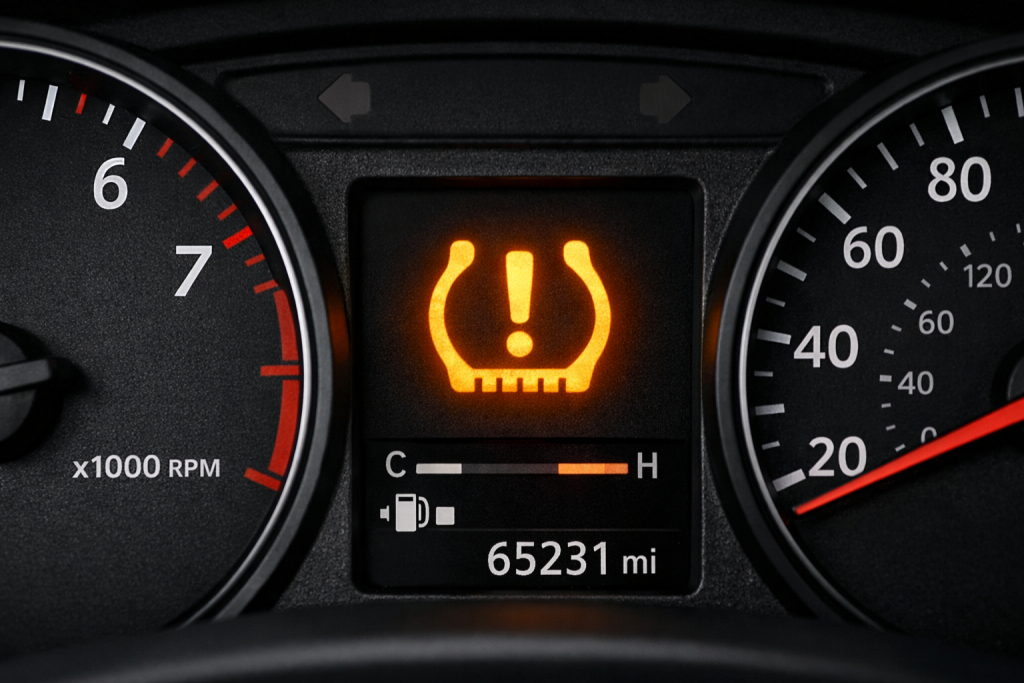
If you are experiencing a continuous tire pressure light alert, don’t be worried! Car and truck owners who visit us for assistance often have a hard time determining whether their tires have low pressure or their monitoring systems have developed faults. Tire pressure monitoring systems (TPMS) work effectively until they experience sensor failure which transforms easy tire alerts into annoying daily problems.
The guide shows you first which tire pressure sensors show warning signs of failure before explaining replacement costs and job duration details and what you should experience during the pre-repair period and post-repair period.
What A Tire Pressure Sensor Actually Does
TPMS systems which most vehicles built since 2000 use for tire pressure monitoring will show alerts once tire pressure drops below safe levels. Your vehicle will have one of two system types depending on its design.
Direct TPMS uses a battery-powered sensor mounted inside each wheel (typically on the valve stem) that reads pressure and transmits data to the vehicle. This is the most common setup today.
Indirect TPMS uses ABS system wheel speed data to estimate tire pressure. The system does not use wheel pressure sensors, but it can issue alerts when a tire’s rolling diameter changes.
People who use the term “tire pressure sensor replacement” refer to direct TPMS sensors which operate inside the tire. Direct TPMS sensors refer to the sensors which stop working because they reach their end of life or their batteries die or they break during tire service or they stop sending data to the vehicle.
Common Signs You Need A Tire Pressure Sensor Replacement
The failed TPMS sensor does not provide accurate tire pressure readings. The system fails to identify the actual tire conditions because it cannot obtain accurate readings from one or more installed tires. Here are the signs we see most often.
The TPMS Light Stays On Even After Filling Tires
This is the classic one. You check the tires, fill them to the pressure listed on the driver’s door jamb, and the light stays on. If the pressures are correct and the warning will not clear after driving for a bit, a sensor issue jumps to the top of the list.
The TPMS Light Comes On And Off Randomly
Intermittent warnings are usually caused by a weak sensor battery or a sensor that is losing communication. This often starts as a “sometimes” problem and turns into a constant light later.
One Tire Shows No Reading Or Dashes On The Display
Many newer vehicles can show individual tire pressures on the dash. If one tire reads “–” or does not show a pressure at all, the vehicle is telling you it cannot hear that sensor.
The Light Flashes First, Then Stays Solid
The TPMS system shows a complete system failure when the light on the system changes from flashing to steady. The vehicle shows low tire pressure through a constant light pattern while the tire pressure monitoring system shows problems through its flashing pattern.
You Recently Got New Tires Or Wheel Work Done
TPMS sensors need protection during tire changes and repairs and wheel swaps because they exist inside the tire. We check for three possible problems when the warning begins immediately after tire service which includes a cracked sensor body and a broken valve stem and an unrelearned vehicle sensor.
What Causes TPMS Sensors To Fail?
TPMS sensors are small, but they work in a harsh environment. Over time, they wear out just like any other component. The most common causes we see include:
- Sensor battery depletion (many last about 5 to 10 years, depending on the vehicle and sensor design)
- Corrosion on the valve stem or internal parts, especially in areas with road salt
- Physical damage during tire mounting or dismounting
- Leaks at the valve stem, grommet, or core
- Sensor communication issues after a wheel swap or aftermarket wheel installation
If your vehicle is around that 6 to 10 year mark and you are starting to see TPMS warnings, battery failure is a very realistic explanation.
Is It Safe To Drive With A Bad Tire Pressure Sensor?
Drivers can operate their vehicles with a damaged TPMS sensor when their tires maintain proper inflation levels, but this situation should not be disregarded for an extended period.
The sensor itself does not present any danger to the user. The system helps you monitor your tire pressure until it reaches an unsafe level to operate. A driver loses control of their vehicle when their tire pressure decreases because they experience performance issues. The proper tire pressure remains crucial for trucks that tow or haul because their loads generate heat and stress.
Drivers should manually measure tire pressure when their TPMS light activates, which requires immediate use of a quality gauge, followed by proper diagnosis to identify whether the issue stems from a tire leak or a sensor failure or both problems.
Tire Pressure Sensor Replacement Cost: What You Should Budget For
TPMS replacement costs depend on the vehicle and the sensor type and the choice between OEM sensors and high-quality programmable aftermarket sensors. The majority of your payment covers three distinct items which you will need to purchase separately:
- The sensor itself (price varies widely by make and model)
- Labor to remove the tire from the wheel, replace the sensor, and reinstall the tire
- Relearn or programming procedure so the vehicle recognizes the new sensor
- Potential add-ons like a TPMS service kit (new seals, grommet, washer, valve core, cap)
The average cost for drivers who need to replace sensors falls between $60 and $180, while some luxury and heavy-duty systems can exceed this range. The process of replacing multiple sensors becomes more efficient when multiple sensors need replacement because technicians can perform their work while tires undergo replacement.
Should You Replace One Sensor Or All Four?
Most situations require the replacement of one sensor when only one sensor experiences damage. The original sensors from the vehicle need replacement because their batteries will fail at the same time which occurs for all vehicles that exceed their expected lifespan.
When we inspect your vehicle, we look at the full picture: sensor age, mileage, corrosion, and whether you are already due for tires. If you are about to buy a new set of tires and your sensors are near end-of-life, it often makes sense to handle sensors at the same time so you are not paying for tire dismount twice.
What To Expect During The Replacement Process
Most TPMS sensor replacements are straightforward, but there are a few steps that matter for long-term reliability. Here is what the process typically looks like in our shop.
Diagnosis First, Not Guesswork
We start by confirming whether the problem is actually a sensor. A TPMS light can be triggered by low pressure, a slow leak, a damaged sensor, or a system communication problem. We check tire pressures, inspect for punctures or bead leaks, and scan the TPMS system to identify which wheel is not responding (or if the issue is elsewhere).
Tire Removal And Sensor Installation
For direct TPMS, the tire has to be partially removed from the wheel to access the sensor. The old sensor is removed, the mounting surface is cleaned as needed, and the new sensor is installed and torqued to spec. This part is important because overtightening can crack components and undertightening can cause leaks.
In many cases, we also recommend a TPMS service kit, which replaces the small sealing parts that keep everything airtight. These parts are inexpensive compared to the headache of chasing a slow leak later.
Relearn Or Programming
After the sensor is installed, the vehicle needs to recognize it. Some vehicles auto-learn after a drive cycle. Others require a specific relearn procedure using a scan tool. Certain sensors must be programmed with the correct protocol before installation.
This is also where DIY replacements can get frustrating. If a sensor is installed but not relearned correctly, the warning light stays on and it feels like nothing changed.
Final Pressure Check And Verification
We set pressures to the correct spec (not the number on the tire, but the number on the vehicle’s placard), verify the sensor readings match, and confirm the light clears after the relearn or drive cycle.
How Long Does It Take?
In many cases, replacing one TPMS sensor takes about 30 to 60 minutes, depending on wheel type, corrosion, and the relearn process. If multiple sensors are being replaced, or if we are also installing tires, the time can change.
If you are in a hurry, tell us when you schedule and we will set expectations up front.
Can You Replace A TPMS Sensor Yourself?
It is possible, but it is not always worth it. The main hurdles are:
- You need equipment to safely break the bead and remove the tire without damaging the wheel or tire
- You need the correct sensor for your exact year, make, model, and trim
- You often need a TPMS tool to relearn or program the sensor
- A small sealing mistake can cause a slow leak that wastes time and ruins tire pressure consistency
For many drivers, a professional replacement ends up saving money and stress, especially when you factor in the cost of tools and the risk of wheel or tire damage.
After Replacement: What Changes And What Should Not
After replacement, the TPMS warning should clear and your dash (if it displays pressures) should show a reading for the repaired wheel. A couple things are normal:
- Some vehicles take a short drive to update readings
- Weather swings can still trigger low pressure warnings in winter because air contracts in cold temperatures
- If your tires have an actual slow leak, the light may return even with a brand-new sensor
If the warning comes back quickly, it is a sign we need to recheck for a leak or confirm the relearn completed successfully.
A Quick Tip To Avoid TPMS Problems In The Future
TPMS issues often show up after tire service, not because the shop did anything wrong, but because sensors are exposed to stress and corrosion. The best prevention is simple: when you replace tires, consider servicing the sensor hardware or replacing aging sensors at the same time. The small decision enables you to stop experiencing the same issue multiple times.
Let’s Get Your TPMS Light Fixed The Right Way
The TPMS warning becomes easy for drivers to overlook until it starts displaying actual low tire pressure alerts. Our team can quickly diagnose your tire pressure light which stays on or flashes or shows incorrect readings to determine whether your vehicle needs a sensor replacement. Call (484) 321-8137 today to schedule your TPMS inspection or tire pressure sensor replacement with Maclane’s Automotive in Malvern, PA, and we will help you get back to a dashboard that is quiet and tires you can trust.
