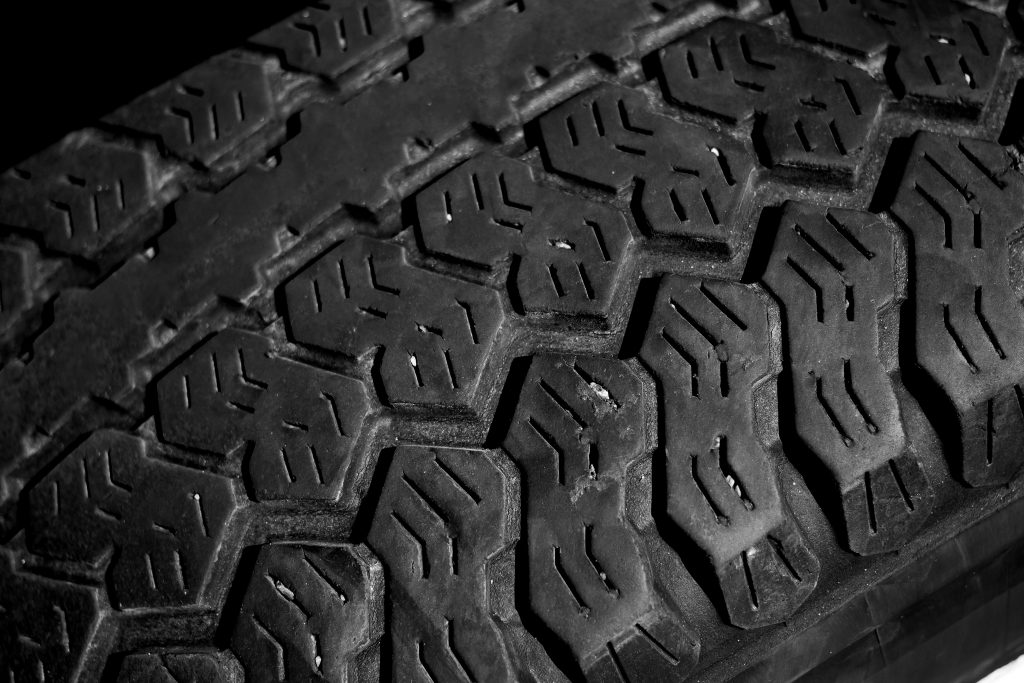
Sitting in a tire shop waiting area is not usually very comfortable. The coffee is most likely bad, and the TV is often too loud. Finally, the person at the counter just asked you what size your tires are.
You do not know what to say.
It is not because you are clueless; it is just that tire size looks like a code that someone made up to confuse people. For example, “P225/65R17 102T.”
What does that even mean?
Continue reading for a cheat sheet that I wish I had on my phone. It will tell you how to read tire size, what the letters and numbers mean, what matters when you are buying tires, and what you can safely ignore when you just want to get on the road.
Where To Find Your Tire Size Quickly
You have three places to check your tire size.
- On the sidewall of the tire.
Look for a string of letters and numbers on the sidewall. It is usually the noticeable thing on the sidewall.
For example P225/65R17 102T.
- Inside the driver’s door jamb sticker.
Open your driver’s door. Look for a sticker on the door frame. It lists the tire size that your car came with, plus the correct tire pressure.
This sticker is very useful because it tells you what the vehicle manufacturer intended, not what the last owner decided.
- In the owner’s manual.
It is not as quick, but it is there.
If you are in a tire shop now, just go outside and look at the sidewall of your tire. Don’t be embarrassed, they do this all day!
The Tire Size Code That Almost Everyone Sees
The common format looks like this: P225/65R17 102T.
Let us break it down piece by piece. Because once you learn it, it is honestly not that hard.
- The first letter or no letter tells you the type of tire.
You might see:
P, which means Passenger, and it is common on cars, SUVs, and crossovers.
LT, which means Light Truck, is used for pickups, heavy-duty use, towing, and work trucks.
ST, which means Special Trailer, and it is for trailers, not for cars.
T, which means Temporary spare. It is the small spare tire.
Sometimes you will see no letter at all, like 225/65R17. That is usually a sizing format, and it is often seen on some tires. The vehicle needs its tires to be replaced with tires that match the door sticker P tire designation, except for situations when you know the reason for selecting different tires. Drivers of cars and SUVs need to use P-metric tires whenever they operate their vehicles without towing heavy loads or carrying any items in their vehicles.
- The first number tells you the width of the tire in millimeters.
In P225/65R17, the 225 is the width of the tire.
That means the tire is 225 mm wide from sidewall to sidewall at its intended rim width.
A bigger number means a tire.
A wider tire can mean grip sometimes, but it can also mean more road noise, more risk of hydroplaning, and sometimes worse fuel economy. So do not just go for a tire because it sounds cooler.
- The second number tells you the aspect ratio, which is the height of the sidewall.
In P225/65R17, the 65 is the aspect ratio.
People find this one confusing because it represents a percentage instead of serving as a measurement. The aspect ratio is the height of the sidewall as a percentage of the width of the tire. The sidewall height measures 65% of 225 mm according to a 225 mm width and a 65 aspect ratio. A higher aspect ratio, which ranges from 70 to 75, provides drivers with a softer ride through its sidewall design. The 40 and 35 aspect ratios lead to shorter sidewalls, which create a more responsive driving experience but result in a rougher driving experience.
The design makes it simple to damage a wheel by hitting the curb. The aspect ratio should stay the same when you replace tires without changing wheel size. The car’s speedometer, ride quality, and safety systems all assume an overall tire diameter.
- The letter after the slash tells you the construction type of the tire, and it is always R.
In P225/65R17, the R means radial construction.
Most modern tires are radial; if you see R, that is normal. If you do not see R, or you see something, that is when you slow down and make sure you are matching what your vehicle needs.
- The last big number tells you the diameter of the wheel in inches.
The 17 in P225/65R17 indicates the wheel diameter measurement which uses inches as its unit of measurement. The tire requires a 17-inch wheel for proper installation. A 17-inch tire requires a specific tire size which you need to use because this situation needs one specific requirement. Yes, people try. The shop technician requires you to confirm whether you are referring to 17-inch tires when you stand in front of him and he asks you this question.
What About The Extra Numbers And Letters After The Size?
After the size, you will usually see something like 102T, 95H, or 110S.
This part matters, not for everyday conversation about tires, but it matters when you are buying.
The load index is a number that represents how much weight each tire can carry at its rated pressure.
It is not 102 pounds or anything intuitive like that; it maps to a chart.
You do not need to memorize the chart; you just need to follow one rule: do not buy tires with a lower load index than what your vehicle requires.
Same or higher is generally fine, assuming the tire fits and is appropriate for your vehicle.
If your door jamb sticker calls for a load index, match it; if it does not list it clearly, most tire shops can look up the correct spec instantly.
The speed rating, which is indicated by a letter, indicates the maximum speed capability of the tire under certain conditions.
Common ones are:
S, which is up to 112 mph.
T, which is up to 118 mph.
H, which is up to 130 mph.
V, which is up to 149 mph.
W, which is up to 168 mph.
Y, which is up to 186 mph.
You might be thinking, “I never drive 130 mph.” Speed rating can also correlate with handling feel, heat resistance, and sometimes how the tire is built.
Same rule as load index: do not go lower than what the car calls for unless you know the tradeoffs.
If the vehicle came with H-rated tires and you drop to T, you might change handling and performance. Sometimes it is acceptable in winter tires, depending on the vehicle and local rules, sometimes it is not. Ask before you downgrade.
The “plus sizing” territory requires you to maintain original tire diameter measurements because this practice ensures your speedometer functions correctly and your safety systems operate as intended. This location requires you to use an actual tire size calculator or seek assistance from a qualified tire shop.
Your system will experience issues when you make slight measurement errors because these inaccuracies lead to problems, which include rubbing, abnormal ABS operations, and incorrect speedometer readings. To appear composed and organized at the counter, you need to speak these words.
Read your tire size off the sidewall; it will say something like “P225/65R17.”
Then add the load and speed if you can see it, for example, “And it’s 102T.”
If you are not sure, just say “I want the replacement size per the door sticker.”
That line can solve a lot of confusion fast.
There are some mistakes people make when it comes to tire size that can waste time and money.
People need to provide both width and aspect ratio measurements for their 17-inch tires because the 17-inch wheel diameter already establishes the required wheel diameter. The 10 mm difference between a 215 tire and a 225 tire creates various challenges because these two tire sizes differ by exactly 10 mm. The system experiences problems because it sometimes rubs against surfaces while displaying altered performance characteristics.
Your tire size requires you to select an exact size match for your previous tires. The load index on SUVs and trucks remains essential information because these vehicles reach heavy loads when you add passengers, cargo, and hitch carrier equipment.
You want to make sure you have the load rating.
Buying “whatever fits” online is not an idea because a tire can fit on your wheel but still be the wrong spec for your vehicle, and shops see this all the time.
Choose Maclane’s Automotive
To sum it up, and to help you get out of that waiting room much sooner, use the above strategies to know that tire size is not that complicated. It is basically:
The width, which is 225
The sidewall percent, which is 65
The construction, which is R,
The wheel diameter, which is 17
Plus the load index and speed rating, which is 102T.
If you remember nothing else, just remember to read the size off the tire sidewall and then match the door jamb sticker if you are not sure.
That is it, now you can go get your keys! For any other tire trouble concerns, choose our pros here at Maclane’s Automotive in Downingtown, PA, and give us a call today at (610) 981-2183.
FAQs
Where can I quickly find my tire size on my vehicle?
You can find your tire size in three places:
- The tire size information is present on the tire sidewall through a combination of letters and numbers, which show the tire size according to the standard P225/65R17 measurement system.
- Drivers can find the recommended tire size and tire pressure specifications for their vehicle inside the door through the driver’s door jamb sticker.
- The owner’s manual contains the tire size information, but it takes more time to find it through the manual than it does to check the tire or door jamb.
Why is it important to match my vehicle’s recommended tire type and size?
The vehicle manufacturers mandate their specified tires because correct tire size and type selection is essential for safe vehicle operation, which impacts vehicle handling, speedometer functioning, passenger comfort, and safety systems.
What does the load index number on a tire mean?
The load index number shows the tire’s weight capacity for operation at the designated tire pressure. For example, 102T uses 102 as its index number.
The system uses a chart to measure weight by providing direct weight measurements.
When buying tires, you should never choose tires with a lower load index than what your vehicle requires. Exceed it for safety.
Can I use tires with a wheel diameter larger than my current wheels?
You cannot use wheel diameters for interchange purposes. A 17-inch wheel tire cannot be installed on a 16-inch wheel. You need to use a wheel diameter that matches your actual wheel diameter for correct installation and safety purposes.
What do letters at the start of a tire size code indicate?
The first letter or letters tell you what type of tire it is, ‘P’ is for tires on passenger vehicles, like cars and SUVs ‘LT’ is for Light Truck tires, which are used on pickups or for heavy-duty work with the truck ‘ST’ is for Special Trailer tires, which are only meant to be used on trailers, ‘T’ is for tires and if there is no letter it usually means the tire size is, in metric you should do what the vehicle manufacturer recommends about the tire size.