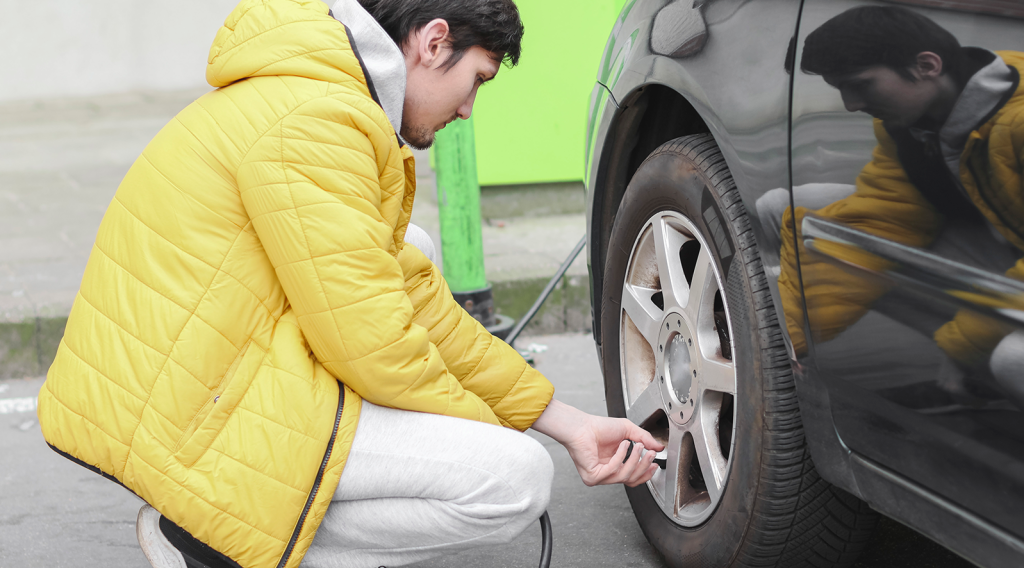
Adding air is getting old. You’ve done it twice, maybe more, and now the same tire is low again. It might still be repairable, but there’s a question to answer before anyone reaches for another plug: is the tire itself leaking?
At the Horseshoe Pike branch of Maclane’s Automotive, we want to check the whole assembly. Tire, valve, wheel, and the seal between them. Air only needs one way out. Repairing a puncture won’t help much if it’s also escaping somewhere else.
Cold Weather Or An Actual Leak?
Start with pressures taken cold, before driving warms the tires. The number you want is on the vehicle’s tire-information placard, usually in the driver’s door opening. The sidewall number is a maximum, not your everyday setting. A drop in outdoor temperature can bring all the pressures down. One tire repeatedly dropping below the others is different. Keep a note of how much you add and when; that’s useful information to bring along.
There May Be Nothing Wrong With The Tread
Have a look at the little valve where you add air. There are seals there that can leak, including ones associated with a pressure sensor. The stem itself can deteriorate. Over at the rim, the tire’s bead has to seal all the way around, and corrosion can interfere with that fit. So we don’t stop looking just because there isn’t a nail sticking out. A pothole-damaged wheel belongs on the list, too. Mention any hard hit you remember, even if it seemed harmless at the time.
What Happened At The First Repair?
If you know, tell us. Was the tire taken off the wheel, or was a plug pushed in from outside? We need an inside inspection to assess a puncture, including damage that driving low may have caused. For an eligible injury, the repair has to fill the channel and seal the inner liner using an approved method. An outside-only plug skips that inspection and isn’t a proper permanent repair. Of course, there might simply be a second puncture. The old repair doesn’t get the blame automatically.
Some Damage Ends The Repair Conversation
We can’t patch a sidewall injury or a damaged shoulder back into a safe tire. A bulge is another stop sign. For an ordinary passenger-tire puncture, a hole bigger than a quarter inch is generally too large; the tire maker’s restrictions still apply even below that size. Overlapping repairs, the remaining tread, and internal condition matter as well. Plenty of tread doesn’t make up for a damaged casing. That can be disappointing when you were hoping for a cheap fix, but another patch isn’t always an option.
Please Do Not Drive It In Flat
If it won’t hold the specified pressure, use a suitable spare within its stated limits or call for roadside assistance. A short drive on a nearly flat tire can finish off one that might otherwise have been repairable. And leave any nail you find where it is for now. Pulling it out may let the air escape much faster. Bubbles from a soapy-water check can help locate a leak, but they can’t tell you what happened inside the tire. That still needs a look.
Enough Trips To The Air Pump
Call Maclane’s Automotive at (610) 590-8669 to arrange an inspection at our Horseshoe Pike branch. Tell us which tire keeps dropping, whether it has been repaired, and whether it was driven flat. We’ll help you get an answer about tire repair, a valve or wheel problem, or replacement. You shouldn’t have to keep a weekly appointment with the air hose.
