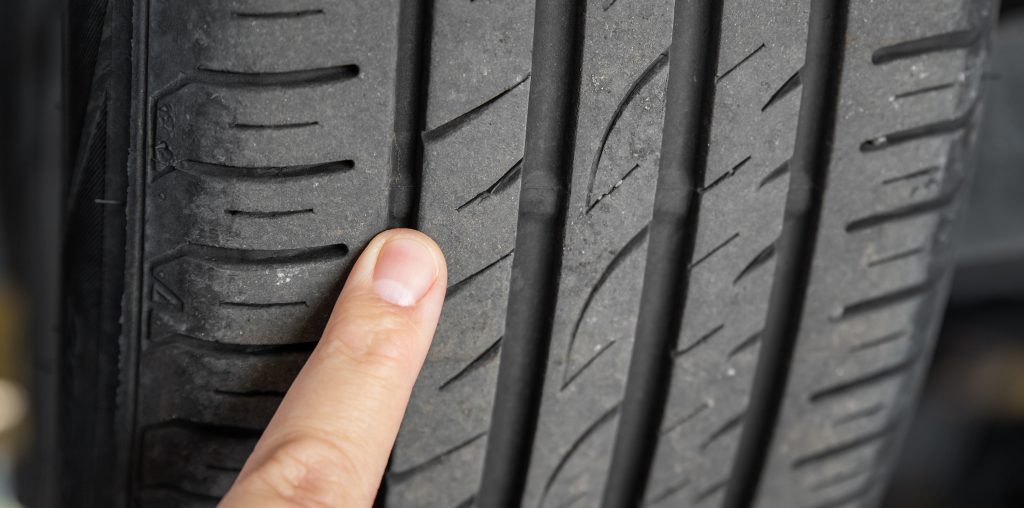
You notice the front tires looking worse than the back ones and think, probably time for a rotation. That may be right. But before moving them around, we’d want to know whether the fronts have simply done more work or whether something is chewing up part of the trea
There’s an important difference between those two situations. At the Horseshoe Pike branch of Maclane’s Automotive, we want the service to address what the tires need, not just move the worn patch somewhere less noticeable.
The Rubber Won’t Grow Back
Once an edge is worn away, it stays worn away. Changing tire rotation positions doesn’t remove wear. Rotation actually makes tire work position even. Rotation only manages minor differences in tire wear from position to position and can only be used if safety requirements and setup parameters are met.
Take a front pair with less tread overall than the rear pair, but fairly even wear across each tire. That’s quite different from one tire with a nearly bald inside shoulder and plenty left in the middle. We’d be asking more questions about that second tire.
What Does The Worn Area Look Like?
A center strip wearing faster can send us toward a pressure check. Both shoulders wearing can suggest low pressure. An edge or a feathered feel can raise alignment questions, while dips around the tread may bring balance or suspension condition into the investigation. There’s overlap here. A pattern is a starting point, not enough to name the failed part.
Maybe you caught a pothole a while back and forgot about it because the car still seemed fine. Mention it. Same goes for a new shake or a steering wheel that isn’t straight anymore. A car doesn’t have to pull noticeably to have an alignment issue.
Moving The Worst Tires Isn’t Always Sensible
We’d check the tire condition and permitted rotation pattern before suggesting a swap. Directional tread, different front and rear sizes, and wheel fitment all affect the options. There is also wet-road stability to consider when tread depths are substantially different. Moving the poorer pair to the rear simply because they started on the front isn’t a sound rule.
Visible cords or a bulge move this out of routine-maintenance territory. Don’t drive on a tire in that condition. Call about safe transport instead of hoping a different wheel position will buy another few weeks.
Find Out Why Before Buying More Rubber
If a worn part is letting the wheel move out of position, that has to be dealt with. Otherwise, the same trouble can spoil a replacement tire. Setting the alignment won’t make a loose suspension component hold still.
Pressure deserves attention along the way. Use the vehicle’s specified cold pressures, not the maximum figure molded into the tire. After the cause is corrected, we still have the existing tire to evaluate. Some can stay in service; some cannot. Noise from an established wear pattern may remain even after the original fault is fixed.
Schedule Around The Tire Setup
For ongoing rotations, use the tire and vehicle manufacturer’s guidance. Pairing every rotation with an oil change works only if the intervals actually line up, and some setups don’t permit a normal rotation at all.
Give the Horseshoe Pike branch of Maclane’s Automotive a call at (610) 590-8669 if the tread looks uneven or the car has started to shake. We’ll discuss a tire inspection and what you’ve noticed before treating a rotation as the whole answer. It is worth finding out why the wear started, especially before paying for another set.
