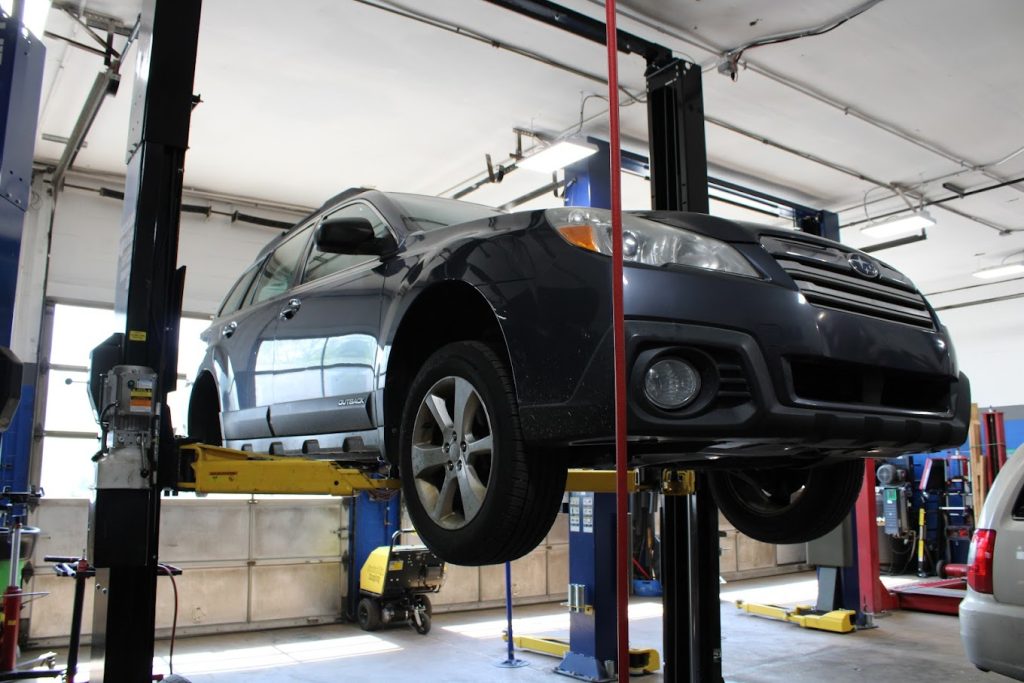
If your car keeps pulling left or right while you’re trying to drive straight, it can be more than just annoying. The truth is, it makes the steering feel “off,” it can wear out parts faster than normal, and it can turn a simple commute into something you have to constantly fight.
In a lot of cases, that pulls points back to the front end: your alignment, your tires, or your suspension components. When the front end isn’t tracking straight, your vehicle may feel unstable, your stopping distance can change, and your tires can wear down in weird patterns that cost you money sooner than expected. You might also notice your fuel economy slipping because the car is working harder just to roll down the road.
I want to walk you through the most common front-end alignment culprits so you can understand what’s happening, what to check first, and when it’s time to get a professional involved before a small issue turns into a big repair.
Understanding Front-End Alignment
Front-end alignment (often called a “wheel alignment”) is the process of setting your front wheels to the proper angles so the vehicle tracks straight, steers predictably, and the tires contact the road evenly. A shop measures and adjusts alignment angles like toe, camber, and caster to match factory specifications.
When the alignment is faulty, your car has to “scrub” a little when moving, and this can be noticed in a few common ways. Steering pull is the most obvious symptom: for a moment, you let go of the steering wheel on a level road, and the vehicle goes to one side. Another typical symptom is uneven tire wear, for example, one tire’s inside edge wears out a lot quicker than the rest. Some drivers also notice that the steering wheel is not in the center position when the car is going straight, or they experience a vibration that was not there before.
Alignment is not only about comfort. The right alignment increases the life of tires, strengthens stability, aids braking and handling, and may even improve your fuel efficiency because the vehicle rolls with lower resistance.
Main Reasons for Bad Front-End Alignment
1) Wrong Air Pressure in Tires
One of the easiest reasons for a pull is also one of the most neglected: tire pressure. If one tire on the front is not inflated enough, that side will have more rolling resistance and will pull the car off the intended path. Over-inflating can also alter the contact of the tire with the road, making the steering feel nervous or less certain.
Improper pressure doesn’t just affect the way the car drives today. It can lead to uneven wear that slowly “bakes in” the pulling sensation over time. For example, if you drive for weeks with a low tire, the tread can wear into a pattern that still pulls even after you finally inflate it correctly.
A quick habit that saves a lot of headaches is checking tire pressure regularly (including the spare if you rely on it) and doing it when the tires are cold. Moreover, a number on the tire sidewall should not be considered the safest option. The sticker located inside the driver’s door jamb that states the recommended PSI is often the best reference.
2) Potholes and Poor Road Conditions
If you have ever driven over a pothole and instantly thought, “That doesn’t sound good,” you are not imagining things. Potholes, bumpy roads, and even sharp curb hits can cause the alignment to go out of specification by shocking steering and suspension parts. At times, the change is gradual at first, then tire wear and handling issues develop over the next few weeks.
When the road impact is a reason, you might see that the steering angle is not perfect anymore, the car jumps a bit over bumps, or it is less stable at high speeds. In very serious situations, a large impact can lead to the damage of a wheel, tie rod, control arm, or even contribute to issues with shocks and struts.
I always suggest following a very simple rule: if you hit something so hard that it makes you cringe, do not only watch for changes in steering feel and tire wear, but also consider having the front end checked. Detecting a bent or loosened part at the early stage can stop the sequence of wear from happening.
3) Worn Shocks and Struts
Shocks and struts don’t “set” alignment the same way tie rods do, but they play a huge role in keeping the tire stable and planted. When shocks or struts wear out, the front end can bounce more, the tire can lose consistent contact with the road, and suspension geometry can shift under load in ways that feel like alignment trouble.
Common signs include a bouncy ride, nose-diving when braking, extra body roll in turns, or a general “floating” feeling at speed. You might see tire wear that is not uniform, and especially the cupping or scalloping wear that looks like a series of dips surrounding the tread.
The main problem with the shock absorbers and struts that are out of order is that they do not usually break down completely at once. Their performance drops gradually, and thus drivers become accustomed to the slow decline and don’t know how much handling has been lost until something really wrong happens. Changing worn parts at the right time helps in regaining the ride control, preserving the tires, and giving an alignment a better chance of staying put.
4) Delay in Vehicle Maintenance
Alignment issues are usually detectable when the maintenance has not been done for too long. Tires are becoming bald, suspension bushings are softening or cracking, ball joints are acquiring play, and steering components are becoming loose. Then one day you experience the pull, but the actual story has been going on for months earlier.
Periodic inspections are very important because a technician can detect early wear before it gets very expensive. A tiny bit of slack in a tie rod end or a worn bushing might not feel very severe immediately, but it can cause your alignment to change while driving. And if you pay for an alignment without fixing worn parts first, you might end up paying twice because the vehicle can’t hold the adjustments.
If you want a simple way to think about it, it’s this: alignment is a “setting,” but the suspension and steering parts are what keep that setting locked in place.
5) Vehicle Collisions (Even Minor Ones)
A collision doesn’t have to look severe to throw off the front end. A low-speed impact can still manage to cause considerable changes as it can result in either misalignment or even damage to the steering and wheel Positioning control. Sometimes the issue is evident immediately, while at other times it only becomes noticeable through uneven tire wear, pulling, or a crooked steering wheel over time.
The drawback of driving for an extended period after an accident is compounded by the fact that you may end up exhausting your tires rapidly or applying more strain to the already slightly bent or misaligned components. In case there’s been a collision involving the front end, wheels, suspension area, or curb impact during the event, it’s advisable to have the vehicle assessed by a professional workshop that can perform a thorough alignment measurement and hidden damage inspection.
Detecting the Right Time to Visit the Mechanic for Alignment Problems
There are some very quick checks that you can easily perform on your own, such as checking the tire pressure and inspecting the tire tread for uneven wear. However, if the car continues to pull after you have corrected the tire pressure, or if the steering feels erratic, it is time for a professional diagnosis.
If you notice any of the below-mentioned symptoms, I would strongly suggest that you schedule an inspection:
The car constantly drifts to the left or right, even when on a straight and level road
The steering wheel gives a vibration, especially when the car speeds up
The steering wheel is not facing straight while the car is running straight
You notice tires are wearing out unevenly (inside edge, outside edge, or patchy wear)
The car rides unstably, bouncily, or “loose” over bumps
A mechanic you trust can take alignment readings and, equally important, can also check the suspension and steering parts that might be causing the alignment issue in the first place.
Fixing Front-End Alignment Problems
The standard way to fix front-end alignment is to do the alignment service first, where the technician will measure the angles of your vehicle and then make whatever adjustments are necessary to bring them back to specification. If the rest of the system is still good, that might be all you need to do.
But in case of worn or broken parts, the repair process usually includes first replacing the problem pieces (like tie rods, ball joints, control arms, or shocks/struts) and then doing the alignment. The order is very important because any adjustments made during the alignment will be lost if the parts that are supposed to be aligned are allowed to move.
The charges will largely depend on the severity of the problem. The alignment process is usually a simple task, but the cost increases when parts, labor, and time spent in diagnosing the damage caused by the collision or the persistence of wear are all taken into account. The upside is that fixing the issue early often protects your tires and prevents additional suspension wear, which is where expenses can really climb.
Why Regular Maintenance Matters – A Manufacturer’s Perspective
We’ve seen how much vehicle performance depends on the quality and consistency of the parts that make up a system. Alignment and suspension reliability aren’t just about a single adjustment at a shop; they depend on components that are built accurately, hold up under load, and fit the way they’re supposed to.
When drivers combine high-quality parts with regular checks and proper maintenance, the outcome is pretty straightforward: better handling, longer tires, and fewer unpleasant surprises.
Choose Maclane’s Automotive
If your vehicle is pulling to the left or right, do not wait for it to “get worse” before you take action! Alignment problems can impair safety, handling, tire life, and fuel costs, and they often indicate a problem that can be fixed and is cheaper to address early. If you need expert guidance on quality automotive components designed for lifetime performance, just give us at Maclane’s Automotive a call at (610) 590-9974 and let’s go over your project and how we can assist.
