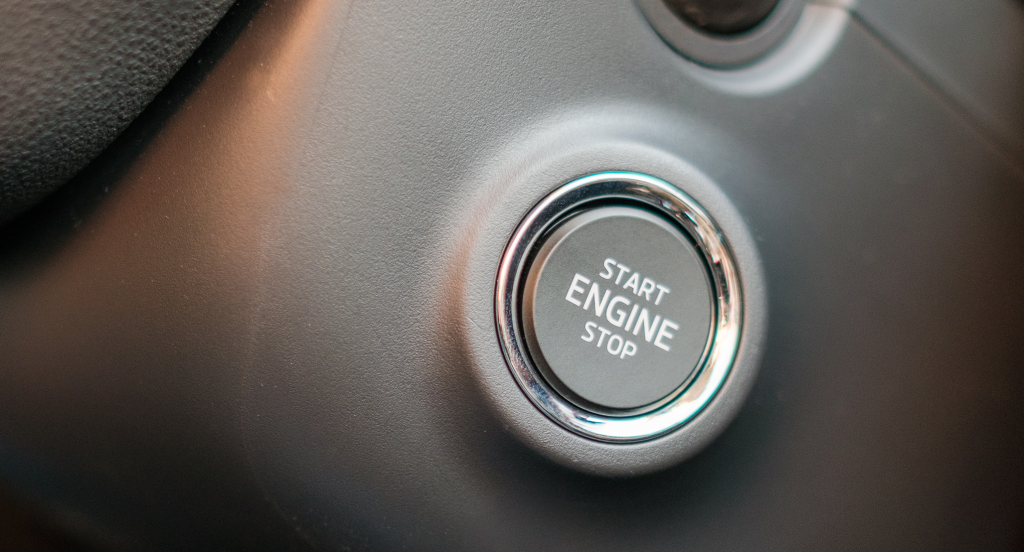
If you have driven a newer car in the last decade, you have probably experienced the following scenario: you roll up to a red light, the engine shuts off, and for a second it feels like something broke. Then you lift your foot, the engine fires back up, and you keep going.
That is automatic auto stop-start (sometimes called start-stop). And after years of drivers complaining about it, the obvious question is: is it finally going away?
One of the key details that get lost in the headlines is this: automatic stop-start was never formally mandated as a required feature of U.S. vehicles. What happened instead was that regulations and the related credit system made it attractive.
Let’s unpack what is actually happening, what it changes, and what it probably does not.
Why Stop-Start Exists In The First Place
Stop-start solves a simple problem: idling wastes fuel.
The engine of your car consumes fuel while the vehicle remains stationary because it needs to perform absolutely none of its functions. The driver should turn off the engine when the vehicle stops and restart it when he wants to drive again. The stop-start technology helps different vehicles achieve fuel savings which range between 5% and 20% depending on their driving patterns and their time spent in idle mode.
The amount exceeds the limits of standard estimation techniques. Automakers need to enhance their fleet-wide fuel efficiency and emissions performance because every slight percentage reduction across hundreds of thousands of vehicles has significant value.
But stop-start did not spread because drivers demanded it. It spread because it was an efficient compliance tool.
Was Stop-start Ever “Required”?
Not exactly.
One of the key details that gets lost in headlines is this: automatic stop-start was never formally mandated as a required feature on U.S. vehicles. What happened instead was that regulations and the related credit system made it attractive.
In other words, stop-start became a way for automakers to earn credits or improve their compliance math under corporate emissions and fuel economy frameworks. If you are designing a vehicle and you can get measurable efficiency gains with a relatively contained hardware and software package, it becomes an obvious lever to pull.
So when the current EPA says it is abandoning support for stop-start systems, it is not “banning” the feature. It is signaling that the agency wants to stop propping up that incentive structure and use the moment to build support for broader deregulation.
That distinction matters, because incentives influence product planning, but they do not instantly rewrite what is already on dealer lots.
What The Current EPA Is Trying To Do
The Trump administration has framed this in a familiar way: deregulation equals cheaper cars and more consumer choice.
Trump’s public pitch is simple and politically effective: regulations make vehicles expensive and load them with features people do not want. Stop-start is an easy example because it is widely disliked. If you want to tell a story about “unwanted features,” stop-start is right there every time you stop at a red light.
The EPA’s argument goes further. It has claimed that Obama-era regulations imposed massive costs, exceeded the agency’s authority, and harmed “economic mobility.” One number being thrown around is $1.3 trillion in costs from the prior regulatory regime.
The new EPA plans to fix emissions standards which it believes cannot be achieved and intends to transfer decisions about regulations to Congress. The Trump EPA plans to eliminate the Endangerment Finding which serves as a vital legal ruling that allows regulation of greenhouse gases because they threaten public health and welfare under the Clean Air Act.
The connection between stop-start and the rest of the content becomes evident through the explanation of stop-start which appears in the title. The feature is a symbol. The bigger fight is about the scope of federal authority over emissions and the direction of the U.S. vehicle fleet.

Why Drivers Hate It (And Why The Hate Is Not Totally Irrational)
Stop-start is unpopular for a few practical reasons:
- It can feel jarring, especially in earlier implementations where restart timing was clunky.
- It changes how the car “feels” in traffic, particularly in creeping stop-and-go conditions.
- It raises reliability concerns, even when the system is engineered for it.
The argument about modern stop-start systems needs to be unbiased because current systems use better starter systems with advanced engine controls and batteries which can handle repeated use.
The idea that something can be obtained without payment actually exists as a fundamental truth. Stop-start increases component wear while creating greater demands on the electrical system especially for the battery. Many stop-start vehicles use enhanced flooded batteries or AGM batteries, which can be more expensive to replace than older conventional batteries. Some owners also notice that when a battery begins to weaken, stop-start can be one of the first systems to behave inconsistently.
To be clear, this does not mean stop-start “ruins engines.” It means it adds complexity and cycling, which can raise maintenance sensitivity over time.
The good news is that the tech has improved. Many newer systems restart more smoothly, and many vehicles let you temporarily disable stop-start with a button. The bad news is that “temporary” is doing a lot of work there. In many cars, the system re-enables on the next key cycle, which is exactly what frustrates people.
If The EPA Backs Off, Will Automakers Drop It?
Some might. Many probably will not, at least not quickly.
Automakers design and certify vehicles on long lead times. They also plan for risk, and the biggest risk is that U.S. policy can swing hard after elections. Even industry groups have warned that rules can be undone by the next administration, and automakers have learned to be cautious about making big product changes based on political winds that may reverse before a model cycle ends.
That is one reason you are seeing “mixed” signals. Even if the current EPA weakens the incentives for stop-start, a future administration could restore stricter standards, change test procedures, or revive credit structures that make stop-start attractive again.
From an automaker’s perspective, removing stop-start is not just a “delete feature” checkbox. It can affect fuel economy ratings, compliance margins, and marketing claims. If a company removes stop-start across a lineup and the regulatory environment tightens again, it may have to claw back efficiency elsewhere, often at higher cost.
So even if stop-start becomes less politically favored, the conservative business move may be to keep it in place, especially on high-volume vehicles.
The Real Wild Card: The Broader Emissions Framework
The U.S. has gone through multiple cycles where one administration sets aggressive emissions targets, the next tries to unwind them, and then the next tries to re-tighten them. This pattern creates a planning mess. The executive branch undoes the predecessor’s rules, and industry ends up with uncertainty, followed by lobbying, followed by some form of transition aid, subsidies, or policy relief.
You can see why the auto industry keeps repeating the same themes: “consumer choice,” “competitiveness,” and “a realistic path to emissions reduction.”
Automakers currently face challenges because EV demand across different markets remains unpredictable. Some buyers want EVs, some do not, and charging infrastructure and pricing still shape adoption. The market value of internal combustion vehicles increases when manufacturers find ways to reduce production costs and make vehicles easier to operate and maintain.
That would argue for dropping stop-start, but compliance math argues the opposite.
If the regulatory direction remains uncertain, stop-start is a relatively cheap way to capture efficiency gains on gas vehicles without redesigning the entire powertrain. That would argue for keeping it.
Could Stop-Start Become Mandatory Later?
It is possible.
The feature has not yet received official U.S. requirements but it will become a standard component of products when regulatory requirements become stricter and the credit system provides incentives for its adoption. Fleet emissions control needs will lead policymakers to establish stronger emission standards which will make stop-start technology the most effective solution along with improved transmission systems and mild hybrid systems and aerodynamic improvements and low-rolling-resistance tires.
In other words, stop-start could become both less popular and more common, depending on what regulations reward.
A Quick Reality Check On “Regulations Always Help” And “Regulations Always Hurt”
Some regulations have clearly delivered benefits. The standardized on-board diagnostics system represents an excellent case which critics of broader rollbacks recognize as a valuable example. The standard establishes multiple benefits because it provides easier vehicle maintenance, ensures ongoing emissions regulation compliance, and establishes a common standard for diagnosing problems.
Regulations create effects which their creators did not intend to produce. The “Cash for Clunkers” program serves as a common example which demonstrates how a policy can create unanticipated consequences to its designers.
The Obama administration environmental standards led to an increase in larger vehicles and crossovers because their design created incentives which decreased fuel efficiency achievements according to one valid criticism about their impact on fuel economy. The interaction between targets and loopholes and consumer demand creates chaotic outcomes.
Stop-start lives inside that mess. It is a technical solution shaped by policy incentives and market preferences that do not always align.
So, Is Auto Stop-Start Actually Going Away?
In the near term, probably not in a clean, dramatic way.
Here is the most realistic outcome: stop-start slowly becomes less universal on certain models if incentives weaken and if automakers believe they can still hit whatever standards survive the next few years. Some brands may tune it to be less intrusive. Others may make the disable button more meaningful. Some may keep it but pair it with mild hybrid systems where the stop-start experience is smoother.
But a total disappearance across the market is unlikely unless the broader emissions and fuel economy framework becomes both looser and stable for long enough that automakers feel safe redesigning around it.
And stability is the part the U.S. rarely delivers.
What You Can Do If You Hate It
If you are shopping now and you strongly dislike stop-start, you have a few practical options:
- Test drive in traffic, not just on an empty loop. You will feel the system more in real stop-and-go.
- Check how the disable button works. Some vehicles remember your preference, many do not.
- Ask about battery replacement costs if you plan to keep the car long term.
- Consider powertrains where it feels natural, like some hybrids and mild hybrids, where the restart event can be nearly invisible.
After all the political noise, the daily reality is simple: you are the one sitting at the light, and you are the one living with the feature.
Stop-start may become less favored in Washington for a while, but that does not guarantee it vanishes from your driveway! That being said, if you are experiencing problems you might suspect result from features like this, or if you’re experiencing stalls or dead starts, give us a call today at our professional repair shop Maclane’s Automotive in Downingtown, PA, today at (610) 590-9974!
Our trained and ASE-certified technicians can keep your car running right on the road, despite the future of legislation about the ever-changing automotive industry.
