Listen up, folks. I’ve got a story to tell you about the unsung heroes of your engine – the ignition coils. These little guys work tirelessly to make sure your car starts up and runs like a dream. But when they start acting up, oh boy, you’re in for a bumpy ride.
I remember the day my trusty old ride started sputtering and coughing like a chain-smoker on a cold morning. I knew something was up, but I didn’t want to face the music. Turns out, my ignition coils were on their last legs, and I had to learn how to test them the hard way.
But you? You’re smarter than that. You’re here to learn how to test ignition coils like a pro, so you can keep your engine purring like a kitten. So, let’s get down to business and make sure your car never leaves you stranded on the side of the road.
Ignition coils are the unsung heroes of your vehicle’s ignition system. They play a crucial role in transforming the low voltage from your car’s battery into the high voltage necessary for sparking fuel combustion. Ignition coils convert battery energy (usually 12 volts) into a whopping 50,000 volts or more to create a spark powerful enough to ignite the fuel mixture in your engine’s cylinders. This process is essential for your vehicle’s performance, as it directly impacts combustion efficiency and overall engine health. Without properly functioning ignition coils, you might experience misfires, rough idling, or even complete engine failure. That’s why it’s crucial to understand the role of ignition coils and keep them in top shape for optimal vehicle performance.
Types of Ignition Coils and Their Applications
Not all ignition coils are created equal. Understanding the different types available and how they fit into various ignition systems can help you make informed maintenance decisions for your vehicle. In older vehicles, a single coil is often used to distribute high voltage to each spark plug via a distributor and spark plug wires. This centralized system relies on the distributor to route the voltage to the correct cylinder at the right time.
Direct Ignition Systems
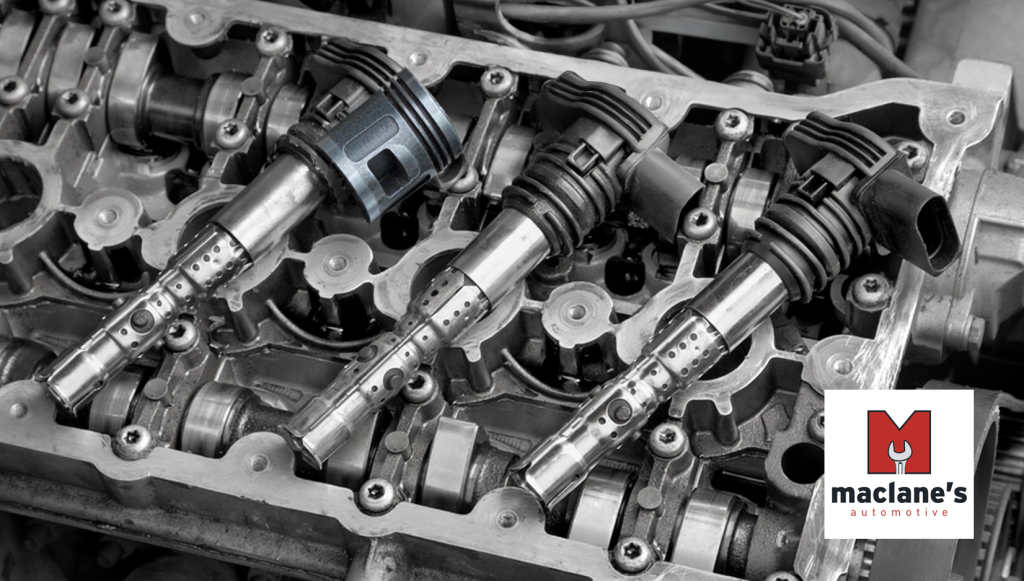
Modern vehicles often use direct ignition systems, which eliminate the distributor for improved efficiency and reliability. These systems use either a Coil-On-Plug (COP) design, where the coil sits directly on top of the spark plug, or a Coil-Near-Plug (CNP) design, where the coil is mounted near the spark plug and connected via a short wire.
There are various types of ignition coils, each designed for specific applications. Some send voltage to a distributor, while others send it directly to the spark plug wire. COP systems, in particular, are becoming increasingly popular due to their compact design and efficient voltage delivery. Identifying early signs of ignition coil failure can save you from more significant engine troubles down the line. Some common symptoms of a bad ignition coil include:
Misfires: If one or more of your ignition coils are failing, you might experience misfires, which feel like a brief stumble or hesitation in your engine’s power delivery.
Rough idle: A faulty ignition coil can cause your engine to idle roughly, especially when the engine is cold or under heavy load.
Loss of power: Weak or inconsistent spark from a failing ignition coil can lead to a noticeable loss of engine power, particularly during acceleration.
Difficulty starting: If your ignition coils are severely damaged, you might have trouble starting your engine or keeping it running once started. Paying attention to these warning signs and addressing ignition coil issues promptly can help prevent more extensive damage to your engine and keep your vehicle running smoothly.
Testing Your Ignition Coils for Optimal Performance
To ensure your ignition coils are functioning correctly, it’s essential to test them regularly. Testing can be done using various methods, both low-tech and high-tech. One simple way to test an ignition coil is by using a spark tester. This device allows you to check the strength and consistency of the spark generated by your ignition coil. Simply connect the tester between the coil and the spark plug, then crank the engine and observe the spark.
For a more in-depth analysis, you can use a multimeter to measure the resistance and voltage output of your ignition coils. Consult your vehicle’s service manual for the specific testing procedures and expected values for your make and model. Regular testing can help you catch ignition coil issues early, preventing more serious problems down the road. Faulty ignition coils can lead to poor fuel consumption and decreased engine performance under various driving conditions.
When an ignition coil fails, it can cause incomplete combustion, meaning the fuel in your engine isn’t burned efficiently. This inefficiency can manifest as reduced fuel economy, especially during city driving or heavy traffic where your engine is under constant load. You might also notice a decrease in engine power and responsiveness, particularly when accelerating or climbing hills. Ignition coils can fail in two ways: complete failure, where the coil produces no spark at all, or intermittent failure, where the coil’s output is weak or inconsistent. Both types of failure can cause significant drivability issues and should be addressed as soon as possible to prevent further damage to your engine.
Choose Maclane’s Automotive
Well, there you have it – the lowdown on how to test ignition coils. It’s not rocket science, but it sure feels like it when you’re elbow-deep in engine grease. But hey, that’s the price we pay for the freedom of the open road, right?
Remember, a little preventive maintenance goes a long way. Keep an eye out for those telltale signs of ignition coil trouble, and don’t be afraid to get your hands dirty. Your car will thank you for it, and so will your wallet. You can contact us at Maclane’s Automotive in Downingtown, PA, at (610) 590-9974 for help with any of your auto needs.
So, the next time your engine starts acting up, you’ll know exactly what to do. Grab your tools, roll up your sleeves, and show those ignition coils who’s boss. And if all else fails, just remember – it’s all part of the adventure of owning a car. Happy testing, and may your engine always spark with joy!
