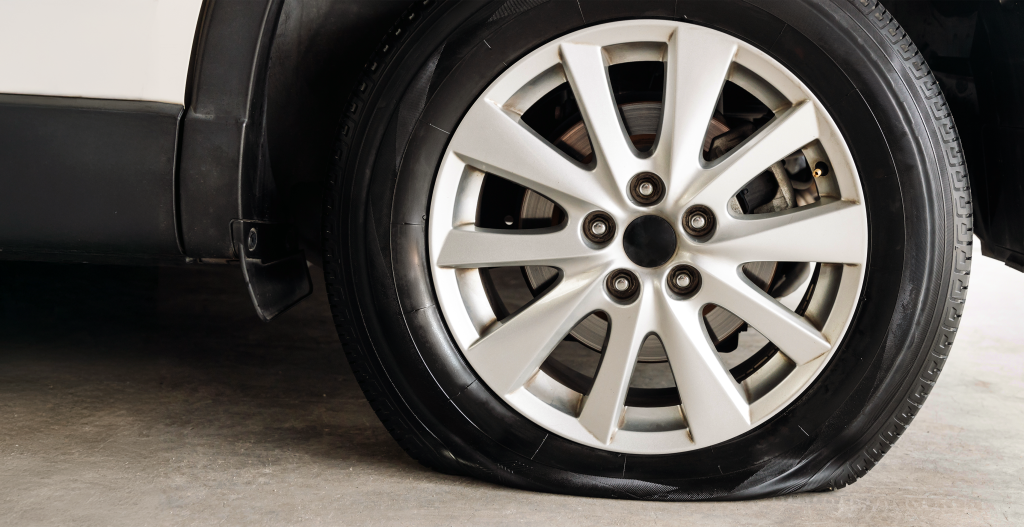
Having a flat tire is always very inconvenient, it could happen just before work, on a road trip during a holiday, or while delivering goods that are time-sensitive. Changing the tire in case of a flat one is not an extremely difficult process, and with the help of some training and having bought everything needed for it, almost everyone can perform this task in a couple of hours.
As a company dealing with drivers of cars and trucks every single day, we know several peculiarities of this occupation. Specifically, people who stay calm, work safely, and logically cope with their issues much quicker than others. This step-by-step instruction will teach you how to change your flat tire.
What To Do First When You Realize You Have A Flat
If you have heard any thudding sounds, noticed any pulling, or a warning message on your dashboard about a low tire, try to decelerate gradually. Avoid using the emergency brakes and signal all the nearby cars by turning on your signals. If possible, try to stop the car in a proper place, a parking area, or even the shoulder on a highway if you were traveling along it.
Choosing a good place for stopping the vehicle, turn on the hazard lights. Do not switch off other lights if there is bad visibility or night. Before exiting the vehicle, check the surroundings carefully.
What You’ll Need Before You Start
All modern vehicles provide the necessary tools required to deal with flat tires. They can be stored in the trunk of your vehicle, under its cargo floor, or behind the passenger seat backs. They include a spare tire (a donut), a jack, and a lug wrench. Some cars come with additional wheel lock keys to unlock your locking lug nuts.
Below you’ll find a list of things that you might need when changing tires, especially when driving trucks:
- Spare tire (inflated), jack, lug wrench, and wheel lock key (if equipped)
- Flashlight, gloves, reflective triangles, and a tire pressure gauge

Step-By-Step: How To Change A Flat Tire
1. Secure The Vehicle
Shift your truck into Park (or put it into gear if it has a manual transmission). Pull up the parking brake, and if you have wheel chocks, use them to prevent the truck from moving. If there are none, you can use a sturdy stone or piece of wood instead.
2. Locate The Jack Point
It is essential when you’re changing tires safely because it needs to be located before lifting the vehicle. It usually depends on the location of the flat tire. Jack points are the areas of reinforced metal in a majority of vehicles, and they’re usually close to each other.
3. Loosen The Lug Nuts (Before Lifting)
Loosen the lug nuts first to ensure that you can lift your truck. This process requires rotating them counterclockwise; you can unscrew them halfway to achieve the desired result. If it seems that they are too tightly secured, apply more pressure on them.
4. Jack The Vehicle Up
Place your truck in the P gear. Apply your parking brake, and if you have wheel chocks, use them to immobilize your truck. In case you do not have wheel chocks, a stone or a wooden piece will be useful.
5. Remove The Lug Nuts And Flat Tire
Remove the lug nuts and set them aside. Take out the flat tire by pulling it toward yourself. Should there be any obstacles such as rust, which might prevent removal, a kick to the tire side may help break it loose.
6. Mount The Spare Tire
Position the spare tire against the wheel studs and bring it closer till it aligns in the correct position adjacent to the wheel hub. Fasten wheel nuts by hand so as not to damage the threads of the bolts, and fix the wheel without turning it.
7. Lower The Vehicle And Tighten Lug Nuts
Lower the car until it reaches the ground on its new tire. It shouldn’t spin just yet. Now it is time to tighten lug nuts. Do it using your lug wrench in several rounds. Then lower your car completely and tighten nuts once again.
After You’re Back On The Road
Keep in mind that donut tires should be used for a limited period only. You drive your truck with caution to reach a tire shop where you’ll get help in replacing the tire. Once your spare tire turns out to be full-size, driving becomes no problem for you. However, you should return to your tire shop to check whether there’s any damage done to your flat tire or its valve.
Be careful about such signs as vibrations of your steering wheel, noise coming from your wheels, and deflation of your spare tire.
In all of these cases, stop and see what the matter is. We recommend checking tire pressure while stopped, as most tires sit unused for years.
When To Call For Help Instead
It may happen that your tires are damaged beyond recognition, or it is unsafe to work due to the presence of heavy traffic. In this case, it would be better to contact experts than risk doing anything on your own.
Ready For Real Tire Help? Call Us
Changing a flat tire is definitely a good skill to have, but you never want to have to question whether a tire needs replacing or if a repair is going to do the job. If you have a flat tire or a slow leak, contact us at Maclane’s Automotive in Downingtown, PA, at (610) 590-8669.