If you are like drivers your calendar is already packed. Between work, errands, school drop-offs and everything else quick” car maintenance can feel like a hassle. One of the common questions we hear at Maclane’s Automotive is simple: How long does a tire rotation take, really?
The good news is that tire rotations are usually one of the services you can get. They can save you time later by helping your tires last longer and wear evenly. Below we will walk you through timeframe. We will also discuss what can slow things down what happens during the appointment and how to plan it into a day without stress.
What A Typical Tire Rotation Timeline Looks Like
In cases a tire rotation takes about 30 to 45 minutes. This is once your vehicle is in the bay and the technician gets started. Some appointments are even quicker if the shop is not busy and there are no complications.
That said the real-world answer often depends on two clocks:
- Service time (the hands-on work)
- Visit time (service time plus waiting, check-in and any additional recommendations)
If you are scheduling your day plan for 45 to 90 minutes total to be safe. This is especially true if you are coming in during peak hours. At Maclane’s Automotive in Downingtown, PA, we always try to keep things moving while still doing the job carefully. The goal is to make this easy on you.
Why Tire Rotation Times Vary
Two people can come in for the service and have totally different experiences. Here are the common reasons a “quick rotation” can take longer than expected.
Shop Traffic And Appointment Scheduling: The biggest factor is usually the one: how busy the schedule is. Early mornings, lunch hours Fridays and weekends tend to be the crowded. If you want the visit time booking ahead and choosing an off-peak time usually helps.
Vehicle Type And Wheel Setup: Some vehicles are straightforward. Others take a bit time.
Larger trucks and SUVs can take longer because the wheels and tires are heavier and sometimes require lift points.
Some vehicles have tires or staggered setups (different sizes front and rear) which limits rotation patterns and may require extra verification.
Aftermarket wheels, wheel locks or specialty lug nuts can slow things down if the key is missing or the hardware is worn.
Stuck Or Damaged Lug Nuts
If lug nutsre over-torqued, cross-threaded rusted or swollen (common on some OEM lug nuts) the technician may need extra time to remove them safely without damaging the stud. This is one of those issues you may not know about until the wheels come off.
Added Services You Request (That Your Vehicle Needs)
Many drivers pair rotations with another service, like an oil change. That can be an use of time but it does add to the total visit.
Also if the technician finds something that needs attention we may recommend addressing it before rotating the tires. This depends on what it’s. For example if a tire is unsafe rotating it to another corner of the vehicle is not going to solve the problem.
What To Expect During The Appointment
If you have never watched what happens during a tire rotation it can feel mysterious. In reality the process is pretty consistent. It is designed to protect your tires, wheels and safety.
Check-In And Quick Questions: We will confirm details like your vehicle, mileage, your tire type and any issues you have noticed. If you mention a vibration, pulling, low tire pressure or uneven wear that helps us decide what else to look for while the wheels are off.
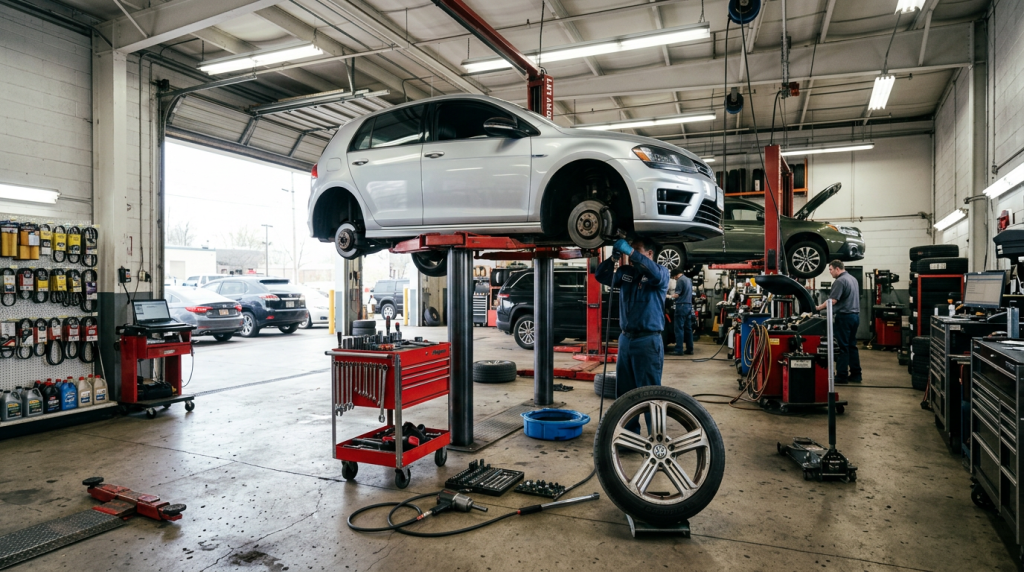
Wheel Removal And Tire Rotation Pattern: Once the vehicle is safely lifted we remove the wheels. Rotate them based on the correct pattern for your vehicle and tire type. The pattern matters because the goal is even wear. For vehicles with non-directional tires you might see a forward-cross or rearward-cross pattern. For tires the tires typically stay on the same side.
Tire Pressure Check And Adjustment: After the tires are moved we set pressures to the manufacturer’s recommendation. This is often overlooked by drivers at home. It makes a difference in tire wear, handling and fuel economy.
Lug Nut Torque To Spec: We reinstall the wheels. Torque the lug nuts to specification. Proper torque is not a detail. It helps prevent brake rotors, vibration and wheel hardware problems down the road.
Quick Visual Inspection While The Wheels Are Off: This part can be the hidden value of a rotation. With the wheels off it is easier to spot things like wear, damage, leaks or brake concerns. If we see something your attention we will explain it clearly so you can decide what you want to do next.
Will I Need To Wait Or Can I Drop It Off?
Either option can. Your schedule is the deciding factor.
If you are waiting, plan to bring something to do. If you are dropping off ask us about the pickup window. This is especially true on high-volume days.
If you are trying to squeeze this into a day one practical tip is to schedule the rotation when you already need to be near our shop for something else. A tire rotation is a lot less disruptive when it fits naturally into your routine.
When You Might Need More Than Just A Rotation
Sometimes drivers book a rotation because it is “time “. The real issue is something else. Here are a few signs that suggest you may need service along with (or instead of) a rotation.
Uneven Wear That Comes Back Quickly: Rotations help, but they cannot fix suspension parts or an alignment issue. If your tires keep wearing an alignment check is often the next step.
Steering Wheel Vibration: A rotation can move the vibration to a speed range or location. However vibration is often tied to tire balance, wheel damage or tire defects. If you notice shaking at highway speeds balancing may be needed.
Vehicle Pulling Left. Right: Pulling is commonly related to alignment tire pressure differences, tire wear patterns or even a tire construction issue. Rotating tires can sometimes change the direction of the pull. However it may not be the fix.
How Often Should You Rotate Your Tires?
Most drivers do well rotating tires every 5,000 to 7,500 miles. Many people line it up with oil changes for convenience. Your owner’s manual may recommend an interval. Your driving habits matter too. Stop-and-go driving, loads, towing, rough roads and lots of highway miles can all change how quickly tires wear.
If you are unsure we can check your tread wear. Give you a clear recommendation. The goal is simple: rotate enough that the tires wear evenly but not so often that you are wasting visits.
How To Make Your Visit Faster (Without Rushing The Work)
If your day is stacked a few small steps can cut down your visit time.
Make an appointment. Choose a less busy time if possible.
Bring your wheel lock key (if you have one) and keep it in a place.
Tell us what you are feeling (vibration, pulling, tire pressure light wear) so we can check the things the first time.
Ask about bundling services if you are due for maintenance soon. This way you reduce the number of trips.
That is really it. You should not have to overthink tire maintenance. You should not have to give up half your day for a rotation.
The Bottom Line: Plan For Under An Hour But Give Yourself A Buffer
In a scenario a tire rotation is a quick in-and-out service. In life your total time depends on the schedule your vehicle setup and whether we find anything that needs your attention. Most drivers are best served by planning for 45 to 90 minutes from arrival to departure. This is especially true on days.
If you want to get your rotation done without the guesswork, we can help you pick a time that fits your schedule. We will keep you informed if anything changes during the visit. Call (610) 590-9974 today to schedule your tire rotation with Maclane’s Automotive in Downingtown, PA. Let us help you stay safe, protect your tire investment and get back to your day with one thing on your list.
FAQs
How long does a typical tire rotation take at a service center? : A typical tire rotation usually takes about 30 to 45 minutes of hands-on service time once your vehicle is in the bay. However, including check-in, waiting and any additional recommendations you should plan for 45 to 90 minutes total. This is especially true during peak hours.
What factors can cause tire rotation times to vary?: Tire rotation times can vary due to shop traffic and appointment scheduling, vehicle type and wheel setup (such, as trucks or directional tires) stuck or damaged lug nuts and any added services you request or that your vehicle needs during the visit.
What happens during a tire rotation appointment?:
- Check-in questions
- Wheel removal and tire rotation
- Tire pressure check and adjustment
- Lug nut torque to spec
- Quick visual inspection
During a tire rotation appointment the technician will check with you about your vehicle and any issues they notice. They will then safely lift your vehicle to remove the wheels. Next they will rotate your tires following the pattern for your tire type. The technician will also adjust your tire pressure to the manufacturers recommendations. After that they will torque the lug nuts to the specification. Finally they will do a visual inspection for any concerns like uneven wear or brake issues.
Can I drop off my car for a tire rotation, do I need to wait?
You can do either depending on your schedule. You can wait during the service by bringing something to do. Alternatively you can drop off your car. Arrange for pickup. It’s an idea to ask about the best pickup window, especially on busy days. Scheduling rotations when you’re already near the shop can make it less of a hassle.
Why might I need more than a tire rotation?
If you have issues like uneven wear that keeps coming or steering wheel vibration these could mean that your suspension parts are worn out or that you have alignment problems. A simple tire rotation won’t fix these issues. In cases you may need additional services like an alignment check alongside or instead of a rotation.
How does proper lug nut torque affect my vehicle after a tire rotation?
Properly torquing lug nuts to the manufacturers specifications helps prevent problems like brake rotors, vibrations while driving and damage to wheel hardware. This step is crucial, for ensuring your safety and prolonging the life of your wheels and brakes after a tire rotation.