While tire rotation may seem like a trivial process, there are many reasons why rotating your tires should not be overlooked. For those wondering how long it takes to rotate a set of tires? The straightforward answer is not very long at all. In fact, you can likely complete a tire rotation during your lunch hour, and you will leave with better-wearing and performing tires.
While tire rotation may seem like a trivial process, there are many reasons why rotating your tires should not be overlooked. For those wondering how long it takes to rotate a set of tires?
How Long Does A Tire Rotation Take?
A tire rotation typically takes between 30 and 45 minutes if the vehicle is already on a lift. Provided your vehicle is ready for service and your appointment is set, your rotation can take much less time. In a busy period, your wait time will probably be a little bit higher than normal, but the procedure itself is not a lengthy one.
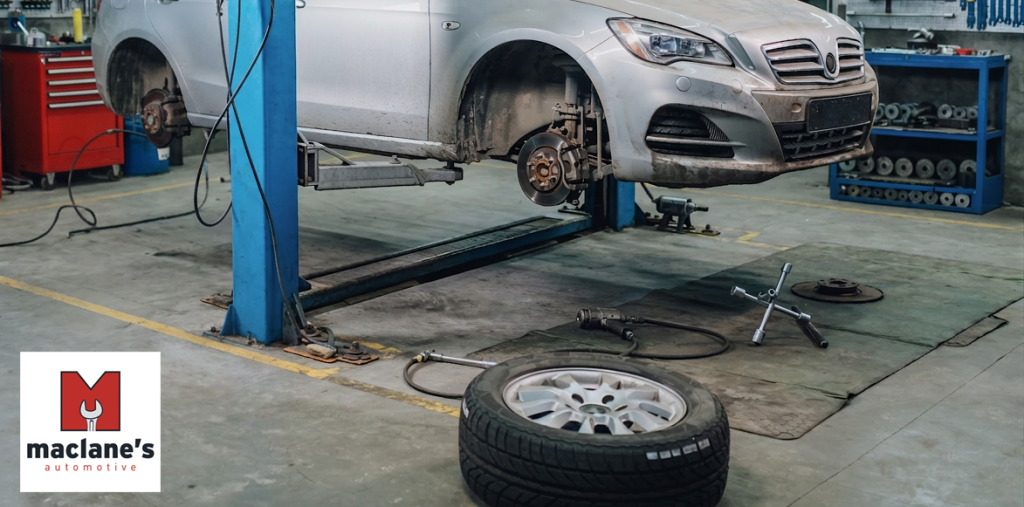
During the rotation, your technician will lift your vehicle, remove your tires, put them into their new positions, torque your lug nuts to manufacturer specifications, and inspect the state of your tires. In some cases, you may have a full-size spare that is included in your rotation pattern; it depends on the design of your particular vehicle.
What Can Make It Take Longer?
Not infrequently, a seemingly easy rotation becomes an extended one, but this is not necessarily a negative aspect of the process. Most likely, it will indicate that we discovered something to be taken care of to prevent further complications.
There are several typical reasons why a rotation may take longer than planned:
- Stuck or swollen lug nuts, rust, or corrosion that takes extra time to remove safely
- Uneven or abnormal tire wear that needs a closer look (alignment, suspension, or inflation issues)
- TPMS concerns like a sensor that isn’t reading correctly or needs attention after service
- You’re also getting an oil change or inspection during the same visit, which is often smart scheduling
If anything like this comes up, our goal is to explain what we’re seeing in plain language and help you decide the next step.
Why Tire Rotations Matter So Much
Tires don’t wear evenly on their own because different positions on your vehicle do different jobs. Front tires usually handle most of the steering and a good share of braking. On many cars, the front tires also pull the vehicle forward. On trucks, weight distribution, loads, towing, and road conditions can make wear patterns even more noticeable.
Rotating your tires helps:
- Extend tire life by keeping wear even across all four (or five) tires
- Improve ride comfort and traction because the tread stays more consistent
- Reduce road noise and vibration that can show up when tires cup or feather
- Protect your investment since replacing tires early is far more expensive than routine rotations
If you have ever found yourself needing to change two tires ahead of schedule because the other two were still “fine,” then you have experienced a classic symptom of neglecting tire rotations.
How Often Should You Rotate Your Tires?
While tire rotations performed every 5,000 to 7,500 miles will not be hard for most car owners, there are specific factors that may dictate the best time to rotate your tires. It may also prove helpful if one rotates the tires at regular check-up times and oil changes. For trucks carrying equipment or hefty trailers, consider rotating tires more often on the lower side of the recommended mileage range.
This would apply to drivers making numerous stops, traveling through rough terrain, and driving in sweltering conditions.
What Happens During A Tire Rotation?
A rotation isn’t just “moving tires around.” We use the correct rotation pattern for your drivetrain and tire setup, like front-wheel drive, rear-wheel drive, all-wheel drive, or directional or staggered tires that have limitations on where they can go.
During the service, we also pay attention to real-world clues your tires give us. For example, a tire that’s wearing faster on the inside edge can point to alignment issues. A chopped or scalloped pattern can hint at suspension wear. Catching these early can save your tires and help your vehicle drive more smoothly.
Should You Rotate Tires If They Look Fine?
Yes, because by the time uneven wear is obvious to the eye, it’s often already costing you tread life. Rotations work best as prevention. Even if your tires still look good, consistent rotation schedules help them stay that way.
Also, many tire warranties require rotations at regular intervals. Keeping up with them can help protect you if you ever need to make a warranty claim.
The Bottom Line
A tire rotation is a quick service, but the benefits last for thousands of miles. If you want more even tread wear, better handling, and the best chance of getting full life out of your tires, staying on schedule is one of the easiest wins in vehicle maintenance.
Now is a great time to schedule your tire rotation at (610) 590-8669 with Maclane’s Automotive. You’ll see how our professionals will get the job done in no time and keep you safe on the road.