A jump gets the engine started. That’s encouraging, but it hasn’t answered the expensive question: what made it need a jump?
We’d check before choosing a battery or alternator. Otherwise you could fit a new battery, park overnight, and find yourself back where you started. At Maclane’s Automotive, we’d want to know what led up to the no-start as well as what happened when someone helped you start it.
Tell Us When It Let You Down
Was it sitting in the driveway, or did the warning come up after you’d already been driving? That’s one of the first distinctions we’d make. We aren’t diagnosing it from the answer, but it helps decide what needs checking.
For example, suppose it cranked slowly after a weekend parked. We’d want to know if the battery was charged when it was parked and whether it can still hold and deliver that charge. We’d also have cable connections and a possible unwanted electrical draw to investigate. If you’ve been doing nothing but short trips, say so; there may have been little running time to replenish what starting used.
A problem during the drive brings charging into focus. With the engine running, the alternator normally carries electrical demand and puts charge back into the battery. Without that supply, whatever remains in the battery is all you’ve got. We couldn’t give you a safe distance to drive on it, and wouldn’t suggest trying.
What Do Clicking And Dim Lights Prove?
Less than you might hope. They fit a low-power starting complaint, but a poor cable connection can produce similar trouble. A starter fault is another possibility. We wouldn’t sell you a battery from a description of the clicking alone.
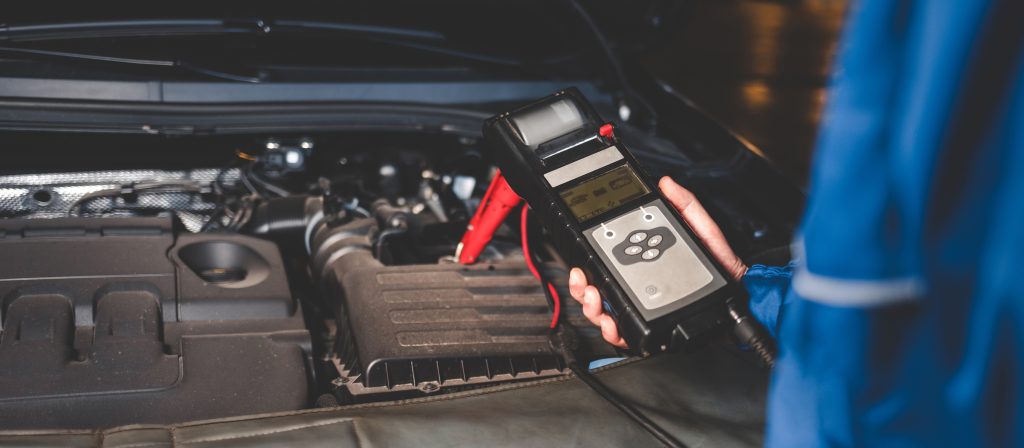
The useful distinction is between charge and condition. A good battery can be flat; a worn battery can show a voltage and still struggle under starting load. Testing may require charging the battery first then assessing battery performance along, with the charging system. Checking one side of that relationship can miss the reason you got stranded.
What Would A Meter Tell Me?
You may have already looked up a voltage chart. About 12.6 volts is a familiar figure for a fully charged conventional lead-acid battery after it’s rested. But was yours just running, or sitting overnight? What type is it, and how cold is it? Those details affect what we make of the number. We still need to know whether it can deliver power under load.
Running-voltage advice is trickier now than an old chart makes it look. Roughly 13.8 to 14.6 volts fits many conventional systems, while smart charging deliberately varies output. We’d check what your vehicle should be doing under the conditions of the measurement. Buying an alternator because one reading missed that range could be an expensive mistake.
Bring any readings you’ve already taken safely, along with when you took them. We don’t require a driveway test before an appointment. If using a meter, keep yourself and its leads clear of fans and belts, and avoid shorting terminals with a lead or tool.
Please Don’t Try The Running-Battery Trick
Disconnecting a battery cable while the engine runs is not an acceptable alternator test. It risks damage to electronics and puts you around live connections and moving parts for no good reason. Leave the cable attached.
For a jump-start, the handbook is the place to check connection points and procedure. Some vehicles don’t use the arrangement you expect from an older car. A swollen, cracked, leaking, or otherwise damaged battery is a stop sign: don’t jump it. Get professional assistance instead.
Even a straightforward replacement may have model-specific requirements. The correct battery type and rating matter, and some cars require registration of the replacement. Fitting in the tray isn’t the full specification, especially on a stop-start vehicle.
What If The Battery Light Is On Now?
If it appeared while driving, reach a safe stopping place and call for assistance rather than trying to finish the trip. Electrical functions may disappear as charge runs down. If there’s a burning smell, flickering lights, or rising engine temperature, mention that when you call. A belt fault can affect more than charging on some engines.
The alternator isn’t automatically guilty: its drive belt, wiring, connections, fuses, or controls may be involved. That’s why we ask for symptoms first and choose parts later.
For a recurring slow start or a battery that won’t stay charged, call Maclane’s Automotive in Malvern, PA at (484) 321-8137 to arrange testing. Bring whatever history you have—even “it started with a jump yesterday” helps. We’ll work through whether you need a car battery replacement, an alternator repair, or attention elsewhere before you spend money on a guess.
