We’d put the gauge next to the car keys the night before. Otherwise, it’s easy to remember the tire check when the luggage is in, everyone is buckled up, and somebody is already asking why you haven’t left. You’ll be tempted to look at the tires and call it good. We’ve got a better starting point than that.
Open the driver’s door and look for the vehicle’s tire label, usually in that opening. You’re after the recommended cold pressures. Not the pressure molded into the tire’s sidewall. That marking describes a tire limit or pressure for a stated load, depending on what it says; it isn’t the normal inflation recommendation for your particular car.
Check Before You Leave, Not After The First Stop
Give the car at least three hours parked, then take the readings before driving. That’s a simple way to start with cold tires. Read the whole label, too. The rear tires may need a different setting from the fronts. If the label is missing or illegible, we’d use the manual or get vehicle-specific information from a qualified source. Your neighbor’s car isn’t a reliable reference, even if it looks much like yours.
There’s a reason for doing this at home. Driving heats the tires, and the pressure goes up with that heat. At the first fuel stop, a perfectly reasonable warm reading might look too high beside the cold recommendation. Let air out to make those numbers match, and you’ve set yourself up for low tires after they cool. That’s an adjustment you didn’t need.
Get A Reading You Can Trust
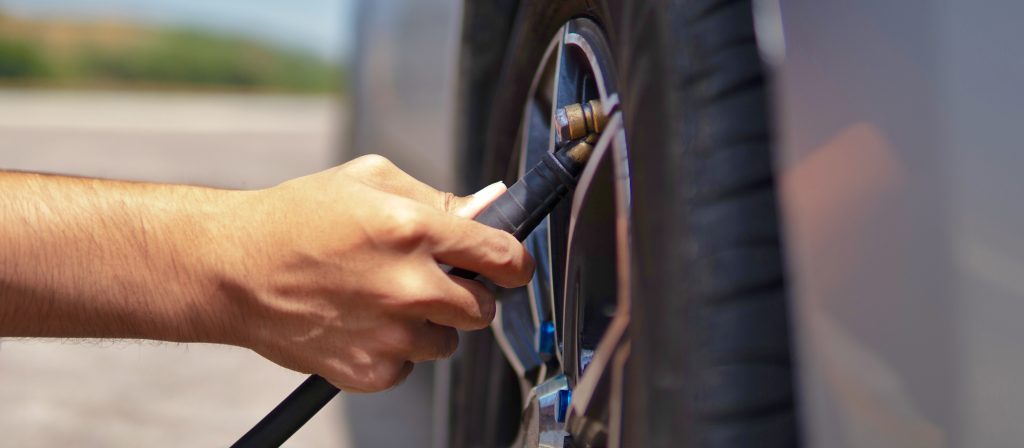
Find a safe spot away from traffic, secure the car, and set the parking brake. Unscrew a valve cap and press the gauge straight onto the valve. You might hear a brief hiss as it seats. A continuing hiss? Try again. We wouldn’t add or release air based on a reading taken while air was escaping around the gauge.
Now compare your reading with the label. On a sound tire that’s a little low, add some air and recheck. You don’t have to get it right in one long burst. Work up to the specified cold pressure; a genuinely excessive cold reading can be reduced carefully, too. Put the cap back on before moving to the next wheel. Writing each reading down saves the inevitable “wait, was that the left rear?” conversation.
While you’re there, have a look at the tire itself. Pressure is only part of the check. A bulge, cut, odd wear, or an object in the tread needs attention even if the gauge gives you the expected number. Leave an embedded screw in place for inspection. Pulling it out in the driveway can turn a slow leak into a tire that won’t hold air at all.
Find Out What’s In The Spare-Tire Well
It may be a spare. It may be a mobility kit. We’d rather you find out now than beside the highway with a trunk full of bags.
For a spare, look up its own pressure in the manual or applicable label. Don’t assume a full-size spare takes the road tires’ setting. A temporary spare has operating restrictions as well, so read those before needing it. If your vehicle has a mobility kit instead, check its condition and instructions. It can’t deal with every sort of tire damage. You may still need roadside help.
If You Notice A Problem During The Trip
A warm tire that reads low isn’t something to wave away. Follow the vehicle manual’s guidance, have a questionable tire assessed, and check again cold later. But there are times to stop the trip, not just schedule another measurement: rapid air loss, visible damage, a seriously low tire, or unusual handling. Pull over safely and arrange help. Driving a low tire can damage it inside, where a walk around the car won’t show you what’s happened.
Towing or packing heavily also deserves a look at the manufacturer’s load and pressure instructions. Extra air doesn’t grant extra carrying capacity. Stay within the limits for the vehicle and tires.
Before you head out, call Maclane’s Automotive in Downingtown, PA at (610) 822-9956 if you’d like help with the tire check. Tell us if one tire keeps needing air, even if you filled it yesterday. We’d much rather have that conversation before you’re miles into the trip, wondering whether it will make it to the next exit.