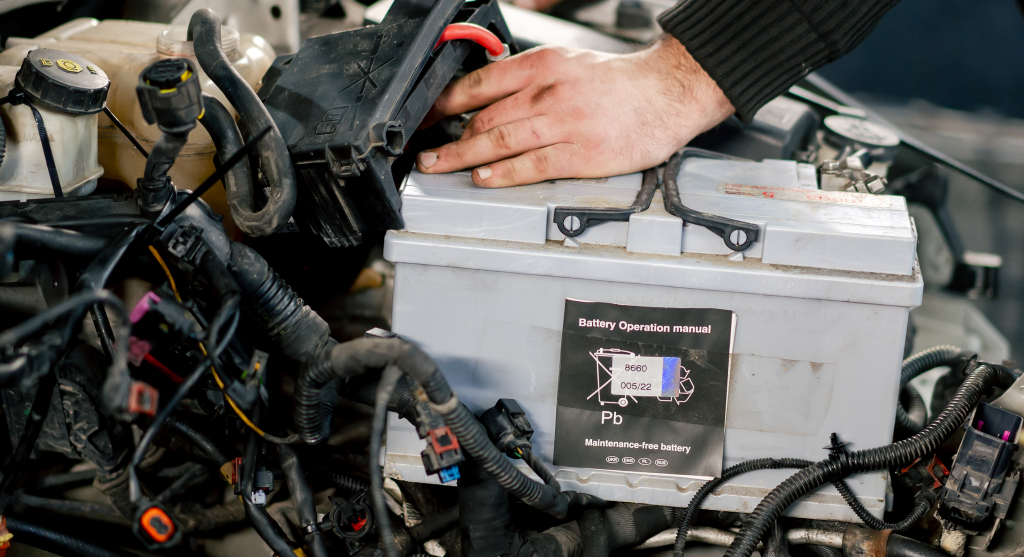
Car batteries usually stop working at some of the worst times, like in the mornings right before you go to work or after a quick stop at the store. The good thing is that many batteries can be replaced at home if you do it the right way. The bad thing is that making a mistake can cause electrical problems, injuries, or make it seem like the new car battery is bad.
At Maclane’s Automotive, we help people every week who try to replace their car battery by themselves and have problems like terminals, wrong car battery size, loose bolts, or blown fuses from a short. Continue reading for some things to do. Things not to do that our experts recommend, along with the details that make a big difference for car and truck owners.
What To Know Before You Start
Replacing a car battery sounds easy. Modern cars make it a little more complicated. Many cars and trucks have electronics, car battery sensors, tight car battery spaces and memory settings that can be lost when the power is turned off. Some models even need a car battery registration or reset procedure after installation.
You need to verify three things before starting your work on the car battery replacement. Your first task requires checking car battery availability while also checking car battery access and your knowledge of terminal and bolt operation. The work becomes easier and quicker because of this preparation.
DO: Make Sure You Really Have A Car Battery Problem
A dead car battery and a car that will not start can look like the problem. They are not always the same. The car battery may be faulty if your engine starts slowly, you hear clicking sounds, or your lights are dim. You need to jump-start your car frequently. Car owners should check their car battery needs because replacing the car battery will result in costs when the alternator or starter needs replacement instead. Using a car battery voltage testing tool, you can determine that a healthy car battery operates at 12.6V voltage.
The car battery needs to be charged because its voltage has dropped below this level. The car usually begins with a charging voltage that ranges between 13 and 14 volts. If it is not charging, a new car battery will not last long if you do not have tools. Pay attention to patterns. If the car battery dies while you are driving, or it keeps going flat after being charged, we usually look for problems with the car.
DON’T: Guess The Car Battery Size Or Specs
Choosing the car battery is more than finding one that fits. Cars use car battery sizes, terminal orientations and performance ratings. Choosing the size can cause problems with the mounting, cables or terminals. Choosing the specs can cause strain or reduce the car battery life, especially for trucks or cars with high electrical loads.
Here is what we suggest you match before buying a car battery:
- Car battery size and terminal orientation: This makes sure it fits and the cables reach without stretching or twisting.
- Cold Cranking Amps (CCA): Use the factory recommendation or higher in climates.
- Car battery type: Standard, AGM, EFB and start-stop car batteries are not interchangeable in cars.
- Reserve Capacity: This is useful for cars with accessories, work trucks and drivers who idle frequently.
If you’re not sure which car battery your car needs we would rather you ask than guess. The cost of a car battery can cause repeated problems, warning lights or premature failure!
DO: Get The Right Tools And Safety Gear
Most car battery replacements only need tools but having the right ones prevents damage and makes the job safer. We recommend wearing gloves and eye protection every time. Car batteries can leak acid, vent gas, and corroded terminals can flake debris.
You need to have a wrench or ratchet set to operate the clamps and bolts with a brush or cleaning tool to maintain the terminals. A memory saver device works correctly when used on cars that have different settings because it provides vehicle owners with memory protection.
DO: Park Your Car And Set Up A Safe Work Area
You should replace your car battery when your car is parked on a surface and the parking brake is engaged. Turn the ignition off, remove the key, and keep it away from the car so no one accidentally starts the engine while your hands are near the terminals. People should maintain garage ventilation while they work because they need to prevent any sparks or flames from entering the garage.
You should check the car battery condition before beginning your work. The presence of corrosion or a cracked casing should be treated as a problem. Car battery acid can damage paint, clothing and skin.
DON’T: Skip The Proper Disconnect Order
This is one of the mistakes we see and it can be dangerous. Always disconnect the terminal first. If you remove the terminal first and your tool touches metal you can create a circuit. That is how sparks, damaged tools and blown electrical components happen.
Once the negative terminal is off position, so it cannot touch anything, then remove the terminal. When installing the car battery, reverse the order: connect the terminal first, then the negative.
DO: Handle The Car Battery With Care
Car and truck car batteries are heavy, awkward and easy to tilt. Keep the car battery upright as you lift it out and set it down. Use the built-in handle if it has one and do not pull on cables to “help” it out. If the car battery is located under a seat in the trunk or tucked under a cowl, take your time. Avoid forcing panels or wiring.
If you have any back or shoulder problems- it is worth getting help. A strained back is not worth saving a service call.
DON’T: Ignore Corrosion And Cable Condition
If you install a car battery onto corroded or loose connections, you can still have problems. Corrosion increases resistance, which reduces power delivery to the starter and can confuse charging systems.
After removing the car battery inspect the clamps and cable ends. If they are green, crusty, or heavily pitted, clean them properly with a brush and a car battery-safe cleaner. Make sure the clamps tighten securely without bottoming out. If a terminal clamp is cracked, stretched, or will not tighten, it should be replaced.
DO: Secure The Car Battery With The Correct Hold-Down
Car batteries must be clamped or strapped down. A loose car battery can vibrate, damage the case, stress the terminals, and create issues that are hard to diagnose.
When you reinstall the hold-down bracket tighten it snugly. Do not strip the bolt if the hold-down hardware is missing or rusted out and fix it before calling the job done. A car battery that can move is a car battery that will fail early.
DON’T: Mix Up Car Battery Venting Requirements
Some cars use vented car batteries with a vent tube especially when the car battery is located inside the cabin area or trunk. If your old car battery had a vent tube the replacement car battery should support the venting setup. Leaving a vent tube disconnected or using a car battery without the vent port is not something we recommend.
DO: Watch For Car Battery Sensors And Start-Stop Systems
Many newer cars use a car battery monitoring sensor. It tracks the car battery state of charge and helps manage charging behavior. Be careful not to damage it and do not pry against it or twist it.
If your car has a start-stop, it often requires an AGM or EFB car battery with performance. Installing a flooded car battery can cause drivability issues, warning lights, or a short car battery life. Some cars also need a car battery registration procedure after replacement. The system knows the car battery is new and charges it correctly.
DON’T: Assume Tight Is Enough
Terminals cause all kinds of problems: random no-starts, flickering lights, intermittent power loss, and strange electrical behavior. After tightening the clamps do a test: try twisting each clamp by hand. It should not rotate on the post. If it moves, it is not tight enough.
DO: Apply Terminal Protection The Right Way
Once the terminals are clean and tight a light layer of protectant can slow down corrosion. You can use a car battery terminal spray or a thin film of grease on the outside of the connection. The key is to avoid slathering grease between the metal contact surfaces before tightening. You want metal-to-metal contact for a connection then protect the exterior from moisture and acid vapor.
DON’T: Forget The Final Checks Before Closing The Hood
Make sure everything is tightened, connected, and working properly before you close the hood and start the engine.
Before you put the covers on or close the panels, take a minute to make sure everything is okay. We think you should do these checks: the car battery is secure, the cables are safe and not near any moving parts, both terminals are tight, and any vent tube or car battery blanket is put back on if your vehicle has one.
Then start the vehicle. Watch for anything. If you see warning messages, check your owner’s manual to see how to reset them for things like windows, steering angle sensors, or start-stop systems. If the vehicle starts slowly with the car battery, you might have a problem with the charging system or the starter, or maybe there is a connection issue.
Our Quick Do’s and Don’ts Recap:
- Do disconnect the cable first. Reconnect it last.
- Do make sure you get the right size car battery, with the CCA and type for AGM and start-stop vehicles.
- Do clean the terminals. Check the cable ends before you put in the car battery.
- Do secure the car battery with the hold-down hardware.
- Don’t let your tools touch the metal parts at the same time.
- Don’t forget about vent tubes, car battery sensors. Registering the car battery.
- Don’t leave the terminals loose or almost tight because that can make it seem like the car battery is bad.
When It Is Smarter To Call A Professional
Replacing the battery at home is a job you can do yourself when the battery is easy to get to and the vehicle is simple. We usually think it is better to get help when the battery is hard to reach, like under seats, behind panels, or under a cowl, or if it is connected to complex electronics. It is also an idea to call a professional if you have had to replace the battery a lot, or if there is heavy corrosion, or if you are getting charging warnings, or anything that might mean the alternator is bad.
At Maclane’s Automotive in Downingtown, PA, we can check your starting and charging system, make sure you get the battery for your vehicle, install it safely, and make sure the vehicle’s computer is working properly. That way you are not worried and will not have to buy another battery because the first one did not work.
Ready For A Battery You Can Trust
Suppose your car or truck is slow to start or keeps needing a jump. You are not sure if the problem is the battery or the charging system. We are here to help. Call (610) 981-2183 today to schedule a professional battery test or replacement. We will get you back on the road with confidence and a battery, from us that you can trust.
