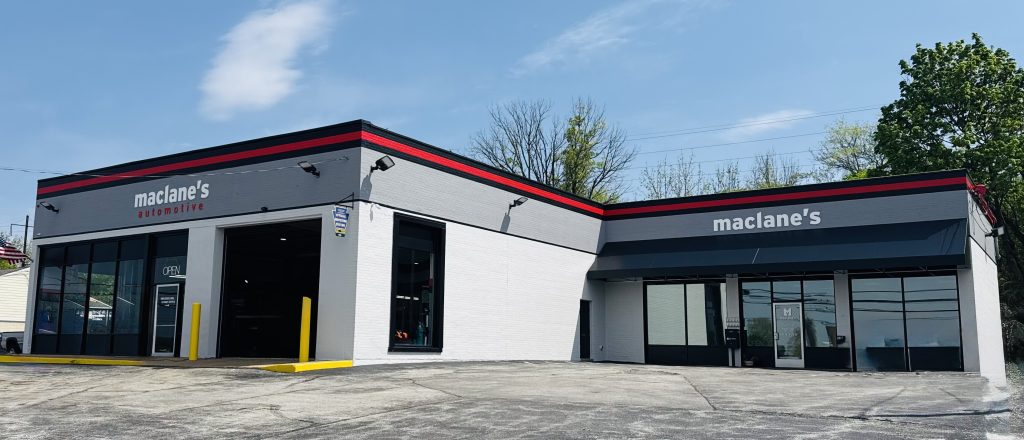
You need an oil change, but the car also has a vibration nobody has explained yet. Should you book everything with one shop or go straight to a specialist? There isn’t one answer for every repair. At Maclane’s Automotive in Malvern, PA, we suggest starting with the problem you’re trying to solve. The sign outside tells you how a business describes itself. A conversation about your particular car tells you much more.
One Visit Can Make Everyday Service Easier
A full-service auto repair shop generally handles a range of maintenance and repairs rather than just one component. That can make sense when the car needs routine service along with a brake inspection, a cooling-system concern, or a suspension noise. One conversation, one drop-off, and a service history that stays together. Convenient, especially when getting a ride home is half the project.
There is a diagnostic advantage when symptoms cross systems, too. A vibration could involve a tire, wheel, suspension part, or driveline component. If it appears only while braking, that changes where the investigation starts. Having several possibilities evaluated together can be useful before committing to one repair category. The goal isn’t to inspect everything for the sake of it. It’s to avoid starting with the wrong assumption.
A Specialist Makes Sense For Certain Jobs
Some repairs call for equipment or experience that not every general shop has. Internal transmission rebuilding is one example. Advanced driver-assistance calibration, certain module-programming jobs, and high-voltage hybrid or electric-vehicle repairs can also require specific capabilities. Those are reasons to ask questions, not reasons to assume a shop can or cannot do the work based on its label.
A specialty shop may concentrate on one system or on particular vehicle brands. That repeated exposure can help with a difficult, model-specific fault. Still, a specialist isn’t automatically the best destination for every warning light. A transmission warning, for instance, doesn’t prove the transmission needs rebuilding. Confirming the fault comes before choosing a major repair.
Match The Capability To Your Actual Car
Tell the shop your vehicle’s year, model, engine, and symptoms. Then ask whether it handles that type of concern and what the initial evaluation includes. ‘We work on those’ is useful, but it leaves room for a follow-up question about the specific job.
Full-service doesn’t mean every possible procedure happens under one roof. Some shops arrange certain work elsewhere. Ask about that before leaving the keys: who completes the outside work, who communicates with you, and whether transport or extra appointments affect the estimate. A clear referral can be more helpful than a vague promise to figure it out later.
Look At The Whole Estimate, Not Just The Labor Rate
A lower hourly rate doesn’t necessarily produce a lower finished bill. Compare the proposed testing, parts, labor, and any required setup or calibration. If one shop has diagnosed the problem and another is only quoting from your description, those totals don’t yet represent the same job.
Ask about the schedule as well. Being able to drop the car off today isn’t the same as having someone begin diagnosis today. A specialist with a backlog may still be the right choice for a particular repair, but you should know what the wait looks like. Arrange transportation around a realistic plan rather than a hopeful finish time.
Give The Next Shop The Information You Already Have
If another shop has inspected the car, bring its written findings, fault codes, and invoice. Explain what was repaired and whether the symptom changed afterward. ‘It still shakes’ is a start. ‘It only shakes under acceleration now’ gives the next technician something more useful.
Some checks may need to be repeated to confirm current conditions. Ask why instead of assuming the shop ignored the earlier work. When more than one business is involved, keep track of which one authorized and performed each repair, and ask about any applicable warranty terms. Clear records make a return visit less confusing if the concern comes back.
Choose A Starting Point Without Committing To Everything
For ordinary maintenance and a new, unexplained symptom, a shop that can evaluate the car broadly is often a sensible first call. For a confirmed repair requiring specialized equipment or internal rebuilding, ask directly about the shop’s capability or a referral. You don’t have to approve a major repair just to begin diagnosis. Agree on the initial scope and how further work will be approved.
Call Maclane’s Automotive in Malvern, PA at (484) 321-8137 to talk through your maintenance or repair concern. Tell us what you drive, what you’ve noticed, and what has already been checked. We’ll help you work out the next step, including whether the job calls for a more specialized approach.
