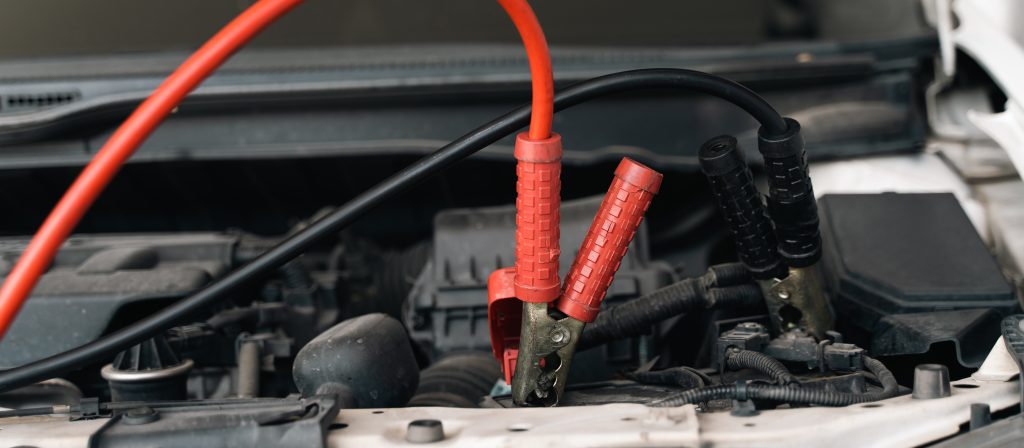
Getting it started is a relief. Deciding whether you trust it to start again is another matter, especially when you’ve already had to borrow jumper cables. We’d hold off on buying a part until it’s been tested. A successful jump tells you extra electrical power helped. It doesn’t tell you where the original power went.
At Maclane’s Automotive, we’d ask what led up to the no-start. Leaving a light on overnight gives us somewhere obvious to begin. A car that needed a jump after an ordinary afternoon in the parking lot leaves more questions. Either way, the goal is to avoid having this same conversation tomorrow morning.
One Jump Isn’t A Battery Test
A discharged battery and a worn-out battery can look much alike from the driver’s seat. Both may struggle to turn the engine over. Both may accept enough help from jumper cables to get it running. What we haven’t established yet is whether the battery has the capacity and starting power this car needs.
Finding the light you left on answers one question, but leaves another: how well did the battery cope? Being drained deeply, especially for a prolonged time, can cost it usable capacity. We’d still have it checked rather than assume that switching off the light has put everything right.
Poor connections can complicate the picture, too. If current can’t get through a cable or terminal properly, a usable battery may get blamed for the no-start. The success of a jump doesn’t eliminate those checks or prove the alternator is working.
What Was Happening While It Sat?
A parked modern car isn’t completely switched off. Security equipment and memory functions use a little power. Leave the vehicle parked long enough and even that expected draw can become a problem. An unwanted draw can do it sooner.
Think about the less visible things as well as the headlights. A glove box lamp may stay on behind a closed door. Or the culprit may be a module that never quite shuts down, rather than anything you can see glowing. Include any added camera, stereo, or other accessory in the history you give us, even if it seems to work perfectly.
“Flat every Monday, fine during the week” is a useful description. So is “It started doing this after we fitted the camera.” We may have to wait for the electronics to shut down before measuring current. Putting in another battery won’t switch off whatever is still consuming power.
Daily Driving Doesn’t Always Mean Enough Charging
A few minutes to work and a few minutes home can be a surprisingly hard routine for a battery. Each start takes power, and each trip may finish before that power has been replaced. You’ve also got the lights, defrosters, and other equipment drawing electricity. So “I drive it every day” doesn’t necessarily rule out a low state of charge.
Cold weather gives the battery less starting power to work with. Summer heat, meanwhile, can accelerate wear inside it. That means a weakness developed in warm weather may not announce itself until a chilly morning. It hasn’t necessarily happened overnight just because that’s when you noticed it.
And we shouldn’t overlook ordinary cable trouble. Power has to get from the battery to the starter through sound connections. Corrosion, looseness, or a poor ground can get in the way even with a usable battery. We’d want that checked before a new part goes in.
What Would Make Us Consider Replacement?
Repeated slow cranking deserves testing. Having to ask for another jump soon after a proper charge is another reason to get it in. We need to see what the battery can deliver under the proper test conditions. Charge it first where needed; otherwise, the test may be telling us it’s flat rather than telling us it’s finished.
By all means, bring us the battery’s age. Just don’t let the date sticker do all the diagnosing. Dim lights and a resetting dashboard can come with low voltage, but they don’t tell us which part caused it. Connections and charging faults still need consideration.
If replacement is needed, “it fits in the tray” isn’t enough. The type and rating must suit the vehicle. Some cars also need battery registration or a battery-management reset after replacement. We want the replacement to work with the car’s charging strategy, not merely fit under the hood.
Why We Check Beyond The Battery
A new battery can go flat again if charging isn’t working or an overnight drain remains. That’s why we’d look at battery condition, cables, and charging operation together. If those don’t explain the complaint, the starting system may need further testing.
One voltage number isn’t a verdict on every alternator, either. On a smart-charging car, the controls deliberately change output. We’d need to know what that system was supposed to be doing when the measurement was taken. An old rule of thumb for a different car won’t answer that.
If you’ve got a charging warning on the road, or electrical power is fading as you drive, get safely stopped and arrange help. Don’t keep driving in hopes that it will recharge itself. That is a different problem from deciding what to buy after a single no-start.
Before You Rely On It Again
We wouldn’t send a deeply flat battery on a long drive and call that a recharge plan. Arrange proper charging with equipment compatible with the battery type, then testing. You may not recover the charge properly by driving, and if charging was the original fault, you can end up stranded all over again.
For a jump-start, use the procedure and clamp points in the manual for that vehicle. Keep one old shortcut out of the process entirely: taking a battery cable off with the engine running is not a safe test. A swollen case, leakage, or any possibility that the battery is frozen also means no jump and no charging attempt. Leave that to professional help.
Was it parked overnight, all weekend, or much longer? Had the starting sound changed before it finally refused? Jot that down for us. That small amount of history can be more useful than repeatedly trying the key. Call Maclane’s Automotive in Malvern, PA, at (484)321-8137 to arrange battery and charging-system testing. We’ll help you find out whether replacement is needed or whether something else is taking the charge away before you need another set of jumper cables.
