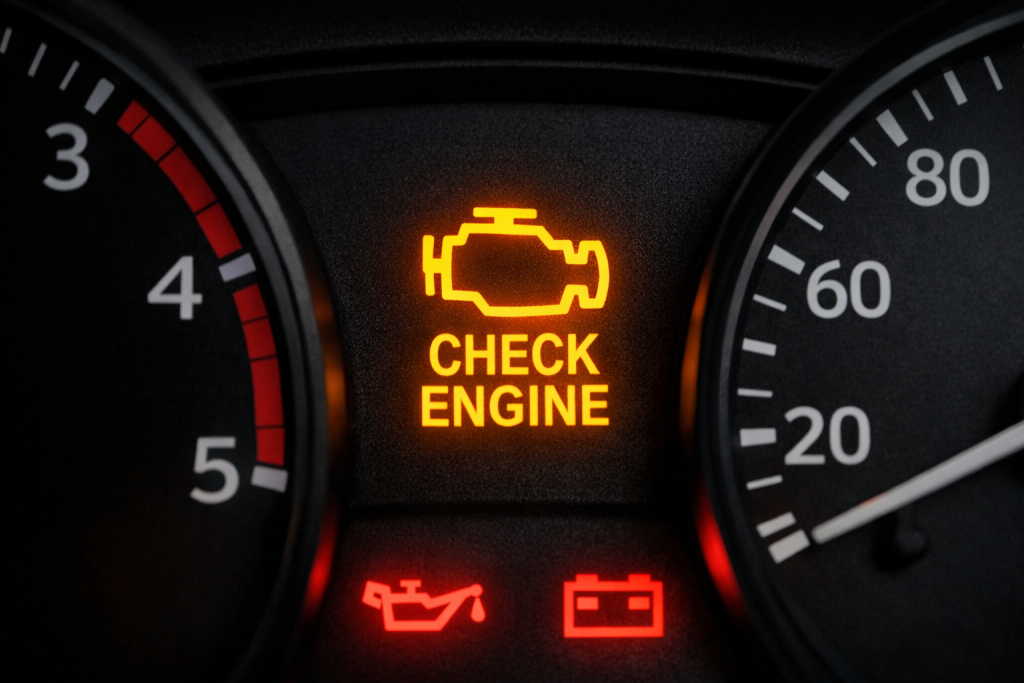
If your check engine light turned on suddenly after your recent fuel up, you most likely aren’t imagining things! This is more common than you might think for car and truck owners to experience a check engine light between two to three miles after they stop for fuel. The good news is that “bad gas”, one of the top reasons for this problem, does not always result in disastrous outcomes. Fuel-related issues will create multiple trouble codes, which include some codes that will result in actual vehicle damage when you continue to operate the vehicle.
Let’s break down what “bad gas” really is, how it triggers a check engine light, what symptoms to watch for, and what you should do next if you suspect the fuel in your tank is the culprit.
What People Mean By “Bad Gas”
Bad gas is a catch-all phrase, but in the shop we usually mean one of these situations:
- Contaminated fuel: Water in the fuel, sediment, rust, or debris from underground storage tanks.
- Wrong fuel: Gasoline in a diesel truck, diesel in a gas vehicle, or the wrong octane for a vehicle that is sensitive to knock.
- Stale fuel: Fuel that has been sitting long enough to degrade, more common with seasonal vehicles, equipment, or low-use trucks.
- High ethanol issues: Fuel with higher ethanol content than expected, or a vehicle that is more sensitive to ethanol-related drivability changes.
Any of these can affect combustion, fuel trims, emissions performance, and sensor readings, which is exactly what the check engine light is watching.
How Bad Gas Can Trigger A Check Engine Light
Modern vehicles continuously monitor two factors, which include engine fuel efficiency and exhaust system performance. The engine continues to operate when fuel quality decreases, but the engine data becomes irregular to the computer system. The fuel warning light for bad gas arises through these common methods. The computer system detects misfires through this mechanism.
It Causes Misfires That The Computer Can Detect
The engine will experience misfires when fuel becomes contaminated through water exposure. Your vehicle’s computer detects misfires by monitoring crankshaft speed changes and other signals. The driver will receive misfire codes when the engine produces enough misfires to exceed the limit.
A driver will falsely accuse bad gasoline for their vehicle problems because misfires represent one of the most common problems, which drivers must handle seriously. The catalytic converter will sustain permanent damage from extended periods of misfires.
It Forces Fuel Trims Out Of Range
Your engine continuously modifies fuel distribution to achieve optimal air-fuel balance during operation. The engine requires additional fuel adjustments when operating with low-quality fuel in order to maintain stability.
The computer system will generate codes P0171 and P0172 which indicate lean or rich conditions when system adjustments exceed acceptable limits and last for extended periods because of sensor readings and engine response. This can happen with water contamination, ethanol content changes, or fuel that does not burn as expected.
It Triggers Evaporative Emissions Codes After Refueling
Not all “bad gas” check engine lights are actually caused by the fuel quality itself. The timing provides a valuable indication of the problem which actually arises from the EVAP system. The vehicle performs self-tests after refueling to detect any leaks present in the fuel vapor system. The computer activates the warning light when the gas cap becomes loose or the cap seal breaks or the EVAP valve becomes stuck which results in code storage for P0455 and P0442.
We always ask whether the light appeared immediately after filling up and whether the cap achieved a tight click because this question requires your answer. The situation holds importance.
The process results in warnings about catalytic converter efficiency problems. Combustion issues arise from fuel that contains contaminants which results in unburned fuel emissions through the exhaust system. The performance of the catalytic converter deteriorates as time passes. The converter fails to perform its emission cleaning duties which results in code P0420 display when its catalyst system efficiency drops.
A single bad tank does not always kill a converter, but repeated misfires or rich running absolutely can.
It Can Upset Oxygen Sensor Readings
Oxygen sensors measure how much oxygen is in the exhaust, which helps the vehicle adjust fueling. If combustion becomes unstable, the O2 sensors may see unusual patterns. The sensor might be fine, but the readings can still cause the computer to set codes related to mixture control or sensor performance. This is also where “throwing parts at it” gets expensive fast, because the sensor may be reporting a real problem upstream.
Common Symptoms That Point To Bad Gas
The check engine light is the headline, but your vehicle usually gives you other hints. If you are dealing with bad fuel, you might notice:
- Rough idle, stumbling, or hesitation when accelerating
- Hard starting or longer crank time
- Loss of power, especially under load or while towing
- Surging at steady speeds
- A strong fuel smell or unusually poor fuel economy
- Engine knocking or pinging, especially with the wrong octane
- A flashing check engine light (this is urgent and usually indicates active misfires)
The light displays a flashing signal which we use to recommend that drivers should stop driving until they reach a secure location. A flashing light indicates that the engine experiences severe misfiring which potentially causes damage to the catalytic converter.
What To Do Right Away If You Suspect Bad Gas
You can take effective actions to solve your vehicle problem when your check engine light activates right after refueling and your vehicle shows signs of abnormal performance.
First, check the gas cap. Remove it, inspect the seal, reinstall it, and tighten until it clicks. If the light was triggered by an EVAP leak, it may take a few drive cycles to turn off on its own, even after you fix the cap.
Second, pay attention to how it runs. If it is driving normally and the light is steady (not flashing), you may be able to drive cautiously for a short time. If it is stumbling, misfiring, or the light flashes, limit driving and plan to get it checked promptly.
Third, save your receipt and note where you fueled up. If there is widespread contamination from a station, that receipt can matter for documentation.
Fourth, avoid adding random “fix in a bottle” products without a plan. Some additives can help with moisture, but they are not a cure for heavy contamination, and they will not fix a wrong-fuel situation.
When Bad Gas Is Not The Real Cause
We also want to be honest: sometimes bad timing makes people blame the fuel, but the check engine light is actually warning you about something that was already failing.
For example, a weak ignition coil, worn spark plugs, a dirty mass airflow sensor, or a failing O2 sensor can all show symptoms that feel like fuel trouble. Refueling is often when people pay attention, so the gas gets the blame.
That is why reading the stored codes and looking at live data matters. The computer is not perfect, but it gives you a starting point that beats guessing.
How We Diagnose A “Bad Gas” Check Engine Light
When a vehicle comes in with a fuel-related complaint, we do not jump straight to draining tanks or replacing parts. We start with basics and confirm what the engine computer is seeing.
Our process usually includes scanning for codes, checking freeze-frame data (what conditions were present when the light turned on), reviewing fuel trims, and looking for misfire counts. We also rule out EVAP issues related to the refuel event. If contamination is suspected, we can inspect fuel quality and in some cases pull a sample to check for water or debris.
If the issue is wrong fuel, the plan is different. A diesel system that gets gasoline requires a very careful approach, and even a small amount can cause expensive damage if it circulates through the system. For a gas vehicle that received diesel, the car may run poorly or not at all, and the fix may involve draining and cleaning.
Can You Just Keep Driving Until The Light Goes Away?
The engine will adapt to the situation and the light will stop showing after multiple driving cycles when the problem results from a loose gas cap or a small fuel quality defect. Driving the vehicle while it shows signs of misfiring and operating too lean and experiencing difficulties with heavy loads will create larger problems which require more extensive repairs.
Here is the practical way to think about it:
- If the car drives normally and the light is steady, you may have some time, but you still should get it scanned soon.
- If the car runs rough, hesitates, or loses power, treat it as urgent.
- If the check engine light is flashing, stop driving and get help. That warning is there for a reason.
How To Avoid Fuel-Related Check Engine Lights In The Future
You cannot control everything that happens at a fuel station, but you can reduce the odds of dealing with contaminated fuel.
Try to use busy, reputable stations that move fuel quickly. Sediment disturbances occur when people attempt to fuel their vehicles during the times when station tanks undergo refilling operations. After every fuel station visit, ensure your gas cap achieves a complete click closure. Replace your gas cap when its seal shows damage or when the cap becomes unsteady during movement.
Fuel stabilizer proves useful for storage because it maintains truck fuel quality during extended downtime and drivers need to understand how ethanol-based fuels change with time. People who practice these small actions will experience fewer costly problems that occur.
The Bottom Line
Bad gas can activate the check engine light because it creates misfires and alters fuel trims and interferes with sensor readings and activates EVAP codes after refueling. The driver experiences similar symptoms from both fuel difficulties and ignition or emissions problems which makes proper diagnostics essential.
We provide quick solutions for your check engine light issue which emerged after your recent fuel stop and started your vehicle to function improperly. You can schedule a diagnostic appointment with us at Maclane’s Automotive in Downingtown, PA, by calling (610) 590-9974 and we will identify the issue and present understandable next steps while helping you drive again safely.