There are some components of your car or truck that will never function “kind of”. Brake lines are one of those components since a little bit of a failure in the braking system’s integrity can lead to drastically increased braking distances. It is not always possible to tell whether the brake lines have started to deteriorate until you find out when you try to stop. The team of technicians at Maclane’s Automotive in Downingtown, PA, has noticed a number of cases of brake lines’ deterioration in cars and trucks having high mileage and being subject to harsh environmental conditions like rain and roads with salt.
What Brake Lines Do And Why They Fail
It is the brake lines that provide pressurized brake fluid to the calipers or wheel cylinders. The braking power depends directly on the pressure that acts between the pads and rotor or the shoe and drum. The brake lines should keep the pressure inside and withstand any kind of mechanical loads. The most common reasons for brake line failures include corrosion and physical damage. Corrosion appears due to contact with the road salt or exposure to moisture.
The physical damage can happen as a result of improper jacking, previous installation or repair work, off-road driving, or scraping by any objects. In addition, rubber flex hose brake lines can become swollen or cracked and start leaking.
Warning Signs You Should Never Ignore
The problem with brake lines is that sometimes they start leaking before any visible puddles appear under the vehicle. Some other symptoms of brake line problems occur quite frequently. Here is what we advise paying attention to in order to avoid a potential problem. The brake pedal might begin feeling spongy or too squishy. A decrease in the brake system’s pressure makes it impossible to stop smoothly. This issue is often accompanied by a need to pump the pedal several times before getting the desired pressure.
A brake warning light on the dashboard is another big one. Some vehicles will trigger a brake system warning when the fluid level drops, and a leak is a common cause of low fluid. Even if the brakes still seem to work “okay,” that light should be treated as urgent.
Brake fluid loss is also a red flag. However, if you realize that the brake fluid is reduced gradually from days to weeks, do not continue to fill the tank. Brake fluid does not consume like fuel; if it’s low, there is probably some leakage, which often happens to brake lines or hoses.
The leakage close to the wheel or along the frame of the vehicle is often detected by wet spots on the inside of tires, suspension parts, or under the car. The brake fluid tends to feel slippery and have a clear to amber color. When the line bursts, it becomes obvious, but in most cases, leakage starts from a small drip.
Another indicator that there might be something wrong with the brake system is when the car pulls to either side when braking. This occurs in situations where the hydraulic pressure supplied by the master cylinder to the front or rear circuit becomes unequal due to leaks, obstructions, or collapsing hoses.
Brakes that drag and produce a burning smell indicate that the rubber hose has become defective. Some hoses could behave like one-way valves, allowing the pressure to be applied but not releasing it effectively. As a result, the brakes heat up, causing early wear of the pads. Finally, rusted brake lines should also be taken seriously.
While it is not necessarily an immediate problem, it is important to pay attention to flaky, thick corrosion or wetness along the fitting parts of the brake line. It is not uncommon to find rust around junction boxes or frame rail sections and brake clips.
What Happens If You Keep Driving
In a worst-case scenario, when brake lines give out, the pedal goes all the way down to the floor and leaves you with inadequate or no braking power on several wheels. Most modern cars feature dual hydraulic systems, but you still lose the efficiency of the brakes significantly. It’s not the kind of problem to “monitor” over time.
If you suspect a brake line issue, we recommend limiting driving and getting the vehicle checked as soon as possible. In a lot of cases, an early repair prevents a bigger failure and reduces the chance of damaging other components.
What Brake Line Repair Usually Involves
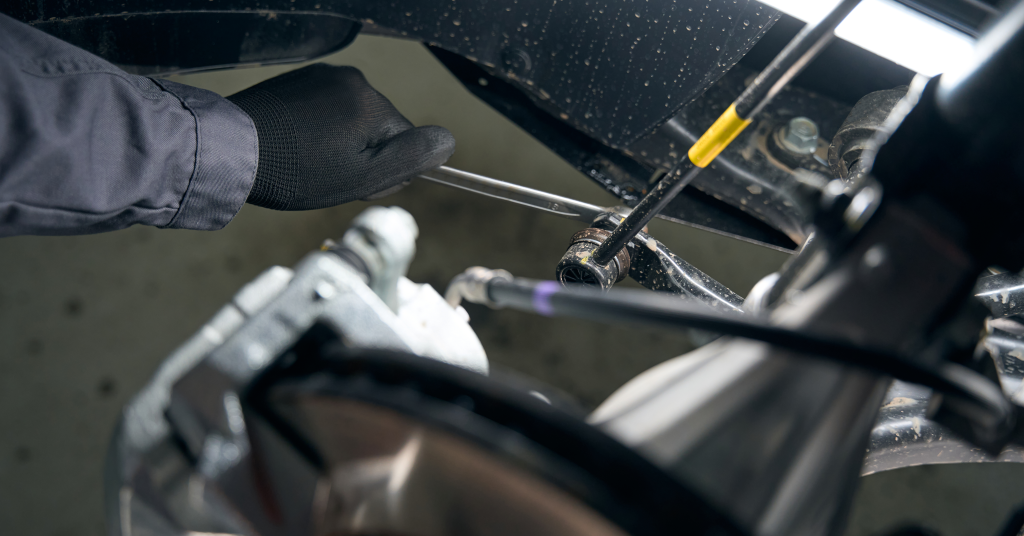
Brake line repair depends on what failed and where. Sometimes it’s a damaged rubber flex hose at a wheel. Sometimes it is a corroded hard line installed along the frame. It needs replacement of the compromised line or hose, installation in proper routing, and secure mounting using appropriate clips, followed by bleeding of the brake system.
Here at Maclane’s Automotive, not only do we address the symptoms but their cause as well. If the issue appears on one of the lines, chances are others nearby are about to fail. If a line has been worn through, we verify the absence of retainers and contact points that are responsible for the wear in question.
Quick Checks You Can Do Before Coming In
If you suspect anything amiss, a couple of basic diagnostics should help you determine the urgency of the situation. Check the level of brake fluid in the reservoir if possible. This is the most evident sign of a brake line leak, besides a drop in performance. Also, inspect the underbody and wheel wells for any moisture. If you spot fluid residue or the pedal starts to soften, stop driving immediately and book your appointment.
Here are the most common “don’t wait” situations we see:
- The brake pedal goes soft, sinks, or needs pumping
- The brake warning light is on, or brake fluid is dropping
Schedule Brake Line Service Before It Becomes A Breakdown
There’s no need to panic when faced with brake line issues since they can be easily remedied with professional intervention. Should you notice a softer pedal, illuminated dashboard symbols, brake fluid leaking, or rust spots on the brake lines, contact us and we’ll resolve the matter quickly and efficiently. Reach out to us now at (610) 590-8669 for expert inspection and repair services from our pros here at Maclane’s Automotive.
