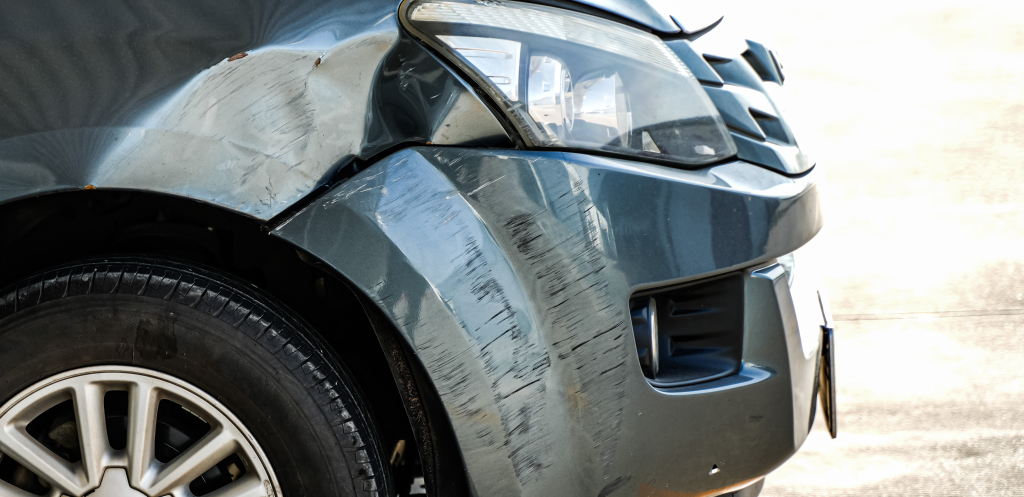
When we see a customer after a small fender-bender, it’s easy to focus on what’s obvious: the scuff, the dent, the cracked plastic, the clips that popped loose. A bumper repair can look straightforward, and visually it often is. But modern vehicles hide a lot of safety technology right where impact damage happens most often, and that’s why ADAS calibration after bumper repair has become a must, not an upsell.
Advanced Driver Assistance Systems (ADAS) rely on sensors and cameras that need to point in the right direction, at the right angle, and from the right position. Even a minor shift in a bumper cover, a bracket, a foam absorber, or a sensor mount can change what the vehicle “sees.” If the vehicle can’t see correctly, it can warn at the wrong time, brake when it shouldn’t, or stay silent when it should be shouting.
What Makes Bumper Repairs Different In ADAS Vehicles
Bumpers are no longer just impact absorbers and styling pieces. In many makes and models, they are also sensor platforms. The process of bumper work requires multiple activities, which include bumper cover removal, clip and bracket replacement, mounting point repair, surface refinishing, and precise component installation. A vehicle can appear completely restored, yet its sensor accuracy will be affected because it will be misaligned by a few millimeters.
The radar and camera-based features experience major errors when positional adjustments occur, even at slight distances, because their systems operate at highway speeds. This is why calibration is tied to procedure, not appearances. If the repair process touched the sensor location, the sensor mount, or the bumper structure it references, calibration should be on the checklist.
ADAS After Front Bumper Repair: What’s At Risk
Front bumpers commonly house some of the most safety-critical ADAS components. Depending on the vehicle, front-end systems can include adaptive cruise control, forward collision warning, automatic emergency braking, lane-keeping support, pedestrian detection, and parking assistance.
Radar sensors are one of the biggest concerns. They are often mounted behind the grille area or within the bumper zone, and they are used to measure distance and relative speed. If a radar sensor is tilted slightly upward or downward, it can “see” the wrong part of the road. In real driving, that can cause early braking, late braking, or inconsistent adaptive cruise behavior that feels unpredictable.
Cameras may not always be physically inside the bumper, but they can still be affected by bumper repairs. Many systems fuse data from a front camera with radar and ultrasonic sensors. If the radar’s view changes after a bumper repair, the system’s combined decision-making can degrade, even if the camera itself was never removed.
Ultrasonic sensors in the front bumper are also sensitive to placement and angle. They power parking distance warnings and low-speed obstacle detection. A slightly shifted bumper cover, thicker paint, incorrect sensor seating, or a damaged retainer can cause constant beeping, false obstacles, or dead zones where the vehicle fails to detect what’s in front of it.
ADAS After Rear Bumper Repair: Why It Still Matters
Rear bumper repairs often get treated as “cosmetic,” especially when damage is limited to a corner tap in a parking lot. The rear bumper of most vehicles contains blind spot monitoring sensors together with rear cross-traffic alert sensors because those systems require precise sensor positioning for their operations.
Rear corner sensors installed on a vehicle’s rear bumper function as the main components for establishing the blind spot monitoring system operation. The sensor angle needs to remain stable because any angle changes will result in two different outcomes. Both outcomes create risk. A missed detection can contribute to a collision, while frequent false alerts can train drivers to ignore the system entirely.
Rear cross-traffic alert is especially important in busy parking lots where visibility is limited. The sensors scan the area behind the vehicle to identify any oncoming cars, cyclists, or pedestrians. The system experiences three distinct operational failures because of a minor misalignment, which causes two different detection errors together with a delayed alert during detection.
Parking assist sensors across the rear bumper can also misbehave after repair if they are not seated correctly, if mounting tabs are repaired imperfectly, or if the bumper cover doesn’t sit flush. Drivers experience this issue through three different symptoms, which include persistent warning sounds, erratic distance measurements, and absence of alerts during their expected time.
Rear camera features can be affected too, even when the camera is mounted higher. Many vehicles overlay guidance lines and warnings based on a combination of camera input and other rear sensors. If the rear sensor geometry changes, the on-screen trajectory lines and distance assumptions may no longer match reality, which can make backing maneuvers less reliable.

Common Repair Steps That Can Trigger A Need For Calibration
Calibration needs are usually tied to what was done during repair, not how hard the impact looked. A “minor” hit can still involve parts and procedures that move sensors off their original position. Situations that commonly call for calibration include bumper cover removal and reinstallation, replacement of bumper reinforcements or absorbers, replacement of grilles that hold radar units, repair or replacement of sensor brackets, and any work that involves straightening mounting points.
Even refinished work can matter. Some radar units sit behind specific bumper materials designed to be radar-friendly. Heavy filler, incorrect repairs, non-matching replacement covers, or certain paint processes can interfere with sensor performance. That doesn’t mean paint automatically breaks ADAS, but it does mean you need to follow correct repair practices and verify sensor operation after the job is done.
What Happens If You Skip ADAS Calibration After Bumper Repair
Skipping calibration can lead to real-world safety issues that are easy to underestimate. The most obvious problem is incorrect warnings or no warnings at all. If a forward collision system fails to warn or brake when needed, the driver may assume the feature is working and take risks they wouldn’t otherwise take. If the system warns too often or brakes unexpectedly, the vehicle can become dangerous in traffic and stressful to drive.
False positives are another common complaint. You might see phantom braking, random alerts, or parking sensors that act like something is always there. Aside from safety concerns, this leads to frustrated customers returning with “something feels off” complaints that could have been prevented with proper post-repair scanning and calibration.
Insurance and documentation can also come into play. Some insurers, fleets, and lease companies expect repairs to meet OEM procedures. The failure to conduct necessary calibration procedures for safety systems after collision damage would lead to problems which create disputes and delays when another incident occurs and the vehicle systems undergo examination.
The process of verifying compliance with manufacturer requirements is established as a final step. The current repair processes of modern vehicles mandate technicians to conduct calibration checks after they complete sensor maintenance work because vehicles maintain both diagnostic trouble codes and calibration status records. The driver will receive an incorrect safety assessment because the vehicle will fail to meet inspection standards after you skip that crucial vehicle evaluation step.
How Calibration Typically Works In Real Life
ADAS calibration does not use one standard method for all vehicles. The process establishes requirements based on multiple factors which include the vehicle’s make and model and production year and installed sensors and repaired components. The process of calibration consists of two distinct types which include static and dynamic methods.
Static calibration requires testing to occur in a controlled setting which uses targets and measurement equipment and level ground surfaces. The vehicle is positioned precisely, and the system is calibrated using manufacturer-specified equipment and distances. This is common for cameras and certain radar systems that need exact alignment.
Dynamic calibration is performed through a prescribed road test where the vehicle learns and validates sensor alignment while driving under specific conditions. Some vehicles require only dynamic calibration, some vehicles need only static calibration, while many other vehicles need both calibration types according to their completed repairs and the OEM procedure requirements. Our process starts with a pre-scan and post-scan assessment, which helps us find stored fault codes while you check whether all ADAS modules function properly. The system undergoes calibration which is followed by verification tests that confirm successful completion of the system process and absence of related faults.
How We Decide Whether Your Vehicle Needs Calibration
We don’t rely on guesswork or “it should be fine.” We look at the vehicle’s ADAS features, where sensors are located, what parts were replaced or removed, and what the manufacturer’s procedures call for. If the repair touched a sensor, a bracket, a bumper structure component, or the mounting points that control alignment, we treat calibration as part of returning the vehicle to pre-accident condition.
We also pay attention to customer symptoms after a repair. If the vehicle shows new warnings, inconsistent sensor behavior, or a change in how features like adaptive cruise or blind spot alerts behave, that’s a sign something needs to be checked. But we aim to prevent those symptoms in the first place by verifying and calibrating when the repair process indicates it.
Summary: Bumper Repair Is Not “Done” Until ADAS Is Verified
ADAS calibration after bumper repair is one of those steps that’s easy to overlook until something goes wrong. The front and rear bumpers of vehicles contain radar systems, ultrasonic sensors, and blind spot detection modules, which require accurate aiming and precise placement. The vehicle’s perception of its surroundings becomes disrupted when any part of its system experiences a slight displacement which results in two types of errors: missed alerts and false warnings and unsafe braking operation.
Our repair work needs to go beyond cosmetic fixes because we must verify that all safety systems operate according to their original manufacturer specifications. We provide assistance to drivers who need to receive a vehicle that functions correctly and has an appropriate appearance.
We need to perform safety system checks and calibrations after we repair your bumper. You can contact us at (610) 590-9974 to arrange an ADAS inspection and calibration appointment with our staff at Maclane’s Automotive in Downingtown, PA!
