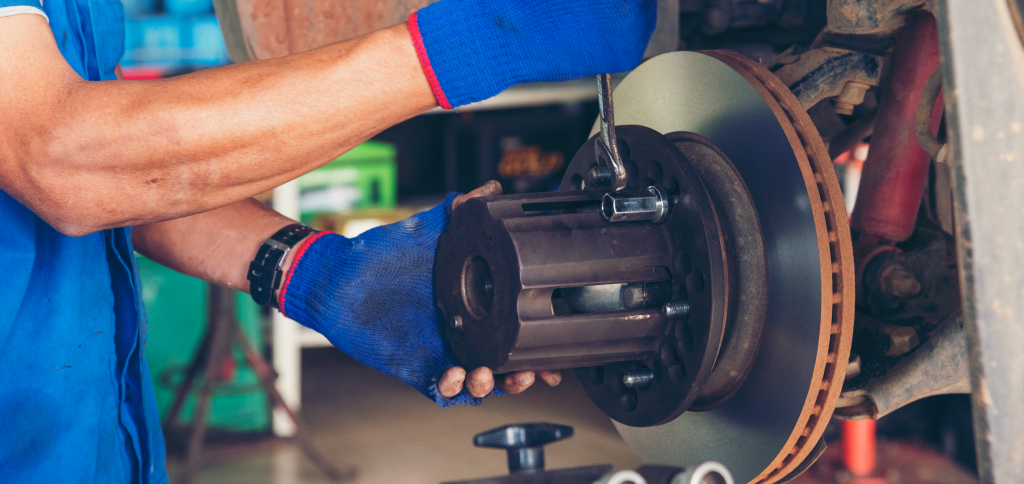
There isn’t one particular squeak that tells you to buy brake pads. It would make things easier if there were. The same sort of noise can come from moisture on a rotor, a pad wear indicator, or something caught where it shouldn’t be. When you call Maclane’s Automotive on Horseshoe Pike about brake repair, we want to hear about the rest of the complaint too. Has the pedal changed? Is this just a morning noise? Are you hearing it at every stop now?
Why Did It Stop Squeaking?
Wet rotors can develop a thin film of rust overnight or after washing the car. When you first use the brakes, the pads have that film to rub across. A short-lived squeak or scrape may be the result. If it clears within the first few stops, with an otherwise normal pedal, surface rust is one possibility.
But don’t assume yesterday’s explanation covers today’s noise. A squeal that stays after warm-up is worth having inspected. So is a sound that’s getting more frequent. Notice whether gentle braking brings it on, or whether it happens even with your foot off the pedal. There’s no need to make hard stops to try to rub it away.
Why We Don’t Just Peek Through The Wheel
The pad you can see isn’t necessarily the one wearing fastest. An inner pad may be much thinner than the outer one. And while some pads have a metal tab that squeals as they wear down, others use an electronic sensor. Waiting for every worn pad to announce itself isn’t a good plan.
Then there’s the hardware holding things in place, road debris, and the pad compound itself. Heat can glaze a pad surface. A harder compound can be noisier without automatically being a cheap or faulty part. Those possibilities are why we don’t want to sell you pads first and find a sticking caliper afterward.
Grinding Changes The Conversation
Grinding can be metal contacting the rotor after the friction material is gone. We can’t confirm that over the phone, but we can say this: stop safely and arrange an inspection before driving farther.
If braking takes longer than it used to, the pedal suddenly feels soft or sinks, or the car pulls severely, don’t attempt the trip to the shop. Stop safely and have it towed. A suspected brake-fluid leak belongs in that same category. For a red brake warning that remains after releasing the parking brake, follow the owner’s manual and get prompt help. Calling it a sensor problem without checking is too big a gamble.
More Than The Squeak
Is there anything else, perhaps a pulse under your foot or a shake in the steering wheel as you brake? Include that when you describe the noise. Rotor thickness isn’t always even all the way around, and pad material can leave uneven deposits. We’d need measurements to know what we’re dealing with. The word warped gets used for a lot of different brake complaints.
Pulling needs its own checks. The caliper may be involved, but we can’t leave tires and suspension out of the picture. Don’t worry about sorting the symptoms into the right mechanical category for us. Just describe them.
Before We Put It Back Together
We’re looking for uneven pad wear as well as how much material remains. Rotor measurements need checking, along with the calipers, hoses, and the hardware that holds the pads in place. Depending on the complaint, we’ll also need to look for leaks or check brake-system codes. A quieter car is nice; properly working brakes are the point of the job.
One thing not to try at home is lubricating the pads or rotors. Those surfaces need friction. Getting oil or grease on them to quiet a noise can interfere with braking, leaving a much more serious problem than the original squeak.
You Can Call Without Knowing What’s Broken
Tell us when you first noticed it and what happens when you press the pedal. That’s enough to start the conversation. Our team at Maclane’s Automotive on Horseshoe Pike can help you arrange an inspection at (610) 590-8669. If the braking feels unsafe, leave the car parked and arrange towing. We’d rather discuss how to get it here than have you test questionable brakes on the way.