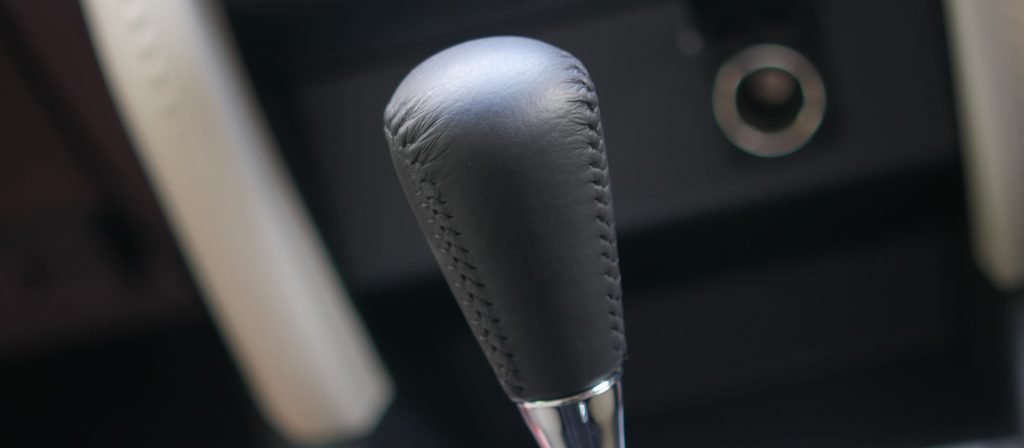
There’s an uncomfortable pause between selecting Drive and feeling the car engage. Your first thought might be the cost of a transmission. We’d hold off on that conclusion. A delay needs checking, but it doesn’t tell us which repair you’ll need—or whether the sensation you’re describing is actually delayed engagement.
When you call Maclane’s Automotive, we’d start there. Did it take a moment to engage, then drive normally? Or did it engage but stumble when you pressed the accelerator? That distinction is worth more than ordering a part based on the word “hesitation.”
What Should I Tell The Shop?
Start with when you noticed it. For example, “only when I leave in the morning” gives us a different lead from “it did it again after I’d been driving for an hour.” If Reverse has behaved the same way, we’d want that detail. These are examples of useful observations, not tests we’d ask you to go and perform.
Mention a warning message or leak, and describe a jolt or rising revs without matching acceleration if you’ve already experienced them. With gear selection, keep your foot on the brake. Don’t add throttle to persuade it to catch; the result can be a sudden movement you weren’t ready for. We don’t need that kind of experiment to book an inspection.
We’d also like the service history, even if the answer is that you don’t know when the fluid was last checked. That’s better than assuming it was done because another service appears on a receipt.
Could It Just Be Low Fluid?
An automatic car isn’t just about moving the shift lever and picking the gear you want. For many cars, it’s about fluid pressure filling a clutch before it’s actually ready to drive. The delay you experience can be a sign of many problems; it can mean you’re low on transmission fluid, you’ve got internal seal leaks, a valve-body is worn, or you have an issue with the solenoid, or even just fluid that drains back into the pan when you’ve parked for a bit.
So a fluid-level check is useful, but “low” wouldn’t be the end of the diagnosis. We’d be looking for the loss as well. Continually topping it up leaves that fault unresolved, and a transmission operated with insufficient fluid can be damaged.
The owner’s handbook should tell you whether checking it yourself is appropriate. A dipstick is one arrangement; a temperature-specific service check is another. If there isn’t an owner procedure, leave this one to the shop rather than improvise. Getting the level or fluid specification wrong creates another problem to sort out. We’d leave additives on the shelf while the cause is still unknown.
Why Not Try A Fluid Change First?
Because it may be maintenance the vehicle needs, but that doesn’t establish it as the repair for this symptom. We wouldn’t want your first repair bill to be for something chosen only because it’s the easiest thing to try.
Leaks and the correct fluid level are part of the initial picture; transmission-module codes and operating data add more information. Depending on what those show, pressure or electrical checks may follow. A fault code is a lead to investigate, not an instruction to replace the component mentioned in its description. It’s also possible to have a mechanical fault with no useful code at all.
A clunk brings mounts into the discussion, but carefully. A worn mount can let the engine or transmission move when load changes and make engagement feel rough. It doesn’t prove pressure is taking too long to build. We wouldn’t want a mount replacement to be mistaken for a diagnosis of hydraulic delay.
Should I Drive It In?
We’d discuss that on the phone before you set off. The car eventually moving doesn’t tell us it will move when you need it to. With severe slipping or no reliable engagement, get safely stopped and have it towed. Treat a bang into gear, a substantial leak, or a burning smell the same way. Repeated attempts to force it into moving only add risk; you don’t want to be finding out about the next delay in traffic.
A small recurring pause still deserves a prompt inspection. We aren’t saying every hesitation damages the transmission internally; we’re saying the cause and the safety of continued driving haven’t been established yet. A road test, if appropriate, comes after considering the vehicle’s condition—not as an experiment we’d ask you to perform.
Ask Us About The Next Step
At our Lincoln Hwy location, European repair is part of our work, including Land Rover and Jaguar specialization. Tell us the model and what you’ve noticed, and we can discuss an inspection that fits the complaint. Call Maclane’s Automotive in Downingtown, PA at (610) 822-9956. You don’t have to arrive knowing which transmission repair to request. Finding out is the point of the appointment.
