A jump got the car started yesterday. This morning, nothing. It’s easy to look at the battery and decide it’s done, particularly if you can’t remember when you bought it. But a car battery replacement may leave you with the same trouble next week. At Maclane’s Automotive in Malvern, PA, we want to know why the battery went flat before asking you to buy another one.
Flat And Worn Out Aren’t The Same Thing
A discharged battery may still be usable. A worn-out one may have enough power to light the dash but not enough to crank the engine. Those little lights don’t ask nearly as much of it. That’s why looking at a voltage reading or watching the dash isn’t the whole test.
We’ll consider its condition and starting ability, including charging and retesting when that’s needed. Slow cranking can also involve the starter or cables, and charging trouble can leave a good battery low. Its age is useful to know, but age alone doesn’t give us the answer. Neither does being fairly new: repeated deep discharges can damage a battery early.
How Long Was It Parked?
Overnight? Three days? A month? That’s worth telling us. A car that starts after charging and then goes flat while parked may have an electrical drain. Or the battery may no longer hold enough charge. The timing helps us choose what to check; it doesn’t prove which one is wrong.
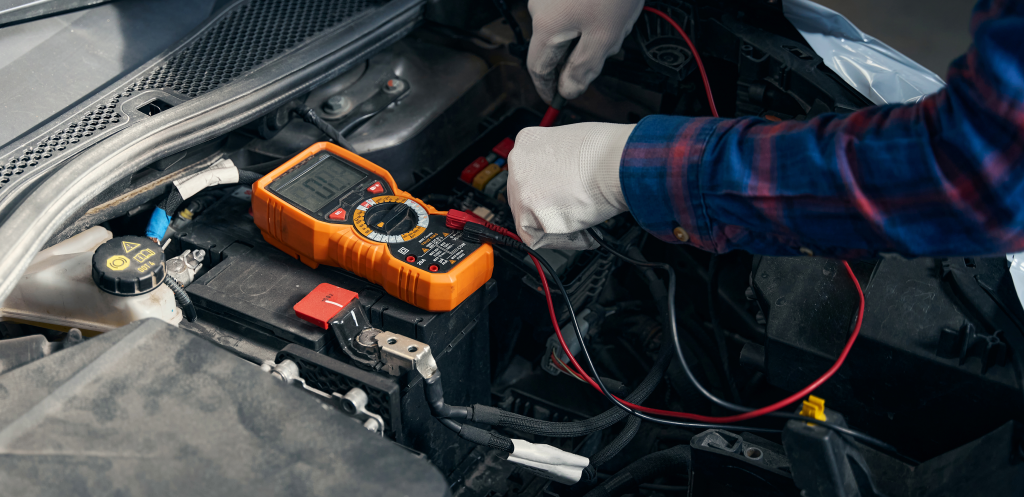
A lamp left on is an obvious suspect. A relay or electronic module staying awake is harder to spot. Cars do use a little electricity while parked, so we aren’t looking for absolutely zero draw. We need to see whether it settles down to the expected level once the vehicle goes to sleep. Open a door during that test, and you can wake things right back up. An intermittent drain can take some patience to catch.
Running After A Jump Doesn’t Clear The Alternator
On a conventional engine-driven charging system, the alternator powers electrical equipment and replenishes the battery with the engine running. The fact that the engine kept running after a jump isn’t enough to declare that system healthy. We may need to check it with different electrical loads, or under the conditions when the fault shows up.
Connections count too. A loose cable or corrosion can interfere with starting and charging. Before blaming an expensive part, those checks belong in the job. One test that doesn’t belong: taking off a battery cable while the engine runs. Don’t do that. It can damage vehicle electronics.
What Changed Before The Trouble Started?
Think about recently fitted equipment. A stereo, remote start, or dashcam with parking mode is worth mentioning. A removable plug-in accessory can be unplugged while parked to help narrow things down, but leave installed wiring and safety equipment alone. Check for cabin or cargo lights staying on as well.
Then think about your trips. A short run after a jump may not put back the charge you used. Several little errands aren’t a guaranteed cure either. Use the owner’s manual for the correct charging or jump-start procedure. If the battery is frozen, swollen, leaking, or visibly damaged, don’t attempt either; arrange help instead.
When It Really Does Need A Battery
If testing shows the battery can no longer do the job, replacement makes sense. We still need the right type and capacity for the car. Some vehicles need registration or a reset after fitting a battery, so a physically matching case isn’t the only thing to check.
There can be two faults. A drain can wear out a battery through repeated discharging. Fix only the drain, and you may still have a weak battery; replace only the battery, and the drain keeps working away at the new one.
Bring Us The Pattern, Not A Diagnosis
When did it last start normally? How long had it been sitting? Has the battery already been replaced? Those answers give us something to work with, even if the car happens to start perfectly when you call. Contact Maclane’s Automotive in Malvern, PA, at (484) 321-8137 to arrange a battery and electrical system check. We’ll help you sort out what needs attention without treating another jump-start as the repair.
