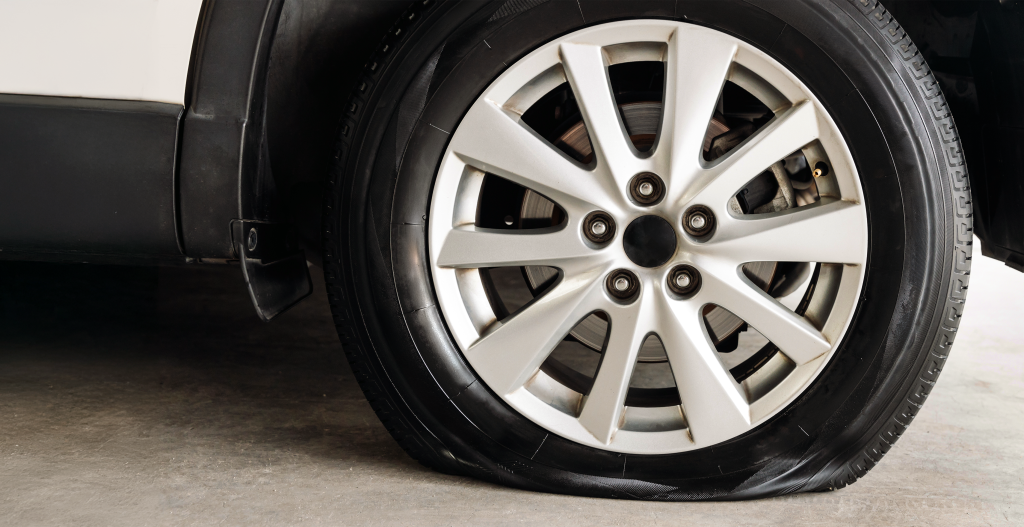
You find a screw in a tire you bought not long ago. Surely that doesn’t mean buying another one? Not necessarily. But we can’t promise a repair from a picture of the screw.
At Maclane’s Automotive in Downingtown, PA, we remove the tire from the wheel to inspect it before approving flat tire repair. There may be damage on the inside that changes the answer.
A Puncture In The Right Place May Be Repairable
A small nail or screw hole within the repairable tread area is often a good candidate. For many passenger and light-truck tires, repair guidance limits punctures to 1/4 inch in diameter, but the tire manufacturer’s rules still apply. Some tires have tighter restrictions.
A screw right out at the tread’s curved edge is a different situation from one nearer the center. That shoulder area is outside the ordinary repair zone. Also, the screw head isn’t the size of the injury; we have to see what went through the rubber.
Previous repairs matter, too. A new repair can’t overlap another, and the tire needs enough usable tread and an otherwise sound structure to justify repairing it.
Tell Us How Far You Drove
Was the car parked when you found the flat, or did you drive after the pressure warning came on? Please tell us, even if you only moved it to escape traffic. Running flat or badly underinflated can overheat and damage the sidewall as it flexes under the vehicle’s weight.
Once we remove the tire from the wheel, we can look for internal scuffing, loose rubber, and other evidence of that damage. Adding air doesn’t undo structural damage. Neither does the fact that the tire managed the last few miles without trouble.
When Replacement Is The Safer Choice
Sidewall and shoulder punctures aren’t suitable for ordinary puncture repairs. Neither are bulges, exposed cords, or damage from a blowout. A bulge can indicate broken internal reinforcement; don’t keep driving on it while waiting for a convenient appointment.
Cuts and irregular tears are different from a small, repairable puncture. Impact damage from a curb or pothole also needs assessment. Excessive wear, significant cracking, or age-related deterioration may rule out repair regardless of where the leak started. If the tire isn’t repairable, we’ll explain what we found.
Why An Outside Plug Isn’t A Complete Repair
An outside plug can stop an air leak without revealing what happened inside the tire. You haven’t inspected the inner liner or the sidewall damage that low-pressure driving may have caused.
A proper puncture repair requires removing the tire, inspecting it, and using an approved repair that fills the injury channel and seals the inner liner. A patch alone doesn’t fill the channel, and a plug alone doesn’t properly seal the liner. The repair method must meet the applicable tire guidance.
Let us know if you’ve used a plug or tire sealant. It’s useful information before we dismount the tire, not something you need to apologize for.
Getting Off The Road Comes First
Ease off speed and steer smoothly toward a safe stopping place if a tire goes flat. Avoid abrupt braking or steering. The shop may be close, but continuing on a flat can ruin the tire. Arrange roadside help or use a suitable spare once safely out of traffic. Don’t attempt a wheel change on an unsafe shoulder. Temporary spares have their own pressure, speed, and distance limits; check the manual.
Found the low tire in your driveway? Call before assuming a top-up makes it safe to drive. Reach Maclane’s Automotive in Downingtown, PA, at (610) 822-9956 to arrange a flat tire inspection and discuss getting it here.
